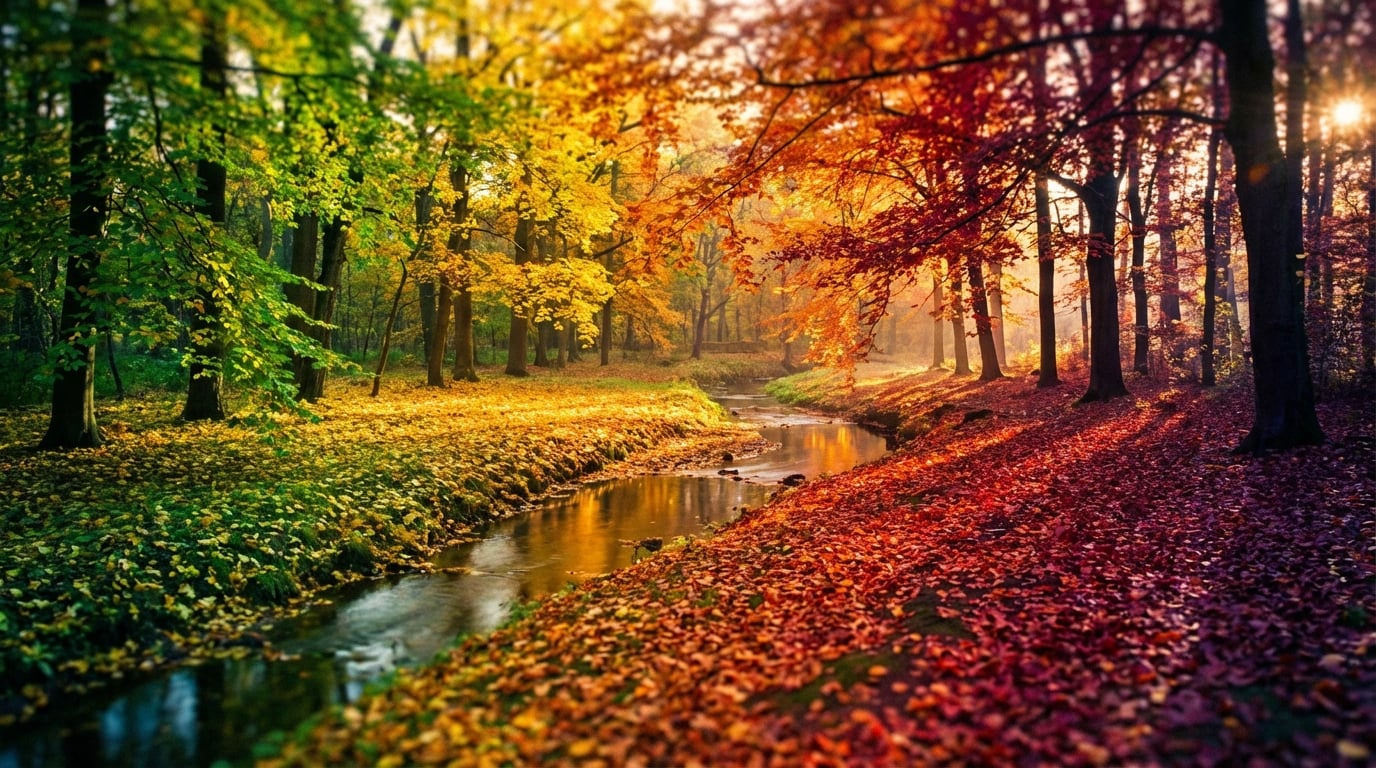
Every autumn, nature puts on one of its most spectacular shows. Trees transform from vibrant greens into brilliant oranges, reds, and yellows before shedding their leaves entirely. But why do leaves change color? Understanding this fascinating biological process deepens your appreciation for seasonal transformations and helps you better observe the natural world around you. Whether you’re an artist seeking inspiration from seasonal palettes or a nature enthusiast wanting to understand plant behavior, this guide explains the science behind autumn’s most beautiful phenomenon.
Leaves change color because plants stop producing chlorophyll—the green pigment that captures sunlight for photosynthesis—as daylight hours decrease and temperatures drop. When chlorophyll breaks down, it reveals other pigments that were always present but hidden beneath the green: carotenoids (yellows and oranges) and anthocyanins (reds and purples). Additionally, shorter days trigger trees to seal off the veins leading to their leaves, trapping sugars inside. These concentrated sugars intensify the red and purple hues. The timing and intensity of color changes depend on temperature, moisture, and sunlight—factors that explain why some autumns are more colorful than others.
Understanding the Science of Chlorophyll Breakdown
Chlorophyll is the primary pigment responsible for a leaf’s green color, and it plays a critical role in photosynthesis. As autumn approaches and daylight decreases, trees detect these shorter days and respond by reducing chlorophyll production. This isn’t a random process—it’s an evolutionary adaptation that allows trees to conserve resources during months when photosynthesis becomes less efficient.
The breakdown of chlorophyll reveals carotenoids and xanthophylls, pigments that absorb light at different wavelengths than chlorophyll. Carotenoids reflect yellow and orange light, while xanthophylls create bright yellow tones. These pigments were present all along but remained invisible under the dominant green chlorophyll. Therefore, when you observe golden leaves in October, you’re seeing pigments that existed since spring.
Beyond these yellow and orange hues, anthocyanins create the dramatic reds and purples characteristic of peak autumn foliage. Unlike carotenoids, anthocyanins are produced during the fall season, not stored beforehand. Trees synthesize anthocyanins when cool nights and sunny days create conditions that concentrate sugars in leaf cells. The more anthocyanins a tree produces, the more vivid the red coloration becomes.
How to Identify the Hidden Pigments in Leaves
To deepen your understanding of autumn color changes, learn to identify which pigments dominate specific leaves and trees. This observation skill proves invaluable whether you’re identifying plant species quickly or gathering inspiration for landscape art color palettes.
Yellow and orange leaves indicate dominant carotenoids. Maples, birches, and ginkgos typically display these warm tones. Red and burgundy foliage signals strong anthocyanin production, common in red maples, sourwoods, and sweetgums. Purple-tinged leaves suggest a combination of anthocyanins and lingering chlorophyll. Brown leaves indicate that all pigments have degraded, signaling the final stage before leaf drop.
To observe pigment transitions personally, collect fallen leaves throughout autumn and examine them under natural light. Notice how transparent leaves appear when backlit—the pigments glow differently depending on light direction. This observation technique connects directly to understanding why artists find autumn foliage so compelling for creating dynamic compositions.


Environmental Factors That Affect Color Intensity
The brilliance of autumn colors varies significantly year to year because environmental conditions directly influence pigment production and timing. Temperature, moisture, and sunlight collectively determine whether you’ll witness a spectacular color display or a muted autumn season.
Cool nights above freezing combined with sunny days create ideal conditions for vibrant colors. Cool temperatures trap sugars in leaves, intensifying anthocyanin production. Simultaneously, sunny days maximize photosynthesis, boosting sugar concentration. Conversely, warm, cloudy autumns produce pale colors because warm temperatures discourage anthocyanin synthesis. Research on autumn leaf color from authoritative sources confirms these patterns across multiple climate zones.
Moisture levels also matter significantly. Adequate rainfall ensures leaves remain hydrated, supporting pigment production. However, drought stress can cause premature leaf drop before colors fully develop. Additionally, early frosts damage leaves before pigments mature, resulting in brown rather than red foliage.
Consider these factors when timing autumn outings or planning when to observe nature’s color changes. You can also explore the most colorful plants worldwide to understand which species produce the most reliable autumn displays regardless of conditions.
Observing and Documenting Autumn Colors
Now that you understand the science behind color changes, apply this knowledge through systematic observation. Track autumn progression in your local area by photographing the same trees weekly, noting which species change color first and which display the most dramatic transformations.
Create a simple documentation system using these steps:
- Select 3-5 trees in your neighborhood representing different species
- Photograph each tree weekly starting in late summer
- Record temperature and weather conditions with each photo
- Note the specific colors visible—avoid general descriptions like “red” or “orange”
- Compare your observations year to year to identify patterns
This practice develops your eye for subtle color variations and prepares you to create more nuanced artwork inspired by seasonal changes. Many artists use documented autumn observations to inform their work throughout the year. If you’re interested in capturing these colors artistically, consider exploring essential techniques for learning landscape painting and how to display art prints beautifully in your home.
Understanding why leaves change color transforms autumn from a simple seasonal event into a window into plant physiology and environmental science. By observing these changes systematically and appreciating the scientific mechanisms at work, you’ll develop a richer connection to the natural cycles that shape our world. Whether you’re a botanist, artist, or casual nature observer, autumn’s color transformation offers endless opportunities for discovery and creative inspiration.

|
joerussell Australian abstract artists based in Byron Bay and curator of the GumPrints art print collection. |
Leave a Reply