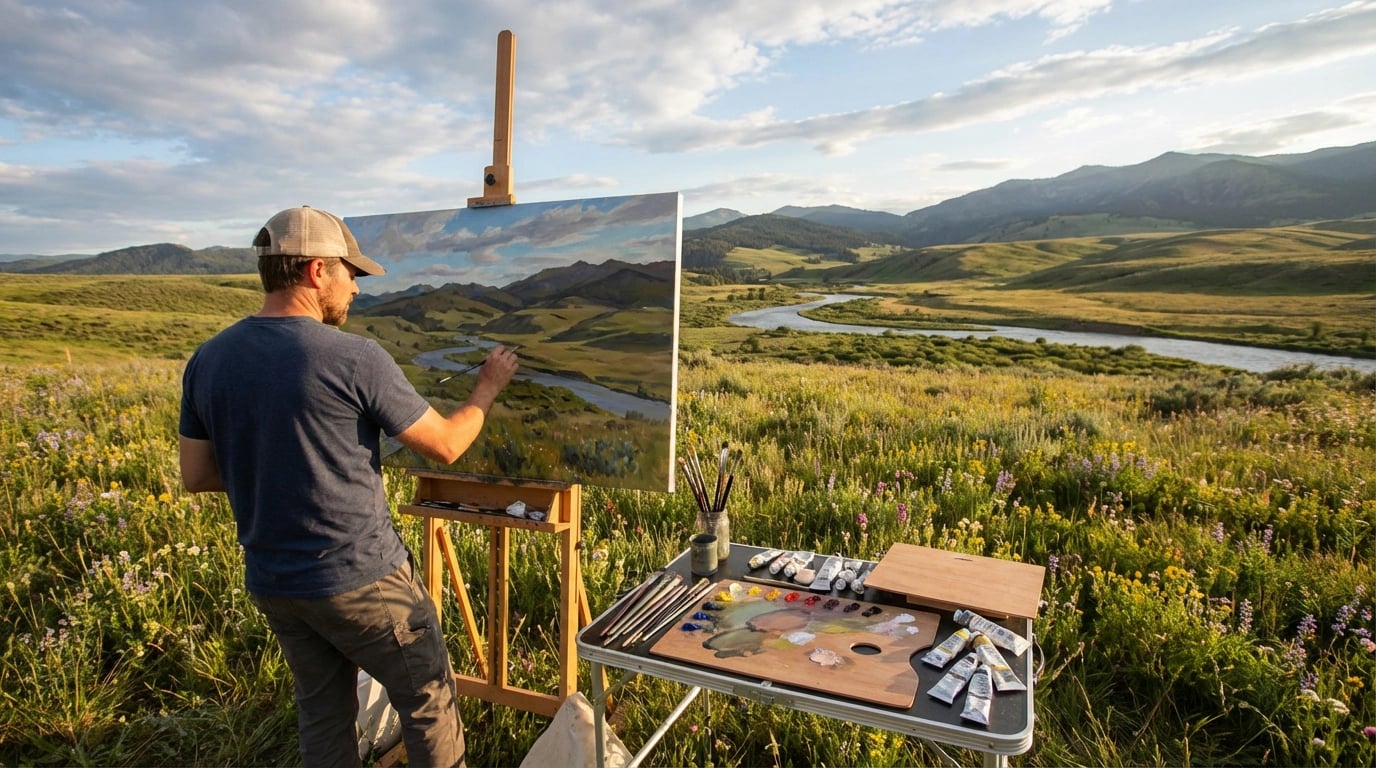
Aspiring landscape painters often wonder how to capture nature’s beauty with the same skill and confidence demonstrated by professional artists. The truth is, painting natural landscapes like a pro isn’t about having innate talent—it’s about developing the right mindset, understanding fundamental principles, and committing to deliberate practice. In my opinion, the divide between amateur and professional landscape painting comes down to three critical factors: observational discipline, technical courage, and conceptual clarity.
Professional landscape painters succeed because they see differently, think strategically about composition, and execute with intentional brushwork. They understand that realism isn’t about copying every detail but rather capturing the essence of a scene through selective emphasis. The real secret lies in training your eye to identify what matters most in a landscape—the gesture of a tree, the rhythm of rolling hills, the temperature shift in atmospheric perspective—and having the technical skills to translate those observations onto canvas. Moreover, professionals approach each painting with a clear vision, making decisive choices about value structure, color harmony, and focal points before they ever touch brush to paint.
Observation Trumps Technical Skill Every Time
The most overlooked aspect of professional landscape painting is the quality of observation that precedes any mark-making. Too many aspiring painters rush to their easels without truly seeing what’s before them. However, professionals spend considerable time simply looking, analyzing relationships between shapes, studying how light interacts with form, and identifying the underlying structure of natural scenes. This investment in visual analysis pays enormous dividends when it comes time to paint.
Furthermore, observational discipline extends beyond the initial viewing. Professional painters constantly reference their subject, comparing their painting to reality and making adjustments based on what they see rather than what they think they know. This practice combats one of the biggest obstacles in landscape painting: painting from memory or preconceived notions rather than direct observation. When you develop essential landscape painting techniques, observation should be your foundation.
Additionally, trained observation means understanding value relationships—the light and dark patterns that create depth and dimension. Professionals often squint at their subjects to simplify complex scenes into basic value masses. This technique, though simple, revolutionizes landscape painting by helping artists identify the major shapes that define a composition. According to the history of landscape painting, this approach has been fundamental to the genre’s development across cultures.
Compositional Thinking Separates Amateurs from Professionals
Professional landscape painters don’t simply paint what they see—they design compelling visual experiences. Consequently, they approach each painting as a compositional problem to solve, making deliberate decisions about what to include, what to omit, and how to arrange elements for maximum impact. This strategic thinking transforms a literal transcription of nature into an artistic interpretation that resonates with viewers.
The concept of selective emphasis is particularly crucial. Nature presents an overwhelming amount of visual information, and attempting to include everything results in cluttered, unfocused paintings. Therefore, professionals identify a clear center of interest and subordinate everything else to support it. They might simplify background details, exaggerate color temperature contrasts, or manipulate values to direct the viewer’s eye exactly where they want it to go. Understanding the essential elements of great landscape paintings helps develop this compositional awareness.


Moreover, compositional mastery involves understanding design principles like rhythm, balance, and unity. Professional painters use repeating shapes to create visual rhythms that guide the eye through the painting. They balance areas of complexity with restful spaces, preventing visual fatigue. They also establish unity through consistent color temperatures, value structures, or brushwork styles. These decisions aren’t accidental—they’re the result of deliberate planning and artistic judgment that develops through study and practice.
Technical Courage and the Freedom to Fail
Perhaps the most defining characteristic of professional landscape painters is their willingness to take technical risks. While amateurs often paint tentatively, afraid to commit to bold marks or color choices, professionals paint with confidence and decisiveness. This courage doesn’t come from never making mistakes—it comes from embracing failure as an essential part of the learning process. Every professional has countless failed paintings behind them, each one teaching valuable lessons about what works and what doesn’t.
Technical courage manifests in brushwork quality. Professionals typically use larger brushes than amateurs might feel comfortable with, making fewer, more intentional marks. This approach creates paintings with freshness and vitality, avoiding the overworked, labored appearance that plagues many amateur works. Additionally, they’re willing to scrape down or completely repaint sections that aren’t working rather than trying to salvage every square inch of canvas. This ruthless self-editing produces stronger final results.
The freedom to experiment also extends to materials and methods. Professional painters continuously explore different landscape painting approaches and aren’t locked into a single way of working. They might experiment with palette knife techniques, glazing, impasto, or mixed media approaches depending on what best serves their vision for a particular painting. This technical flexibility allows them to match method to subject matter effectively.
In conclusion, painting natural landscapes like a pro requires shifting your entire approach to the craft. It demands training your observational skills until you see beyond surface appearances to underlying structures. It requires thinking compositionally, making strategic decisions about design rather than passively copying nature. Most importantly, it necessitates developing technical courage—the confidence to make bold marks, take risks, and learn from failures. While talent may play a role, these skills are learnable through dedicated practice and study. For those seeking inspiration in natural forms, exploring landscape art color palettes can provide fresh perspectives. Browse the curated collection to see how professional artists interpret natural landscapes in various styles.

|
joerussell Australian abstract artists based in Byron Bay and curator of the GumPrints art print collection. |
Leave a Reply