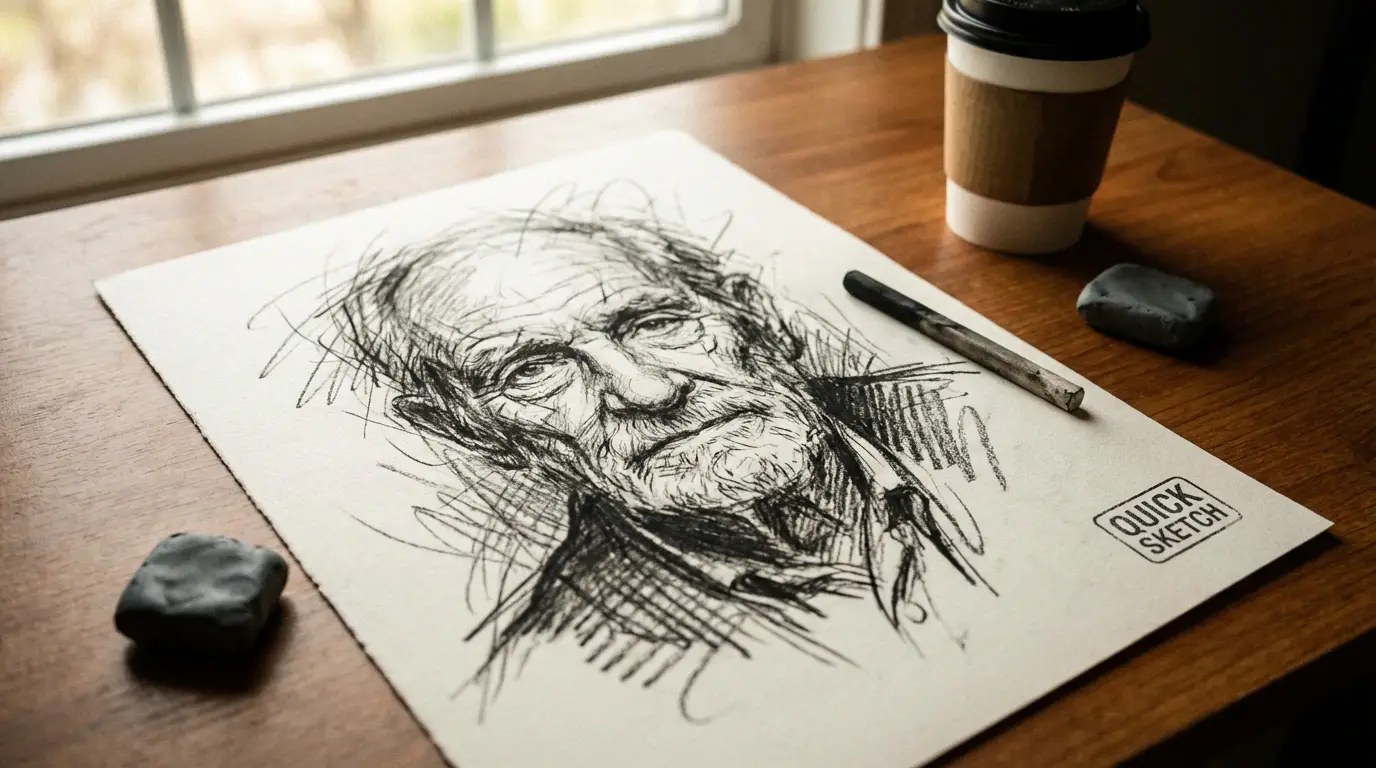
When you’re making art, speed matters—whether you’re a professional artist working against deadlines, a hobbyist looking for quick creative expression, or someone seeking an immediate outlet for inspiration. The reality is that some art forms let you complete a finished piece in minutes, while others demand weeks or months of sustained effort. Understanding which techniques deliver results fastest can transform how you approach your creative practice and help you build artistic momentum without sacrificing quality.
Sketch-based art forms stand out as the quickest to produce. Pencil sketching, charcoal drawing, and ink work can yield compelling results in 15 minutes to an hour, depending on complexity and detail. Digital art using tablet software offers similar speed advantages, with instant undo capabilities and no drying time. Quick watercolor washes, gestural painting, and collage work also deliver finished pieces rapidly. The key difference between quick art and rushed art lies in intention—fast doesn’t mean careless; it means working with focused technique and accepting the spontaneity that comes with speed.
Sketch-Based Art: The Foundation of Speed
Pencil sketching remains the fastest fundamental art form because it requires minimal setup and produces immediate visual results. A simple graphite pencil and paper are all you need to create expressive gesture drawings, character studies, or landscape compositions. Most artists can complete a meaningful sketch in 20 to 45 minutes, and loose gesture sketches take just 5 to 15 minutes. The advantage lies in the directness of the medium—what you put down is instantly visible, and erasing allows for corrections without restarting.
Charcoal drawing accelerates the process further. With broader strokes and faster mark-making, charcoal covers larger areas quickly and creates dramatic tonal ranges without laborious blending. A charcoal figure study can be completed in 30 minutes with confident, expressive results. Vine charcoal works particularly fast for initial blocking, while compressed charcoal builds rich blacks and midtones efficiently. The soft nature of the medium encourages loose, gestural work rather than tight detail—a quality that inherently speeds up production.
Ink work, whether with brush, pen, or marker, demands decisiveness but rewards speed. Once the line is down, it’s final, which means artists working in ink develop a practiced confidence that accelerates their process. Botanical illustration using ink often produces polished results in under an hour, especially when combined with minimal line work rather than heavy cross-hatching. Ball-point pen sketching has seen a resurgence because quality ballpoint pens deliver controlled lines at remarkable speed, creating finished pieces that rival more formal drawing media.
Why Sketching Works Best for Speed
The psychology of sketch-based work supports rapid creation. Because sketches are often perceived as preliminary work, artists feel less pressure to achieve perfection. This mental freedom paradoxically produces better results—looser, more confident marks that feel alive. Additionally, sketch media require no drying time, no mixing, and minimal physical setup. You can complete an entire session with a single pencil and small pad, making spontaneous creation possible anywhere.
Digital Art and Immediate Results
Digital art on tablets and styluses has become one of the fastest mediums for making art professionally and creatively. Procreate, Clip Studio Paint, and Adobe Fresco eliminate the wait for drying and allow unlimited undos, resets, and layering without commitment. A digital painting that would take hours with physical media—mixing colors, waiting for layers to dry, managing wet pigment—can be completed in 20 to 45 minutes digitally. The undo function means artists can experiment without fear, which paradoxically speeds up decision-making and execution.
Digital sketching tools offer parametric brushes that accelerate detail work. Symmetry tools create balanced compositions instantly. Selection tools modify areas without redrawing. Transform functions adjust composition in real time. For artists comfortable with tablet interfaces, these efficiency gains translate to significantly faster completion times compared to traditional media. A concept illustration, character design, or quick environment study moves from conception to finished piece in a single session.
The setup advantage matters more than many realize. Traditional media require workspace preparation, material gathering, and cleanup. Digital work eliminates these overhead costs. Furthermore, digital art can be output and displayed immediately, whereas traditional work may require photographing, scanning, or framing before sharing. This immediate availability feedback loop helps artists iterate and create multiple pieces in the time traditional media would demand for one.
Choosing the Right Digital Tool
Not all digital tools deliver speed equally. Illustration software with vector capabilities enables crisp outlines and flat colors faster than raster programs, though both have speed advantages. Brushes matter significantly—well-designed brushes that respond to pressure and speed produce more natural marks in fewer strokes than poorly optimized brushes that require constant adjustments. Investing in quality styluses and tablets with responsive surfaces accelerates the physical act of making marks, reducing the learning curve that slows down beginners.
Watercolor and Ink Techniques for Quick Execution
Watercolor painting, despite its reputation for requiring patience, can produce finished pieces remarkably quickly when approached with speed-focused technique. Wet-on-wet washes create expansive color fields in seconds. Glazing transparent layers builds complexity rapidly. A watercolor landscape, when executed with confident brushwork and minimal detail, reaches completion in 30 to 60 minutes. The key is embracing spontaneity—watercolor rewards quick decision-making and punishes hesitation, naturally pushing artists toward speed.
Furthermore, understanding which subjects suit watercolor’s quick nature matters. Simple landscapes with broad washes, abstract compositions, or botanical studies of flowers and leaves complete faster than detailed architectural pieces. Landscape painting techniques emphasizing atmospheric effects leverage watercolor’s unique fluidity for speed. Artists working quickly in watercolor develop intuitive color mixing and gestural mark-making that distinguish their work from overly labored pieces.
Ink drawing combined with watercolor creates what’s sometimes called “ink and wash” work—a medium that merges the speed of ink line with the quick coverage of watercolor. Artists complete a piece by establishing structure with ink, then adding watercolor washes directly, with no waiting between media applications. This hybrid approach delivers finished artwork with line clarity and tonal complexity in 45 minutes to an hour. The technique particularly suits studies of botanical subjects like gum leaves, where ink provides defining structure and watercolor adds naturalistic color.
Speed Techniques in Watercolor
Specific watercolor techniques accelerate the process:
- Wet-on-wet glazing: Applying wet pigment to wet paper creates soft edges and large color areas instantly.
- Dry brush work: Using minimal water creates textural marks quickly without waiting for layers to dry.
- Pre-mixed color palettes: Preparing colors before starting eliminates mixing time during painting.
- Limited color palettes: Using three to five colors reduces decision-making and accelerates harmony.
- Minimal detail: Focusing on value structure rather than fine lines completes backgrounds faster.
Collage and Mixed Media Fast-Track Methods
Collage represents perhaps the quickest path to creating visually complex, finished artwork. Cutting and arranging existing images requires no drawing skill and produces composition in minutes. A collage can be completed start-to-finish in 30 to 60 minutes, depending on scale and intricacy. Digital collage using stock images, photographs, and design elements accelerates this further—artists assemble finished compositions in 15 to 30 minutes using template-based layouts and library assets.
Mixed media approaches—combining collage with drawing, painting, or printing—add dimensionality and visual interest while remaining fast. Tearing paper instead of cutting adds organic edges and texture. Layering with acrylic paint over collage pieces integrates materials quickly because acrylic dries fast. Combining these fast techniques creates pieces with apparent complexity that belies their quick execution, making mixed media ideal for artists wanting substantial-looking results without extended timelines.
Paper crafting and construction-based art also accelerate creative output. Folding, cutting, and assembling paper structures—kirigami, pop-up techniques, or simple paper sculpture—produces three-dimensional artwork in minutes. These tactile approaches offer a welcome change from drawing or painting for artists experiencing creative fatigue. The immediacy of seeing a physical structure emerge engages different creative problem-solving than mark-making media.
Building Speed with Found Materials
Using ready-made materials—printed papers, fabric scraps, magazine pages, or purchased elements—eliminates production time. Rather than creating all elements, artists curate and combine existing materials. This approach particularly suits thematic art projects exploring nature subjects, where photography and botanical prints provide ready-made material. The time saved on individual element creation allows focus on overall composition and conceptual strength.
Building Speed Without Losing Quality
The relationship between speed and quality deserves clarification. Rushed work and fast work are opposites. Rushed implies carelessness and insufficient planning. Fast implies intentional technique and focused execution. Building genuine speed requires practice with specific media until the physical act becomes intuitive. A sketch artist drawing hundreds of gesture studies develops muscle memory and confidence that accelerates production. A digital painter practicing daily with consistent tools builds speed through familiarity.
Planning accelerates execution significantly. Spending 5 to 10 minutes on preliminary thumbnails, value studies, or compositional sketches prevents wrong turns during main work. Artists who plan ahead work faster than those figuring out composition during execution. Similarly, limiting scope maintains speed—a small-scale, focused piece completes faster than an ambitious, detailed work. Understanding this distinction helps artists choose projects that match available time while maintaining artistic integrity.
Equipment matters measurably. Quality tools that respond predictably accelerate the creative process. A responsive stylus enables faster digital work. Fresh, vibrant pigments reduce color mixing time. Sharp pencils maintain consistency. Conversely, fighting with inadequate tools consumes time and breaks creative flow. Investing in reliable media specific to your chosen fast technique pays dividends in productivity.
| Medium | Typical Time to Completion | Key Speed Advantage | Best For |
|---|---|---|---|
| Pencil Sketching | 15–45 minutes | Minimal setup, instant feedback | Gesture studies, concept work |
| Digital Painting | 20–45 minutes | Unlimited undos, no drying time | Illustrations, color studies |
| Charcoal Drawing | 30–50 minutes | Broad marks, fast tonal coverage | Figure studies, dramatic work |
| Watercolor Painting | 30–60 minutes | Wet-on-wet techniques, transparency | Landscapes, botanical studies |
| Collage | 30–60 minutes | No drawing required, immediate assembly | Mixed media, conceptual work |
| Ink and Wash | 45–60 minutes | Combined techniques, no waiting | Botanical art, detailed sketches |
The Creative Advantage of Working Quickly
Beyond practical benefits, working quickly offers genuine creative advantages. Speed forces decision-making, which strengthens compositional clarity. Artists who work fast typically develop stronger instincts because they rely on intuition rather than overthinking. Furthermore, completing pieces regularly builds momentum and confidence. An artist producing five quick sketches weekly develops skill faster than someone laboring over two elaborate pieces yearly.
Quick art practices encourage experimentation. Lower psychological stakes mean artists try bold color combinations, unusual subjects, or unfamiliar techniques without the anxiety of “wasting” extended time. This experimental mindset accelerates growth and often produces surprising discoveries impossible in more controlled, methodical approaches. Many professional artists maintain daily sketch practices for exactly this reason—rapid iteration builds skill and generates ideas more efficiently than sporadic, lengthy sessions.
Additionally, working quickly often produces more authentic, emotionally direct results. When artists don’t have time to second-guess or overwork, their genuine responses to subjects emerge more clearly. A quick watercolor capturing atmospheric feeling may resonate more powerfully than a labored piece revised repeatedly. Art enthusiasts frequently prefer the immediacy and spontaneity of quickly executed pieces, recognizing the energy and authenticity they convey. This market preference validates what practice confirms—speed and quality aren’t opposing forces when technique supports the process.
Establishing Your Fast Practice
Starting a speed-focused practice requires choosing one medium and committing to regular, timed sessions. Setting time limits—whether 15, 30, or 60 minutes—creates productive structure. Working from observation rather than imagination accelerates decision-making because subjects provide constraints. Reference materials, still life objects and reference studies (Wikipedia), or photography speed up setup and focus. Tracking completed pieces builds visible progress and motivates continuation. After consistent practice, speed becomes natural, and what initially felt rushed develops into practiced confidence.
Community and accountability accelerate skill development. Art challenges with time constraints—sketch-a-day practices, hourly art challenges, or quick study groups—build momentum through external structure and peer encouragement. These communities celebrate speed and quick execution rather than treating them as lesser than finished works. The psychological shift from viewing fast art as preliminary to recognizing it as complete and valuable fundamentally changes approach and output.
Making art quickly opens creative practice to people with limited time, whether through work schedules, family commitments, or other demands. By embracing speed-appropriate techniques and media, artists maintain meaningful creative output despite real-world constraints. The result isn’t diminished art—it’s art that matches available resources while building practice toward eventual mastery. Visit our art collection to explore finished pieces across various fast mediums, from digital works to watercolor paintings that celebrate the immediacy of quick execution.
Whether you work with pencil, digital tools, watercolor, or mixed media, the quickest art forms deliver complete creative expression in 15 minutes to an hour. Speed becomes an asset rather than a limitation when technique and intention align. By understanding which media and approaches suit your time constraints, you transform available hours into meaningful artistic practice and finished work.

|
Joseph Russell Australian abstract artists based in Byron Bay and curator of the GumPrints art print collection. |
Leave a Reply