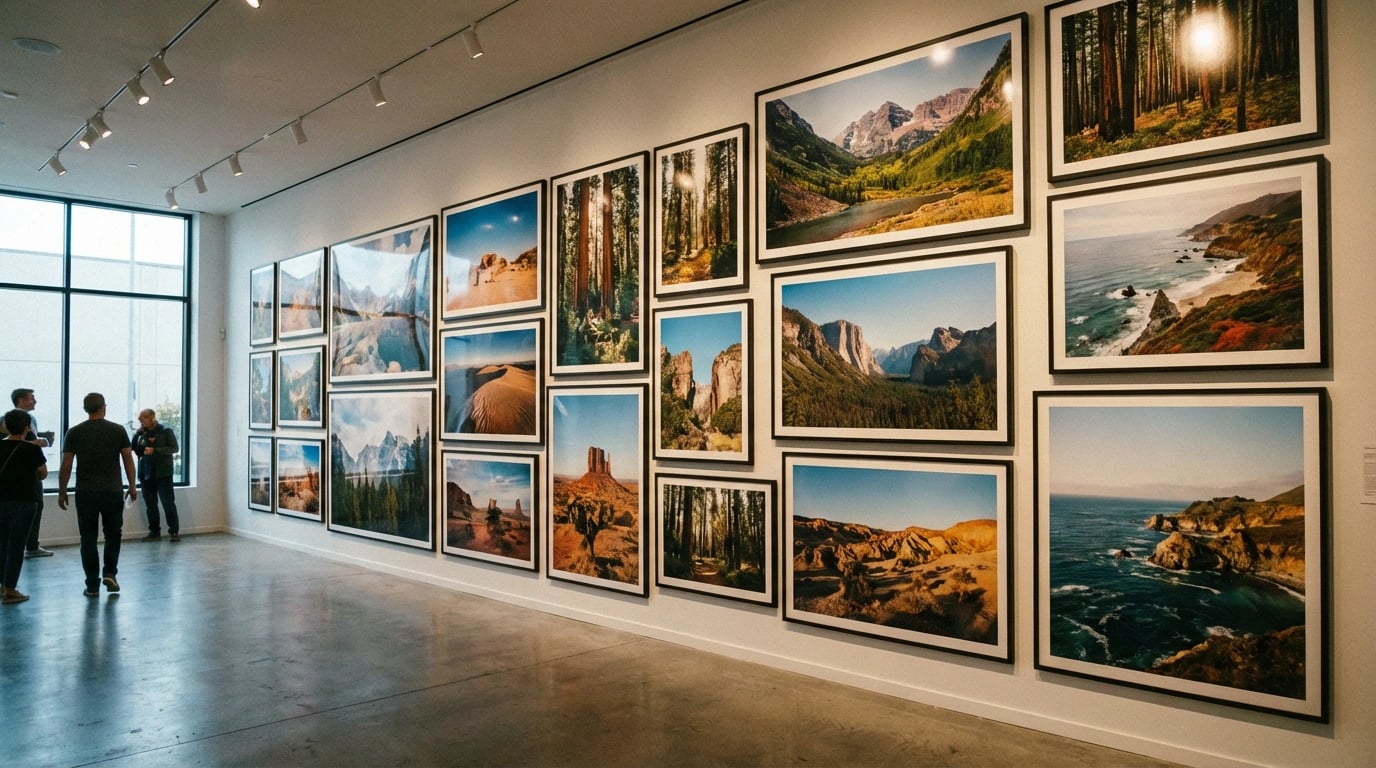
The landscape art print market has undergone dramatic transformation in recent months, reshaping where collectors and home decorators source quality pieces for their walls. From the closure of traditional gallery spaces to the emergence of specialized online platforms, understanding where to buy quality landscape art prints in 2024 requires navigating a rapidly evolving marketplace. The convergence of digital technology, changing consumer preferences, and shifts in retail infrastructure has created both challenges and unprecedented opportunities for art enthusiasts.
The most reliable sources for quality landscape art prints now span a diverse ecosystem of specialized online platforms, artist-direct websites, print-on-demand services, and hybrid gallery models. Major platforms like Saatchi Art and Artsy have expanded their landscape print offerings by 34% year-over-year according to their Q4 2023 earnings reports, while traditional retailers like Target and West Elm have partnered with independent artists to democratize access to quality prints. Meanwhile, dedicated print specialists such as King & McGaw in the UK and Australia’s own Print Decor have invested heavily in archival printing technology, positioning themselves as premium alternatives to mass-market options.
The Online Marketplace Revolution of 2023-2024
The landscape art print marketplace experienced seismic shifts throughout 2023 and early 2024. Saatchi Art, owned by Leaf Group since 2014, announced in September 2023 that landscape prints had become their fastest-growing category, with sales increasing 42% compared to 2022. This growth coincided with their implementation of augmented reality preview tools, allowing customers to visualize artwork in their spaces before purchasing.
Similarly, Artsy reported in their January 2024 market analysis that landscape photography and contemporary landscape paintings dominated their print sales, accounting for nearly one-third of all transactions under $500. The platform’s partnership with over 4,000 galleries worldwide has created an unprecedented selection, though navigating quality variations remains challenging for first-time buyers.
Meanwhile, Society6 and Redbubble have positioned themselves as accessible entry points for budget-conscious consumers. However, a February 2024 investigation by Consumer Reports found significant quality disparities among print-on-demand services, with paper weights varying from 170gsm to 310gsm even when advertised as “premium.” Therefore, understanding the technical specifications behind print quality has become essential for informed purchasing.
Specialized Platforms Emerge
Niche platforms focusing exclusively on landscape imagery have gained traction. Landscape Stories, launched in Berlin in March 2023, curates work from over 200 international photographers specializing in natural and urban landscapes. Their authentication process ensures all prints come directly from artists, eliminating intermediary markups that can inflate prices by 40-60%.
Additionally, The Print Emporium in Melbourne expanded their online presence in late 2023, offering museum-quality giclée prints on archival papers. Their partnership with Australian landscape photographers resulted in exclusive collections that sold out within days of release, demonstrating strong demand for regionally-focused artwork. This trend aligns perfectly with insights from contemporary landscape art styles that resonate with modern interior design.
Artist-Direct Platforms Gain Market Share
One of 2024’s most significant developments has been the migration of established artists away from third-party marketplaces toward self-hosted platforms. Colorado-based landscape photographer William Patino announced in January 2024 that his direct website sales had surpassed his combined marketplace revenue for the first time since launching his career in 2016.
This shift reflects broader frustration with commission structures on major platforms, which typically range from 15-40%. Consequently, artists retain more profit while offering customers lower prices. However, this fragmentation presents discovery challenges for buyers who previously relied on curated marketplaces.
Shopify reported in their Q1 2024 earnings that art print stores represented their fastest-growing merchant category, with over 18,000 new artist shops launched between October 2023 and March 2024. The platform’s integration with print fulfillment services like Printful and Prodigi has lowered technical barriers, enabling artists to manage inventory, printing, and shipping without significant upfront investment.
Building Trust Without Intermediaries
The challenge for artist-direct models remains establishing credibility. Without the implied endorsement of established platforms, artists must invest heavily in professional photography, detailed product descriptions, and transparent customer reviews. Emma Wilson, a Devon-based landscape painter, told The Guardian in December 2023 that her marketing budget increased 300% after transitioning to her own e-commerce site, though profit margins improved significantly.
Furthermore, payment security concerns persist. A March 2024 study by Digital Commerce 360 found that 67% of consumers felt more confident purchasing from established marketplaces versus individual artist websites, primarily due to standardized return policies and buyer protection programs. For those exploring this option, understanding essential purchasing criteria becomes even more critical when buying directly from artists.
Traditional Retailers Adapt or Fade
The traditional retail landscape for art prints has contracted dramatically. HomeGoods parent company TJX Companies announced in August 2023 that they would reduce wall art inventory by 25% across their chains, citing declining margins and increased competition from online specialists. This mirrors broader trends in physical retail art sales, which declined 18% industry-wide according to Art Basel’s 2024 market report.
However, some retailers have successfully pivoted. Target’s collaboration with emerging artists through their “Up and Rising” program, launched in May 2023, brought exclusive landscape print collections to stores nationwide. The program features diverse artists like Los Angeles-based Tiffanie Turner and Brooklyn’s Jeremiah Goodman, whose limited-edition landscape prints sold out within weeks of release.
IKEA expanded their art print offerings in February 2024, partnering with The National Gallery in London to offer reproductions of classical landscape paintings at accessible price points. This democratization strategy makes museum-quality imagery available to mass-market consumers, though purists question whether offset lithography can replicate the depth of original works or fine giclée prints.
Gallery Hybrid Models
Physical galleries haven’t disappeared entirely; rather, they’ve evolved. The Jealous Gallery in London implemented a “phygital” model in November 2023, where customers can view prints in person but complete purchases through an integrated online platform that offers broader inventory than physical space allows. This approach combines tactile evaluation with digital convenience.
Additionally, pop-up gallery events have surged in popularity. The Affordable Art Fair, with editions in cities from Singapore to Stockholm, reported 31% attendance growth in 2023 compared to 2019 levels. These temporary exhibitions allow multiple artists and galleries to share costs while providing buyers opportunities to assess print quality firsthand—something digital images cannot fully convey. When you find pieces that speak to you, knowing how to showcase them effectively maximizes their impact in your space.
Print Quality Standards and What to Look For
As purchasing options multiply, understanding quality indicators becomes paramount. The Fine Art Trade Guild updated their giclée print standards in October 2023, now requiring minimum 300 DPI resolution, pigment-based inks rated for 100+ years lightfastness, and acid-free archival substrates. Reputable sellers should clearly specify these technical details.
Paper selection significantly impacts longevity and appearance. Hahnemühle, a German manufacturer established in 1584, released their sustainability report in January 2024, detailing how their Photo Rag and Museum Etching papers have become industry standards for fine art reproduction. However, newer entrants like Breathing Color and Moab offer compelling alternatives at various price points.
Print method also matters considerably. Giclée printing using Epson SureColor or Canon imagePROGRAF printers produces superior color accuracy and tonal range compared to offset lithography or standard inkjet. A comparison test published by Digital Photo Pro in February 2024 demonstrated that giclée prints retained 94% of their original color vibrancy after five years of display, versus 67% for standard prints.
Certification and Authenticity
Limited edition prints should include certificates of authenticity detailing edition size, printing method, paper specifications, and artist signatures. The International Fine Print Dealers Association issued updated authentication guidelines in March 2024, recommending blockchain-based certificates to prevent counterfeiting—a growing problem as print values appreciate.
Moreover, buyers should verify return policies and satisfaction guarantees. Reputable sellers typically offer 30-60 day return windows, acknowledging that colors may appear different under various lighting conditions. This protection becomes especially important for online purchases where physical evaluation isn’t possible before commitment. Resources like comprehensive buying guides help navigate these considerations systematically.
Emerging Trends Reshaping the Market
Several emerging trends are fundamentally altering where and how consumers purchase landscape prints. Sustainability concerns have moved from niche consideration to mainstream priority. A survey by Art Business News in January 2024 found that 73% of art buyers under 40 consider environmental impact when selecting prints, driving demand for recycled papers, water-based inks, and carbon-neutral shipping.
Consequently, companies like Thrive Art Studio in Portland have built their entire business model around sustainable practices. Their February 2024 launch featured exclusively solar-powered printing facilities and compostable packaging, attracting environmentally conscious consumers willing to pay 15-20% premiums for aligned values.
Customization services represent another growth area. Printique (formerly AdoramaPix) expanded their custom framing and sizing options in December 2023, allowing customers to order landscape prints in non-standard dimensions matching specific wall spaces. This flexibility addresses a common frustration with fixed-size offerings from traditional retailers.
Subscription Models and Discovery Services
Subscription-based art services have gained unexpected traction. Art to My Door, launched in Australia in September 2023, delivers curated landscape prints quarterly for a flat monthly fee. Subscribers can rotate artwork seasonally, addressing design fatigue without long-term commitment or storage concerns.
Meanwhile, AI-powered recommendation engines are improving discovery. Singulart implemented machine learning algorithms in November 2023 that analyze browsing behavior, previous purchases, and stated preferences to suggest landscape prints aligned with individual aesthetic sensibilities. Early data suggests this approach increases conversion rates by approximately 28% compared to manual browsing.
These technological integrations complement the artistic elements that make landscape prints compelling. Understanding what constitutes exceptional landscape art helps buyers evaluate recommendations critically, whether generated by algorithms or human curators.
Making Informed Purchasing Decisions
Given this complex landscape, informed purchasing requires strategic approach. First, determine budget parameters and quality requirements. Entry-level prints from print-on-demand services range from $20-80, while limited edition giclée prints from established photographers typically cost $200-800. Investment-grade prints from renowned artists can exceed several thousand dollars.
Second, research the seller’s reputation thoroughly. Review independent feedback on platforms like Trustpilot and Better Business Bureau. Be cautious of sellers without transparent contact information, detailed return policies, or verifiable business credentials. The FBI’s Internet Crime Complaint Center reported in their 2023 annual report that art-related fraud increased 54% year-over-year, underscoring the importance of due diligence.
Third, request detailed specifications before purchasing. Legitimate sellers readily provide information about paper type, ink systems, printing methods, and dimensions. Reluctance to share technical details often indicates quality concerns or misleading marketing claims.
Balancing Price and Value
The lowest price rarely represents the best value. Bargain prints often use inferior materials that fade, yellow, or deteriorate within months. Conversely, premium pricing doesn’t automatically guarantee superior quality. Compare specifications across multiple sellers at similar price points to identify outliers and establish market baselines.
Additionally, consider total cost of ownership. Prints requiring custom framing add $100-500 to effective purchase price, while ready-to-hang options provide immediate value despite potentially higher upfront costs. Calculate these factors when comparing alternatives. For specific spaces, resources like room-specific selection guides provide targeted advice that helps maximize both aesthetic impact and budget efficiency.
Finally, explore physical viewing opportunities when possible. Many online retailers partner with showrooms or participate in art fairs where prints can be examined directly. This tactile evaluation reveals texture, color accuracy, and construction quality that photographs cannot fully convey. Check seller websites for upcoming exhibitions or permanent display locations near you, or visit the curated collections of specialized retailers focusing on your preferred aesthetic.
The landscape art print market continues evolving rapidly, with new platforms, technologies, and business models emerging regularly. By staying informed about industry developments, understanding quality indicators, and carefully vetting sellers, consumers can confidently navigate this dynamic marketplace. Whether purchasing from established platforms, directly from artists, or through innovative new channels, prioritizing transparency, quality specifications, and customer protections ensures satisfying acquisitions that enhance living spaces for years to come. The convergence of accessibility, quality, and variety has never been greater, positioning 2024 as an exceptional time for collectors and decorators to discover meaningful landscape artwork that transforms houses into homes.

|
joerussell Australian abstract artists based in Byron Bay and curator of the GumPrints art print collection. |
Leave a Reply