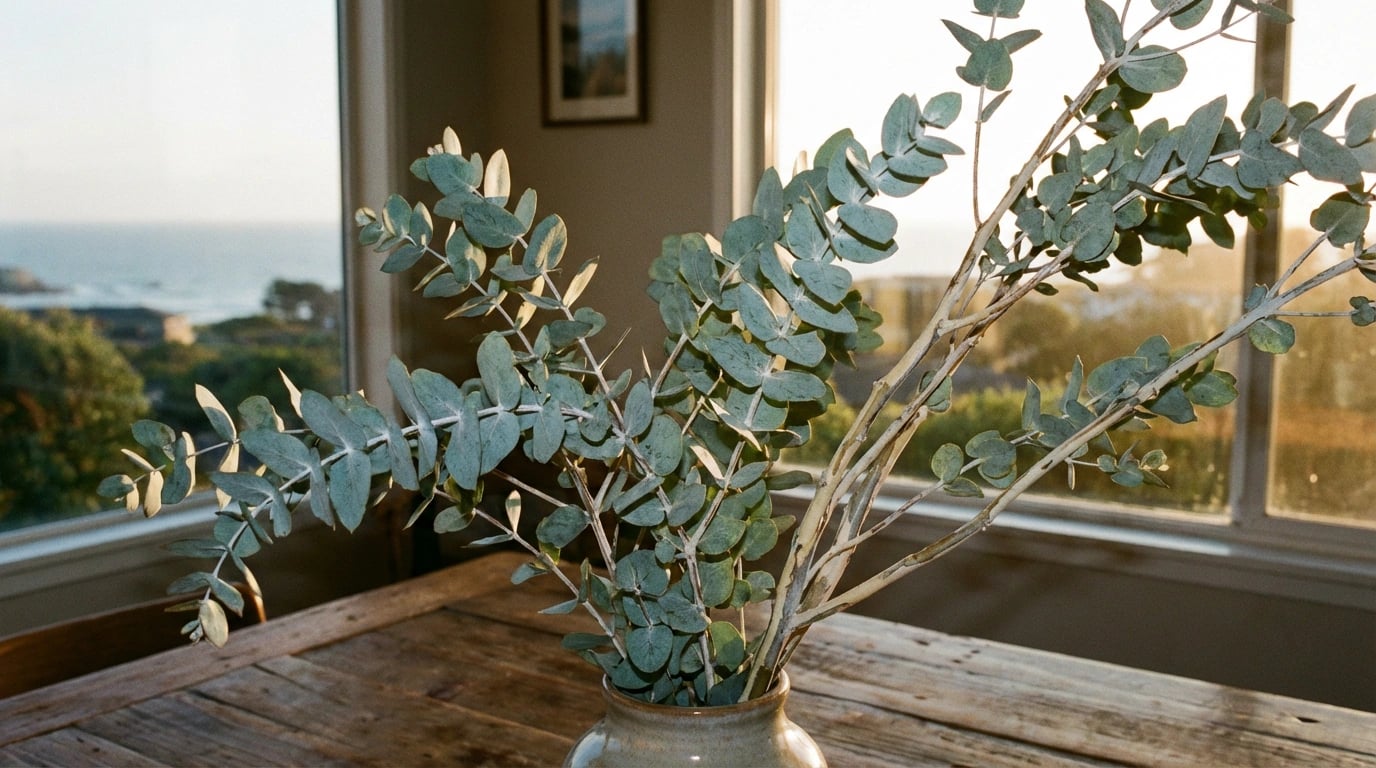
The ethereal beauty of eucalyptus branches has captivated artists for generations, and painting these distinctive silvery stems with watercolours offers a rewarding challenge that combines technical skill with creative expression. Whether you’re drawn to the delicate curves of hanging branches or the striking contrast of pale bark against deep foliage, mastering watercolour techniques for eucalyptus brings the essence of Australian flora to life on paper. This guide will walk you through the essential steps and techniques needed to capture the unique character of gum tree branches in your artwork.
Successfully rendering eucalyptus branches requires understanding their distinctive characteristics: the subtle colour variations from silver-grey to pale brown, the smooth texture with occasional bark remnants, and the graceful way branches curve and twist. The translucent nature of watercolours makes them ideally suited to capturing these delicate qualities, allowing you to build layers of colour that mimic the natural depth and luminosity of these beloved Australian trees. By following a methodical approach and mastering key techniques, you’ll develop the confidence to create stunning botanical artwork that celebrates these iconic branches.
Materials and Preparation
Before beginning your eucalyptus branch watercolour, gathering the right materials ensures a smoother creative process. Consequently, you’ll need quality watercolour paper with a minimum weight of 300gsm to prevent buckling when wet. Cold-pressed paper provides an excellent surface texture that captures the organic quality of branches beautifully.
Your colour palette should include the following essential pigments:
- Payne’s grey or neutral tint for the base silvery tones
- Raw umber and burnt sienna for warm undertones
- Ultramarine blue for cool shadow areas
- Yellow ochre for subtle warmth in highlights
- Sap green or viridian for any attached foliage
Additionally, invest in quality brushes including a medium round brush (size 6-8) for main branches and a fine detail brush (size 0-2) for smaller twigs. A flat brush (1-inch) proves useful for initial washes and background work. Furthermore, keep clean water containers, a mixing palette, and paper towels readily accessible throughout your painting session.
Understanding Eucalyptus Branch Structure
Observing real eucalyptus branches before painting dramatically improves your ability to render them convincingly. Gum tree branches typically exhibit smooth, cylindrical forms with gentle curves rather than angular turns. The branches taper gradually from thick main stems to delicate twigs, creating a natural hierarchy that guides the viewer’s eye through your composition.
Notice how eucalyptus branches often grow in opposing pairs or alternating patterns. Moreover, the bark’s distinctive silvery-grey colour results from the shedding process that exposes fresh layers beneath. This creates subtle colour variations along each branch, with some areas appearing almost white whilst others show hints of tan or pale green.
When studying branch structure, pay attention to how light interacts with the smooth cylindrical surface. Highlights appear along the top edges where light strikes directly, whilst shadows curve around the underside. This understanding of form and light becomes crucial when building depth in your watercolour work. Therefore, taking time to sketch several quick studies helps internalise these patterns before committing to your final piece.
Observing Natural Growth Patterns
Eucalyptus branches demonstrate remarkable diversity depending on species. Some varieties display gracefully drooping branches, whilst others grow more upright with distinctive angular joints. Different gum species offer unique characteristics worth exploring. Visit local parks or gardens to photograph reference material, or collect fallen branches for close observation in your studio.
Step-by-Step Painting Technique
Step 1: Create an Initial Sketch
Begin with a light pencil drawing mapping out your branch composition. Keep lines minimal and focus on capturing the overall flow and major directional changes. Avoid heavy pencil marks that might show through delicate watercolour washes. Consider the composition carefully, ensuring branches lead the eye naturally through the picture plane.
Step 2: Apply the Base Wash
Mix a pale wash combining Payne’s grey with a touch of raw umber and generous water. Using your medium round brush, apply this mixture to establish the basic branch forms. Work quickly whilst the paper remains wet, allowing colours to blend naturally. Leave the very top edge of each branch white or extremely pale to suggest reflected light. This foundation layer should be quite transparent.
Step 3: Build Shadow Layers
Once the base wash dries completely, mix a slightly darker tone using more pigment and less water. Apply this along the underside of branches to create dimensional form. The watercolour glazing technique allows you to build depth gradually through multiple transparent layers. Each subsequent layer should be slightly smaller than the previous one, leaving gradations of tone that suggest the curved surface.
Step 4: Add Colour Variation
Eucalyptus branches rarely appear uniformly grey. Therefore, introduce subtle colour shifts by dropping diluted yellow ochre into still-damp shadow areas or adding touches of ultramarine blue for cooler tones. These variations create visual interest and authenticity. Work with a light touch, as eucalyptus branches maintain their characteristic silvery appearance despite subtle colour notes.
Working Wet-on-Wet Versus Wet-on-Dry
Understanding when to use wet-on-wet versus wet-on-dry techniques proves essential for eucalyptus branches. Wet-on-wet creates soft, diffused edges perfect for capturing the smooth transitions on bark surfaces. Conversely, wet-on-dry applications produce crisp edges ideal for defining branch edges and adding textural details. Alternating between these approaches throughout your painting process yields the most convincing results.
Adding Details and Finishing Touches
Once your basic branch structure appears solid, focus shifts to the details that bring authenticity to your work. Fine twigs extending from main branches should be painted with your smallest brush using confident, flowing strokes. These delicate elements add grace and movement to your composition, particularly when they overlap or intersect with other branches.
Consider adding subtle texture suggestions where bark naturally peels or roughens. A nearly dry brush with concentrated pigment can be dragged lightly across the paper surface to create these effects. However, restraint remains crucial—eucalyptus bark’s defining characteristic is its smoothness, so textural elements should be minimal and strategic rather than overwhelming.
If including foliage, keep leaves loose and impressionistic to maintain focus on the branches themselves. The distinctive elongated eucalyptus leaves can be suggested with simple brushstrokes using various green mixtures. This approach complements traditional botanical art principles whilst maintaining a contemporary watercolour aesthetic. Additionally, you might explore how contemporary gum art interprets these natural forms.
Creating Atmospheric Depth
To suggest three-dimensional space, branches in the foreground should display stronger contrast and more detail than those receding into the background. Furthermore, background branches benefit from softer edges and lighter values. This atmospheric perspective technique helps viewers understand spatial relationships within your composition naturally.
Common Challenges and Solutions
Many artists struggle with achieving the characteristic silvery quality of eucalyptus branches. The solution lies in restraint—using less pigment rather than more. The white of the paper contributes significantly to this luminous appearance, so preserve those light areas carefully throughout your painting process.
Another common challenge involves creating convincing cylindrical forms. Remember that shadows on round objects curve gradually rather than ending abruptly. Practice painting simple cylinders separately to develop your understanding of how light wraps around curved surfaces. Moreover, the gradual darkening from light to shadow creates the dimensional illusion essential for realistic branches.
Overworking watercolours represents perhaps the most frequent pitfall. Eucalyptus branches benefit from fresh, direct brushwork rather than excessive layering. If colours become muddy, step back and allow the painting to dry completely before assessing whether additional work is truly necessary. Often, less intervention produces more convincing results, allowing the watercolour medium’s inherent transparency and luminosity to shine through.
Preserving Freshness in Your Work
Maintaining the fresh, spontaneous quality that makes watercolours so appealing requires decisive brushwork and knowing when to stop. Each stroke should be intentional and confident. Additionally, limiting the number of layers prevents colours from becoming dull or overworked. The beauty of eucalyptus-inspired artwork often lies in its simplicity and directness.
As you develop your skills with watercolour eucalyptus branches, remember that practice and observation remain your greatest teachers. Study how established artists approach similar subjects, visit galleries featuring Australian native botanical works, and most importantly, spend time observing real eucalyptus branches in various lighting conditions. Each painting session builds your understanding and technical facility, gradually developing an intuitive approach to capturing these beautiful silvery branches. With patience and practice, you’ll discover your own unique interpretation of these iconic Australian forms, creating artwork that celebrates the distinctive character of gum trees through the delicate medium of watercolour.

|
joerussell Australian abstract artists based in Byron Bay and curator of the GumPrints art print collection. |
Leave a Reply