Blog

  • Grow Your Own Eucalyptus Oasis

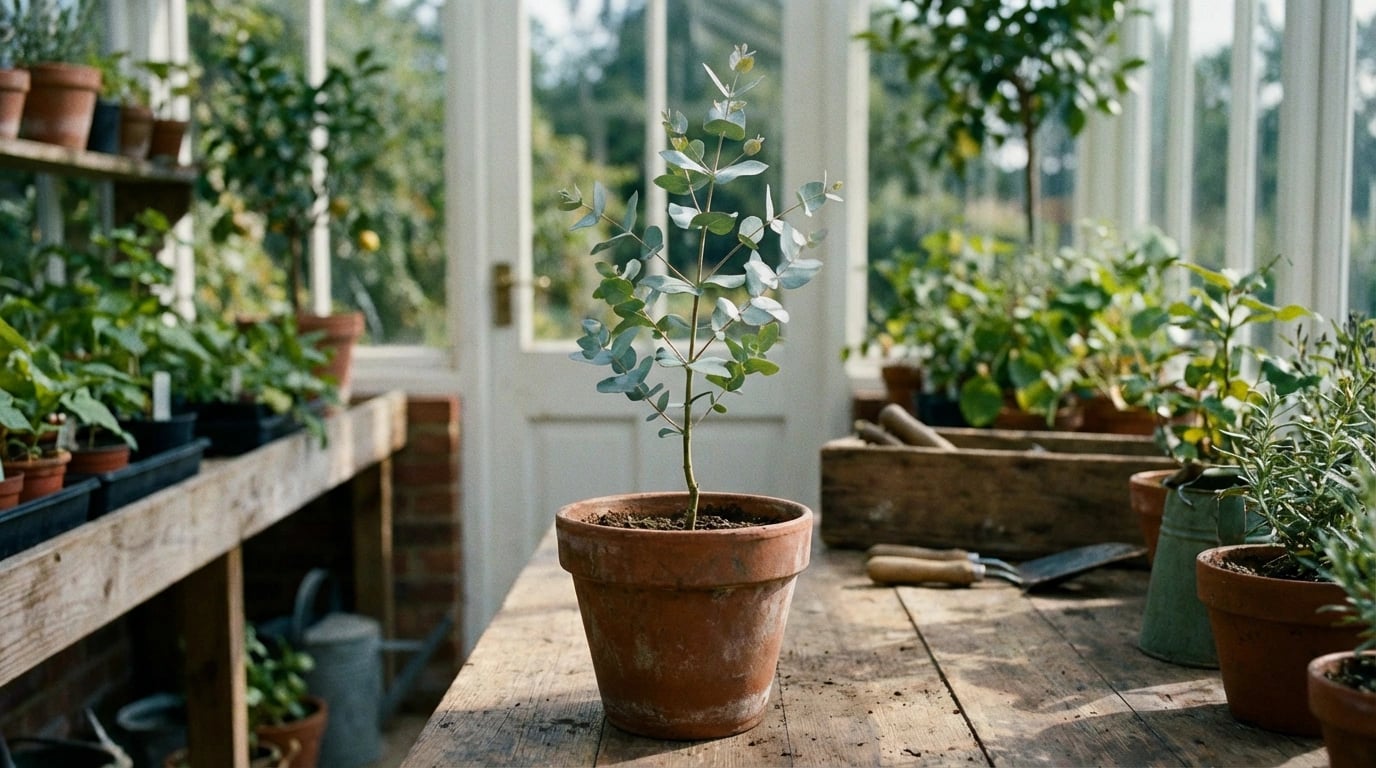
    Grow Your Own Eucalyptus Oasis

    Transforming your home garden into a fragrant, silvery-leafed sanctuary begins with selecting the right eucalyptus species. Among the hundreds of gum tree varieties native to Australia, choosing the best eucalyptus species for home gardens requires careful consideration of climate, space, and aesthetic goals. Whether you’re drawn to their aromatic foliage, decorative bark, or wildlife-attracting properties, eucalyptus trees offer unique beauty and versatility for residential landscapes.

    The ideal eucalyptus species for your garden depends on several key factors: available space, local climate conditions, and intended purpose. For compact gardens, dwarf varieties like Eucalyptus gunnii ‘Azura’ or Eucalyptus parvula stay manageable at 3-5 metres. Medium-sized properties benefit from Eucalyptus nicholii or Eucalyptus caesia, which reach 8-12 metres with stunning visual appeal. Larger blocks can accommodate Eucalyptus leucoxylon or Eucalyptus torquata. Additionally, consider whether you want cut foliage for arrangements, shade provision, or simply ornamental value when making your selection.

    Step 1: Assess Your Available Space and Growing Conditions

    Before selecting eucalyptus species, thoroughly evaluate your garden’s characteristics. Measure the planting area to determine how much vertical and horizontal space you can dedicate. Most eucalyptus varieties grow rapidly, so understanding mature dimensions prevents future problems with structures, power lines, or neighbouring properties.

    Additionally, analyse your soil type, drainage patterns, and sunlight exposure. Eucalyptus trees generally thrive in full sun with at least six hours of direct light daily. Test your soil pH—most species prefer slightly acidic to neutral conditions (5.5-7.0). Furthermore, observe drainage after heavy rain, as waterlogged roots cause significant problems for these Australian natives.

    Consider your local climate zone and frost frequency. While many eucalyptus species tolerate light frosts, young plants need protection during establishment. Research average temperatures and rainfall patterns to ensure compatibility with your chosen varieties. Consequently, matching species to your microclimate increases success rates dramatically.

    Step 2: Select the Best Eucalyptus Species for Your Needs

    Compact Gardens (Under 50 Square Metres)

    For limited spaces, dwarf eucalyptus varieties prevent overcrowding whilst maintaining aesthetic appeal. Eucalyptus gunnii ‘Azura’ (Cider Gum) produces stunning blue-grey foliage and responds excellently to coppicing—cutting back annually to maintain shrub-like proportions. This technique keeps plants below 2 metres whilst encouraging juvenile foliage prized for floral arrangements and botanical art.

    Eucalyptus parvula (Small-leaved Gum) naturally stays compact at 3-4 metres with pendulous branches and small, rounded leaves. This species suits courtyard gardens and contemporary landscapes beautifully. Similarly, Eucalyptus vernicosa (Varnished Gum) forms a dense, slow-growing shrub ideal for container cultivation or rock gardens.

    Medium-Sized Gardens (50-200 Square Metres)

    Medium properties accommodate stunning ornamental species that balance size with visual impact. Eucalyptus nicholii (Narrow-leaved Black Peppermint) reaches approximately 10 metres with weeping foliage creating elegant, fine-textured canopies. Its narrow leaves rustle pleasantly in breezes, adding sensory dimension to garden spaces.

    Eucalyptus caesia (Gungurru) offers spectacular pink-red flowers and silvery bark on a graceful, weeping form. This Western Australian native grows 8-10 metres and tolerates poor soils remarkably well. Meanwhile, Eucalyptus torquata (Coral Gum) produces vibrant pink-red flowers against grey-green foliage, creating striking focal points in garden beds.

    Larger Properties (Over 200 Square Metres)

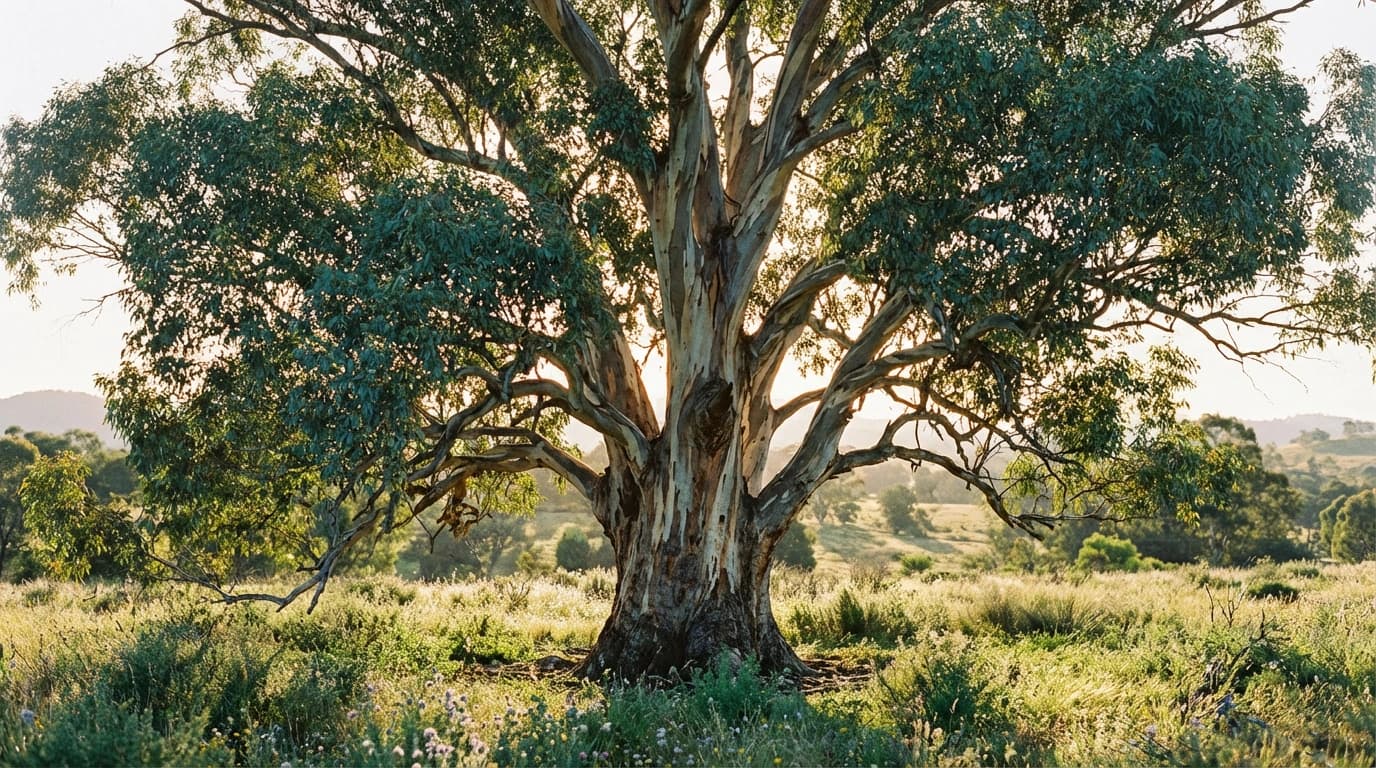
    Expansive gardens support magnificent eucalyptus species that showcase the genus’s full grandeur. Eucalyptus leucoxylon (Yellow Gum) develops beautiful mottled bark in cream, grey, and pink tones whilst producing prolific winter flowers attracting native birds. This species reaches 15-20 metres and tolerates various soil types.

    Eucalyptus sideroxylon (Red Ironbark) combines durability with ornamental value through rough, dark bark contrasting with cream to pink blossoms. According to the Australian National Botanic Gardens, this species demonstrates exceptional drought tolerance once established, making it ideal for sustainable landscapes.

    Step 3: Prepare Your Planting Site Properly

    Clear the Planting Area

    Remove all weeds, grass, and debris from a circle at least 1 metre in diameter. Eucalyptus seedlings compete poorly with established vegetation during early growth stages. Therefore, creating a weed-free zone ensures young plants access sufficient nutrients and moisture.

    Improve Soil Drainage

    Dig a hole twice the width of your plant’s root ball but only as deep. Eucalyptus roots grow horizontally rather than deeply, so shallow, wide planting encourages proper establishment. If your soil drains poorly, incorporate coarse sand or gypsum to improve structure. However, avoid adding rich compost or fertilisers—eucalyptus species evolved in nutrient-poor conditions and excessive richness promotes weak, disease-prone growth.

    Test drainage by filling the planting hole with water and observing how quickly it drains. Water should disappear within 2-4 hours. Consequently, if drainage seems inadequate, consider creating a raised mound or selecting a more suitable location. Many gardeners also find inspiration in understanding the natural growing conditions that eucalyptus species prefer.

    Step 4: Plant Your Eucalyptus Correctly

    Timing Your Planting

    Plant eucalyptus during cooler months—autumn or early spring—when temperatures moderate and rainfall typically increases. This timing allows root systems to establish before summer heat stress or winter frost challenges young plants. Moreover, autumn planting gives seedlings maximum establishment time before their first summer.

    Planting Technique

    Carefully remove your eucalyptus from its container, gently teasing out circling roots without damaging the root ball. Position the plant so the soil level matches its previous depth—planting too deeply causes collar rot. Backfill with excavated soil, firming gently to eliminate air pockets whilst avoiding excessive compaction. Create a shallow basin around the plant to direct water toward roots during establishment.

    Water thoroughly immediately after planting, applying approximately 10 litres slowly to ensure deep penetration. Subsequently, apply a 75mm layer of coarse mulch around the plant, keeping it away from the trunk to prevent collar rot. Suitable mulches include eucalyptus bark, wood chips, or leaf litter.

    Step 5: Establish Proper Care Routines

    Watering During Establishment

    Newly planted eucalyptus requires regular watering for the first 12-18 months until root systems establish. Water deeply once or twice weekly during dry periods, providing 10-20 litres per session depending on plant size and weather conditions. However, always allow soil to dry between waterings—constant moisture encourages root diseases.

    Once established, most eucalyptus species tolerate extended dry periods remarkably well. In fact, overwatering mature specimens causes more problems than drought. Therefore, reduce watering frequency gradually as plants mature, eventually providing supplementary water only during prolonged droughts.

    Fertilisation Considerations

    Eucalyptus species generally require minimal fertilisation. If growth seems weak, apply native plant fertiliser sparingly in early spring. Avoid phosphorus-rich products—eucalyptus evolved in phosphorus-poor soils and excessive amounts cause toxicity. Furthermore, slow-release, low-phosphorus formulations suit eucalyptus best, preventing nutrient surges that promote soft, disease-susceptible growth.

    Those interested in cultivating eucalyptus for creative purposes might explore how artists capture the unique characteristics of eucalyptus foliage or discover ways to incorporate eucalyptus aesthetics into home design.

    Step 6: Maintain Shape and Health Through Pruning

    Strategic pruning maintains eucalyptus size, shape, and vigour. For compact varieties, annual coppicing in late winter promotes bushy growth with attractive juvenile foliage. Cut stems to within 30-60cm of ground level, encouraging multiple shoots that create dense, shrub-like forms perfect for smaller gardens.

    Larger specimens benefit from formative pruning during early years to establish strong structure. Remove competing leaders, weak branches, and inward-growing limbs whilst the tree remains manageable. Subsequently, mature eucalyptus requires minimal pruning beyond removing dead wood or branches compromising safety.

    Always prune during dry weather to minimise disease risk, and sterilise tools between cuts. Consequently, clean cuts heal faster and reduce infection opportunities. Most eucalyptus species respond vigorously to pruning, so don’t hesitate to shape plants confidently whilst respecting their natural growth habits.

    Monitor your eucalyptus regularly for pest or disease issues, though these Australian natives generally resist problems when grown in appropriate conditions. Watch for lerp psyllids, which create white waxy covers on leaves but rarely cause serious damage. Similarly, occasional leaf spot or powdery mildew appears during humid conditions but typically resolves without intervention.

    Creating your eucalyptus oasis enriches your garden with distinctive Australian character whilst supporting native wildlife. These remarkable trees offer year-round interest through evergreen foliage, decorative bark, and often spectacular flowers. Moreover, their adaptability and low-maintenance requirements make them excellent choices for sustainable, water-wise landscapes. By selecting appropriate species and following proper establishment techniques, you’ll enjoy these magnificent natives for decades whilst contributing to local biodiversity and connecting with Australia’s rich botanical heritage. Browse the collection of eucalyptus-inspired artwork to further celebrate these iconic trees in your home.

    joerussell

    joerussell

    Australian abstract artists based in Byron Bay and curator of the GumPrints art print collection.

  • Grow Thriving Eucalyptus: The Gum Tree Secret

    Grow Thriving Eucalyptus: The Gum Tree Secret

    Growing eucalyptus in your Australian garden brings an authentic touch of native beauty whilst supporting local wildlife and the environment. These iconic gum trees offer year-round interest with their distinctive aromatic foliage, striking bark patterns and graceful form. Whether you’re planting a towering forest red gum or a compact dwarf variety for a container, understanding the fundamentals of eucalyptus cultivation ensures your trees thrive for generations.

    Successfully cultivating eucalyptus requires matching the right species to your climate, providing excellent drainage, and understanding their unique growth habits. Most species prefer full sun exposure, minimal fertilisation, and infrequent deep watering once established. The key lies in replicating their natural Australian habitat conditions – poor soils, plenty of light, and good air circulation. With proper site selection and minimal intervention, eucalyptus plants become remarkably low-maintenance additions to your landscape.

    Choosing the Right Eucalyptus Species

    Selecting an appropriate species represents the most critical decision in your eucalyptus growing journey. Australia boasts over 700 eucalyptus species, each adapted to specific climatic conditions and soil types. Consider your available space carefully, as some species reach heights exceeding 40 metres whilst others remain compact shrubs under three metres.

    For cooler climates, species like Eucalyptus pauciflora (Snow Gum) and Eucalyptus dalrympleana (Mountain Gum) tolerate frost and snow. Conversely, tropical regions suit species such as Eucalyptus miniata (Darwin Woollybutt). Coastal gardeners should explore salt-tolerant varieties including Eucalyptus robusta (Swamp Mahogany).

    Furthermore, consider the ornamental qualities that appeal to you. Some gardeners favour species with visually striking foliage perfect for artistic displays, whilst others prioritise flowering characteristics or decorative bark patterns. Research the mature dimensions, growth rate, and maintenance requirements before purchasing.

    Popular Species for Home Gardens

    • Eucalyptus gunnii (Cider Gum) – Hardy, compact growth with silvery-blue juvenile foliage
    • Eucalyptus cinerea (Silver Dollar Gum) – Prized for its rounded, aromatic leaves
    • Eucalyptus leucoxylon (Yellow Gum) – Spectacular pink or white flowers
    • Eucalyptus caesia (Gungurru) – Stunning weeping habit with large pink flowers
    • Eucalyptus torquata (Coral Gum) – Compact size ideal for smaller gardens

    Site Selection and Soil Preparation

    Eucalyptus plants demand full sun exposure to develop their characteristic form and vigour. Choose a location receiving at least six hours of direct sunlight daily. Additionally, ensure adequate spacing from buildings, as extensive root systems may interfere with foundations and underground services. Most species develop large canopies requiring considerable clearance.

    Soil drainage represents the paramount concern when establishing eucalyptus. These Australian natives evolved in nutrient-poor soils with excellent drainage, making them particularly susceptible to root rot in waterlogged conditions. Heavy clay soils require amendment with coarse sand and organic matter to improve drainage significantly.

    Preparing Your Planting Site

    Begin by testing your soil pH, aiming for slightly acidic to neutral conditions between 5.5 and 7.0. Meanwhile, incorporate aged compost or well-rotted manure sparingly – excessive organic matter can harm eucalyptus. Dig a hole twice the width of your root ball but no deeper, as planting too deeply encourages stem rot.

    If drainage concerns persist, consider constructing raised mounds or beds. This technique proves particularly effective in regions with high rainfall or naturally heavy soils. The Australian Department of Agriculture and Water Resources provides valuable guidance on soil management for native species.

    Planting Your Eucalyptus

    Timing significantly influences establishment success. In temperate regions, plant during autumn or early spring when temperatures remain moderate and rainfall more reliable. However, avoid planting during extreme weather periods, as young eucalyptus struggle with temperature stress whilst establishing root systems.

    Step-by-Step Planting Process

    First, thoroughly water your potted eucalyptus several hours before planting. Consequently, the root ball remains intact during transplanting, minimising shock. Carefully remove the plant from its container, gently teasing out circling roots without damaging the root system excessively.

    Position the plant so the root collar sits level with the surrounding soil surface. Backfill with excavated soil, firming gently to eliminate air pockets whilst avoiding compaction. Create a shallow watering basin around the plant extending to the drip line. Apply a thorough initial watering, allowing moisture to penetrate deeply.

    Staking proves unnecessary for most eucalyptus plantings unless exposed to strong winds. If required, use flexible ties and remove stakes within twelve months to encourage natural trunk strength development. Much like the magnificent specimens that inspire Australian artists, your tree will develop character through natural movement and growth.

    Watering and Fertilising Requirements

    Newly planted eucalyptus require consistent moisture during their first growing season whilst establishing extensive root systems. Water deeply once or twice weekly, adjusting for rainfall and temperature. Deep, infrequent watering encourages roots to penetrate deeply rather than remaining shallow and vulnerable.

    Once established after approximately twelve months, most eucalyptus tolerate extended dry periods remarkably well. Indeed, overwatering established trees causes more problems than underwatering. During severe drought, provide occasional deep watering to prevent excessive stress, particularly for younger specimens under five years old.

    Fertilisation Guidelines

    Eucalyptus evolved in nutrient-poor Australian soils, therefore requiring minimal fertilisation compared to exotic species. Excessive nutrients, particularly phosphorus, prove toxic to many eucalyptus species. Avoid phosphorus-rich fertilisers entirely, as they damage root systems and reduce nutrient uptake efficiency.

    If growth appears slow or foliage pale, apply a low-phosphorus native plant fertiliser sparingly during spring. Alternatively, a light application of aged compost around the root zone provides gentle nutrition. Generally, established eucalyptus growing in reasonable soil require no supplementary feeding whatsoever.

    Pruning and Ongoing Maintenance

    Eucalyptus naturally develop attractive forms with minimal intervention. However, strategic pruning enhances shape, manages size, and encourages the silvery juvenile foliage prized by florists and artists. Moreover, certain species respond remarkably well to coppicing – cutting back to ground level to produce multiple stems with abundant juvenile leaves.

    Pruning Techniques for Healthy Growth

    Conduct formative pruning during late winter or early spring before active growth commences. Remove dead, damaged, or crossing branches using clean, sharp tools. For species grown specifically for foliage production, regular tip pruning encourages bushy growth and maintains juvenile leaf characteristics favoured in botanical art compositions.

    Young trees benefit from removing lower branches gradually as they mature, creating clear trunk space. Nevertheless, avoid removing more than one-quarter of the canopy in any single session. Heavy pruning stresses trees unnecessarily and may stimulate excessive epicormic growth.

    Mulching proves beneficial for moisture retention and temperature moderation. Apply organic mulch in a doughnut shape around the tree, keeping material away from the trunk to prevent collar rot. Refresh mulch annually, maintaining a depth of approximately 75-100 millimetres.

    Troubleshooting Common Issues

    Despite their general hardiness, eucalyptus occasionally experience problems requiring attention. Recognising symptoms early enables prompt intervention, preventing minor issues from becoming serious threats. Most problems stem from unsuitable growing conditions rather than pests or diseases.

    Yellowing Foliage

    Chlorotic or yellowing leaves typically indicate overwatering, poor drainage, or nutrient imbalances. Check soil moisture levels and ensure adequate drainage. Alternatively, phosphorus toxicity causes similar symptoms, particularly if inappropriate fertilisers have been applied. Consequently, cease all fertilisation and improve drainage immediately.

    Pest Management

    Eucalyptus rarely suffer serious pest damage in their native range. Psyllids occasionally cause leaf distortion, whilst Christmas beetles may defoliate young trees. Generally, healthy vigorous trees tolerate pest damage without intervention. Avoid chemical pesticides that harm beneficial insects and native wildlife.

    Possums and koalas browsing foliage indicate you’ve created valuable habitat. Whilst browsing occasionally appears severe, established trees recover readily. Physical barriers protect particularly vulnerable young specimens if necessary.

    Environmental Stress

    Drought stress manifests as wilting foliage and premature leaf drop. Provide supplementary watering during extended dry periods. Conversely, waterlogged conditions cause similar symptoms alongside fungal issues. Improving drainage addresses waterlogging problems effectively.

    The artistic beauty of eucalyptus extends beyond living specimens. Many enthusiasts discover creative inspiration through capturing their elegant forms in watercolour paintings or exploring various artistic interpretations of gum trees. Browse our curated collection of eucalyptus-inspired artwork to celebrate these magnificent Australian icons.

    Successfully growing eucalyptus transforms your garden into a thriving native ecosystem whilst celebrating Australia’s botanical heritage. By selecting appropriate species, providing excellent drainage, and respecting their minimal care requirements, your eucalyptus will flourish for decades. These resilient trees reward patient gardeners with year-round beauty, distinctive fragrance, and invaluable habitat for native wildlife. Start your eucalyptus growing journey today and experience the satisfaction of nurturing these iconic Australian treasures.

    joerussell

    joerussell

    Australian abstract artists based in Byron Bay and curator of the GumPrints art print collection.

  • Watercolor Eucalyptus: Capturing Silvery Branches

    Watercolor Eucalyptus: Capturing Silvery Branches

    The ethereal beauty of eucalyptus branches has captivated artists for generations, and painting these distinctive silvery stems with watercolours offers a rewarding challenge that combines technical skill with creative expression. Whether you’re drawn to the delicate curves of hanging branches or the striking contrast of pale bark against deep foliage, mastering watercolour techniques for eucalyptus brings the essence of Australian flora to life on paper. This guide will walk you through the essential steps and techniques needed to capture the unique character of gum tree branches in your artwork.

    Successfully rendering eucalyptus branches requires understanding their distinctive characteristics: the subtle colour variations from silver-grey to pale brown, the smooth texture with occasional bark remnants, and the graceful way branches curve and twist. The translucent nature of watercolours makes them ideally suited to capturing these delicate qualities, allowing you to build layers of colour that mimic the natural depth and luminosity of these beloved Australian trees. By following a methodical approach and mastering key techniques, you’ll develop the confidence to create stunning botanical artwork that celebrates these iconic branches.

    Materials and Preparation

    Before beginning your eucalyptus branch watercolour, gathering the right materials ensures a smoother creative process. Consequently, you’ll need quality watercolour paper with a minimum weight of 300gsm to prevent buckling when wet. Cold-pressed paper provides an excellent surface texture that captures the organic quality of branches beautifully.

    Your colour palette should include the following essential pigments:

    • Payne’s grey or neutral tint for the base silvery tones
    • Raw umber and burnt sienna for warm undertones
    • Ultramarine blue for cool shadow areas
    • Yellow ochre for subtle warmth in highlights
    • Sap green or viridian for any attached foliage

    Additionally, invest in quality brushes including a medium round brush (size 6-8) for main branches and a fine detail brush (size 0-2) for smaller twigs. A flat brush (1-inch) proves useful for initial washes and background work. Furthermore, keep clean water containers, a mixing palette, and paper towels readily accessible throughout your painting session.

    Understanding Eucalyptus Branch Structure

    Observing real eucalyptus branches before painting dramatically improves your ability to render them convincingly. Gum tree branches typically exhibit smooth, cylindrical forms with gentle curves rather than angular turns. The branches taper gradually from thick main stems to delicate twigs, creating a natural hierarchy that guides the viewer’s eye through your composition.

    Notice how eucalyptus branches often grow in opposing pairs or alternating patterns. Moreover, the bark’s distinctive silvery-grey colour results from the shedding process that exposes fresh layers beneath. This creates subtle colour variations along each branch, with some areas appearing almost white whilst others show hints of tan or pale green.

    When studying branch structure, pay attention to how light interacts with the smooth cylindrical surface. Highlights appear along the top edges where light strikes directly, whilst shadows curve around the underside. This understanding of form and light becomes crucial when building depth in your watercolour work. Therefore, taking time to sketch several quick studies helps internalise these patterns before committing to your final piece.

    Observing Natural Growth Patterns

    Eucalyptus branches demonstrate remarkable diversity depending on species. Some varieties display gracefully drooping branches, whilst others grow more upright with distinctive angular joints. Different gum species offer unique characteristics worth exploring. Visit local parks or gardens to photograph reference material, or collect fallen branches for close observation in your studio.

    Step-by-Step Painting Technique

    Step 1: Create an Initial Sketch

    Begin with a light pencil drawing mapping out your branch composition. Keep lines minimal and focus on capturing the overall flow and major directional changes. Avoid heavy pencil marks that might show through delicate watercolour washes. Consider the composition carefully, ensuring branches lead the eye naturally through the picture plane.

    Step 2: Apply the Base Wash

    Mix a pale wash combining Payne’s grey with a touch of raw umber and generous water. Using your medium round brush, apply this mixture to establish the basic branch forms. Work quickly whilst the paper remains wet, allowing colours to blend naturally. Leave the very top edge of each branch white or extremely pale to suggest reflected light. This foundation layer should be quite transparent.

    Step 3: Build Shadow Layers

    Once the base wash dries completely, mix a slightly darker tone using more pigment and less water. Apply this along the underside of branches to create dimensional form. The watercolour glazing technique allows you to build depth gradually through multiple transparent layers. Each subsequent layer should be slightly smaller than the previous one, leaving gradations of tone that suggest the curved surface.

    Step 4: Add Colour Variation

    Eucalyptus branches rarely appear uniformly grey. Therefore, introduce subtle colour shifts by dropping diluted yellow ochre into still-damp shadow areas or adding touches of ultramarine blue for cooler tones. These variations create visual interest and authenticity. Work with a light touch, as eucalyptus branches maintain their characteristic silvery appearance despite subtle colour notes.

    Working Wet-on-Wet Versus Wet-on-Dry

    Understanding when to use wet-on-wet versus wet-on-dry techniques proves essential for eucalyptus branches. Wet-on-wet creates soft, diffused edges perfect for capturing the smooth transitions on bark surfaces. Conversely, wet-on-dry applications produce crisp edges ideal for defining branch edges and adding textural details. Alternating between these approaches throughout your painting process yields the most convincing results.

    Adding Details and Finishing Touches

    Once your basic branch structure appears solid, focus shifts to the details that bring authenticity to your work. Fine twigs extending from main branches should be painted with your smallest brush using confident, flowing strokes. These delicate elements add grace and movement to your composition, particularly when they overlap or intersect with other branches.

    Consider adding subtle texture suggestions where bark naturally peels or roughens. A nearly dry brush with concentrated pigment can be dragged lightly across the paper surface to create these effects. However, restraint remains crucial—eucalyptus bark’s defining characteristic is its smoothness, so textural elements should be minimal and strategic rather than overwhelming.

    If including foliage, keep leaves loose and impressionistic to maintain focus on the branches themselves. The distinctive elongated eucalyptus leaves can be suggested with simple brushstrokes using various green mixtures. This approach complements traditional botanical art principles whilst maintaining a contemporary watercolour aesthetic. Additionally, you might explore how contemporary gum art interprets these natural forms.

    Creating Atmospheric Depth

    To suggest three-dimensional space, branches in the foreground should display stronger contrast and more detail than those receding into the background. Furthermore, background branches benefit from softer edges and lighter values. This atmospheric perspective technique helps viewers understand spatial relationships within your composition naturally.

    Common Challenges and Solutions

    Many artists struggle with achieving the characteristic silvery quality of eucalyptus branches. The solution lies in restraint—using less pigment rather than more. The white of the paper contributes significantly to this luminous appearance, so preserve those light areas carefully throughout your painting process.

    Another common challenge involves creating convincing cylindrical forms. Remember that shadows on round objects curve gradually rather than ending abruptly. Practice painting simple cylinders separately to develop your understanding of how light wraps around curved surfaces. Moreover, the gradual darkening from light to shadow creates the dimensional illusion essential for realistic branches.

    Overworking watercolours represents perhaps the most frequent pitfall. Eucalyptus branches benefit from fresh, direct brushwork rather than excessive layering. If colours become muddy, step back and allow the painting to dry completely before assessing whether additional work is truly necessary. Often, less intervention produces more convincing results, allowing the watercolour medium’s inherent transparency and luminosity to shine through.

    Preserving Freshness in Your Work

    Maintaining the fresh, spontaneous quality that makes watercolours so appealing requires decisive brushwork and knowing when to stop. Each stroke should be intentional and confident. Additionally, limiting the number of layers prevents colours from becoming dull or overworked. The beauty of eucalyptus-inspired artwork often lies in its simplicity and directness.

    As you develop your skills with watercolour eucalyptus branches, remember that practice and observation remain your greatest teachers. Study how established artists approach similar subjects, visit galleries featuring Australian native botanical works, and most importantly, spend time observing real eucalyptus branches in various lighting conditions. Each painting session builds your understanding and technical facility, gradually developing an intuitive approach to capturing these beautiful silvery branches. With patience and practice, you’ll discover your own unique interpretation of these iconic Australian forms, creating artwork that celebrates the distinctive character of gum trees through the delicate medium of watercolour.

    joerussell

    joerussell

    Australian abstract artists based in Byron Bay and curator of the GumPrints art print collection.

  • Gum art

    Gum art

    Gum art represents one of Australia’s most distinctive and celebrated artistic traditions, capturing the essence of the nation’s iconic eucalyptus trees through various creative mediums. From delicate watercolours depicting intricate gum leaves to bold abstract interpretations of ancient forests, this artistic genre has become synonymous with Australian identity and natural beauty. Whether you’re an artist seeking inspiration, a collector exploring native botanical art, or simply curious about this uniquely Australian art form, understanding gum art opens up a world of creative possibilities rooted in our spectacular natural landscape.

    This comprehensive guide explores everything you need to know about gum art, from its historical significance to contemporary techniques, artistic styles, and how to incorporate these stunning works into your home or creative practice. The versatility of gum trees as artistic subjects—with their distinctive bark, graceful foliage, and ever-changing colours—has inspired generations of Australian artists to create works that celebrate our native flora in ways both traditional and innovative.

    Understanding Gum Art: Origins and Significance

    The tradition of depicting eucalyptus trees in Australian art stretches back thousands of years, beginning with Indigenous Australian rock art and bark paintings. Aboriginal artists have long understood the spiritual and practical significance of gum trees, incorporating them into creation stories and documenting their uses in traditional culture. These early representations established gum trees not merely as botanical subjects but as powerful cultural symbols embodying the Australian landscape’s soul.

    European settlers arriving in Australia encountered these unfamiliar trees with fascination and, initially, bewilderment. Early colonial artists documented eucalyptus species with scientific precision, creating botanical illustrations that served both artistic and educational purposes. As Australian national identity developed throughout the nineteenth and twentieth centuries, gum trees became increasingly prominent in landscape paintings, symbolising the unique character of the Australian bush. Artists like Hans Heysen elevated gum tree painting to fine art, capturing the majestic beauty of ancient eucalypts with extraordinary technical skill.

    Today, gum art encompasses a vast spectrum of interpretations, from photorealistic renderings to highly stylised abstractions. The eucalyptus genus itself offers remarkable diversity, with over 700 species providing endless inspiration for artists. This botanical variety translates into artistic diversity, with each species offering distinctive visual characteristics—from the smooth, multicoloured bark of rainbow gums to the papery texture of scribbly gums and the towering presence of mountain ash.

    Artistic Techniques and Mediums

    Gum art practitioners employ numerous techniques and mediums, each offering unique possibilities for capturing eucalyptus beauty. Watercolour remains exceptionally popular for botanical gum art, allowing artists to achieve the delicate translucency of gum leaves and the subtle colour variations in bark. The medium’s fluid nature perfectly suits depicting the graceful movement of gum branches and the dappled light filtering through eucalyptus canopies.

    Oil painting provides artists with the capacity to build rich, textured surfaces that convey the depth and character of ancient gum forests. This medium particularly excels at capturing the complex colour palettes found in gum tree bark—the ochres, greys, whites, and occasional vibrant tones that make eucalyptus bark so visually striking. Meanwhile, acrylic painting offers versatility and quick drying times, making it ideal for both detailed botanical studies and bold contemporary interpretations.

    Printmaking techniques have become increasingly popular in gum art, with artists exploring methods for capturing gum leaves through various processes. Linocut, etching, and screen printing each offer distinctive aesthetic qualities suited to different artistic visions. Photography and digital art have also emerged as significant mediums, with artists using modern technology to capture and manipulate images of gum trees in innovative ways that challenge traditional representations.

    Mixed Media and Experimental Approaches

    Contemporary artists increasingly combine multiple mediums to create layered, textural works that explore gum trees through experimental lenses. Collage techniques incorporating actual gum leaves, bark fragments, or seed pods add three-dimensional elements and authentic materiality. Some artists integrate resin, gold leaf, or unconventional materials to create works that push beyond traditional botanical art boundaries whilst maintaining their connection to eucalyptus subjects.

    Styles and Interpretations in Gum Art

    Gum art encompasses remarkable stylistic diversity, reflecting both individual artistic vision and broader movements within Australian art. Botanical realism remains a cornerstone approach, with artists meticulously documenting eucalyptus species’ anatomical details. These works serve educational purposes whilst demonstrating exceptional observational skills and technical precision, creating scientifically accurate yet aesthetically compelling representations.

    Impressionistic gum art captures the atmospheric qualities of eucalyptus landscapes—the shimmer of light on silver-grey foliage, the haze of distance in vast forests, the movement of leaves in coastal breezes. This approach prioritises emotional resonance and sensory impression over photographic accuracy, evoking the experience of being within gum tree environments rather than simply observing them. The result often feels more experiential and evocative than strictly representational works.

    Abstract interpretations have gained considerable prominence in contemporary gum art, with artists reducing eucalyptus forms to essential shapes, colours, and patterns. These works might focus on the rhythmic repetition of leaves, the organic curves of branches, or the colour harmonies found in bark textures. Abstract gum art allows viewers to engage with eucalyptus imagery in fresh ways, discovering new visual relationships and emotional responses. The “Gum print 2” exemplifies this approach, translating the essence of gum trees into abstract visual language that captures their spirit without literal representation.

    Minimalist gum art strips away extraneous detail, focusing on singular elements—perhaps a single gum leaf suspended against negative space, or the elegant silhouette of a solitary tree. This reductive approach emphasises form, composition, and the power of simplicity, creating contemplative works that invite sustained viewing and reflection.

    Creating Your Own Gum Art

    Beginning your gum art journey requires both observation and experimentation. Spending time amongst eucalyptus trees provides essential visual research—notice how light interacts with leaves, how bark textures change across species, how branches create distinctive patterns against sky. Photographing gum trees from various angles and in different lighting conditions builds a valuable reference library for studio work.

    Understanding which gum leaves make the best art subjects helps focus your artistic exploration. Different eucalyptus species offer varied visual characteristics—some with broad, rounded leaves; others with narrow, lance-shaped foliage. Consider what qualities attract you most: colour, texture, shape, or the way leaves cluster on branches. These observations inform your artistic choices and help develop your distinctive approach.

    Essential Materials and Setup

    Your chosen medium determines specific material requirements, but certain basics apply across approaches. Quality paper or canvas provides the foundation for lasting work. For botanical studies, consider hot-pressed watercolour paper with smooth surfaces ideal for detailed work. For expressive paintings, cold-pressed papers or stretched canvases offer more texture and tooth.

    Invest in good brushes appropriate to your medium—fine detail brushes for botanical precision, broader brushes for expressive mark-making. If working with watercolours, professional-grade paints offer superior pigment quality and mixing properties compared to student grades. Similarly, artist-quality oils or acrylics provide better coverage, colour intensity, and longevity than economy options.

    Developing Your Artistic Voice

    Whilst learning from established artists provides valuable foundations, developing your unique perspective on gum trees distinguishes memorable art from competent copies. Explore stories behind Australian eucalyptus art to understand how other artists have found their distinctive voices. Consider what aspects of gum trees resonate most deeply with you—their ecological importance, their aesthetic beauty, their cultural significance, or their personal meaning.

    Experimentation proves essential in discovering your style. Try different approaches: render the same subject realistically, impressionistically, then abstractly. Work in varied colour palettes, from naturalistic to highly stylised. Combine techniques or introduce unconventional materials. This exploratory process, whilst sometimes frustrating, ultimately reveals what feels most authentic to your artistic vision.

    Collecting and Displaying Gum Art

    Building a gum art collection allows you to surround yourself with works celebrating Australia’s iconic trees whilst supporting local artists. When selecting pieces, consider how they complement your space aesthetically and what they communicate about your connection to Australian landscape and culture. Quality matters more than quantity—a single exceptional piece often provides more satisfaction than numerous mediocre works.

    Exploring options through dedicated galleries and online platforms like our shop provides access to diverse gum art styles and price points. Original paintings command higher prices but offer unique ownership of one-of-a-kind works. Limited edition prints provide more accessible entry points whilst maintaining artistic integrity and investment potential. Consider the artist’s reputation, the work’s condition, and provenance when making significant purchases.

    Displaying gum art effectively requires thoughtful consideration of lighting, placement, and framing. Natural light beautifully illuminates gum art but ensure artworks avoid direct sunlight, which causes fading over time. Picture lights or track lighting provide controlled illumination that enhances viewing without causing damage. The relationship between eucalyptus prints and interior design offers guidance on integrating these works harmoniously into various spaces.

    Framing and Preservation

    Professional framing protects your investment whilst enhancing presentation. Conservation-grade materials—acid-free mats, UV-protective glass or acrylic, and quality frames—ensure longevity. For works on paper, mounting and matting create visual breathing room and physical separation from glazing. Framing choices should complement rather than overpower the artwork, with simpler frames often serving contemporary and abstract pieces best, whilst more ornate options suit traditional botanical studies.

    Regular maintenance keeps gum art looking its best. Dust frames gently with soft, dry cloths. Monitor humidity levels, as excessive moisture or dryness affects both paper and canvas. If moving house, wrap framed works in protective materials and transport them upright rather than flat to prevent pressure damage.

    Contemporary gum art increasingly intersects with environmental consciousness, with artists using eucalyptus imagery to raise awareness about habitat conservation, climate change impacts, and biodiversity loss. These works transcend pure aesthetics, functioning as visual activism that prompts viewers to consider their relationship with Australian ecosystems. Some artists donate proceeds from gum art sales to environmental organisations, creating direct connections between art appreciation and conservation action.

    Digital technologies are transforming how artists create and share gum art. Digital painting software enables experimentation without material costs, whilst social media platforms provide unprecedented opportunities for artists to reach global audiences. Augmented reality applications allow viewers to visualise how gum art appears in their spaces before purchasing, whilst virtual galleries make Australian art accessible worldwide. Learning to paint like Australia through eucalyptus mastery now involves both traditional skills and digital literacy.

    The integration of Indigenous perspectives and collaboration between Indigenous and non-Indigenous artists enriches contemporary gum art with deeper cultural understanding and shared storytelling. These partnerships acknowledge that eucalyptus trees carry profound significance within Aboriginal culture, with knowledge systems developed over tens of thousands of years. Respectful collaboration creates opportunities for cultural exchange that benefits both artists and audiences, producing works that honour traditional connections whilst exploring contemporary expression.

    Emerging Artists and Innovation

    A new generation of Australian artists brings fresh perspectives to gum art, often combining traditional subjects with contemporary techniques and conceptual frameworks. These emerging practitioners explore themes of identity, place, and belonging through eucalyptus imagery, creating works that resonate with contemporary audiences whilst maintaining connections to established traditions. Supporting emerging artists through purchases and commissions nurtures this creative ecosystem’s continued vitality.

    Installation art incorporating gum trees—whether actual tree elements, large-scale projections, or immersive environments—pushes gum art beyond conventional formats. These experiential works transform viewers’ relationships with eucalyptus imagery, creating memorable encounters that challenge passive observation. As exhibition spaces evolve and audiences seek more interactive experiences, installation-based gum art will likely expand.

    Sustainable Practices

    Artists increasingly adopt sustainable practices in creating gum art, using environmentally responsible materials, non-toxic paints, and ethically sourced papers and canvases. Some incorporate fallen gum leaves and bark rather than harvesting from living trees, ensuring their art practice doesn’t harm the subjects they celebrate. This ecological mindfulness aligns artistic practice with the environmental values many gum art collectors hold dear.

    The broader trend toward Australian native floral prints reflects growing appreciation for indigenous flora beyond purely decorative purposes. As Australians increasingly embrace native gardens and sustainable landscaping, gum art serves both aesthetic and educational functions, familiarising people with eucalyptus diversity whilst beautifying their environments.

    In conclusion, gum art represents a dynamic, evolving field that honours Australia’s natural heritage whilst embracing contemporary innovation. Whether you’re creating, collecting, or simply appreciating these works, engaging with gum art deepens your connection to the eucalyptus trees that define Australian landscapes. As environmental challenges intensify and cultural conversations evolve, gum art will undoubtedly continue adapting, ensuring these magnificent trees remain celebrated through visual creativity for generations to come. The enduring appeal of eucalyptus as artistic subject matter testifies to both their visual splendour and their profound significance within Australian consciousness.

    joerussell

    joerussell

    Australian abstract artists based in Byron Bay and curator of the GumPrints art print collection.

  • Botanical Art

    Botanical Art

    Botanical art represents one of the most captivating and historically significant forms of artistic expression. This comprehensive ultimate guide explores the world of botanical illustration, from its rich history to modern applications in contemporary design. Whether you’re an artist, collector, or simply someone who appreciates the beauty of nature rendered on canvas, this guide will provide you with essential knowledge about botanical art and its enduring appeal.

    Botanical art encompasses detailed, scientifically accurate illustrations of plants, flowers, and botanical specimens. Unlike general floral painting, botanical art prioritises precision and educational value, often serving both aesthetic and scientific purposes. This art form has flourished for centuries, evolving from medicinal plant documentation to fine art display pieces. Today, botanical artwork remains highly valued in interior design, botanical research, and fine art collections worldwide.

    The History and Evolution of Botanical Illustration

    Botanical art boasts a fascinating history spanning centuries. During the Renaissance period, detailed plant illustrations emerged as essential tools for botanists and physicians studying medicinal properties. These early scientific illustrations laid the groundwork for what would become a respected artistic discipline. The botanical art tradition (Wikipedia) demonstrates how this field evolved from pure documentation to celebrated fine art.

    The seventeenth and eighteenth centuries witnessed an explosion of botanical art across Europe. Artists like Pierre-Joseph Redouté gained international recognition for their exquisite rose illustrations. These works combined scientific accuracy with artistic beauty, establishing standards that persist today. Major botanical gardens and royal collections became repositories for these treasured artworks, elevating their status beyond mere reference materials.

    Australian botanical art holds particular significance in contemporary times. Native flora such as eucalyptus trees and wildflowers have inspired generations of artists. The unique characteristics of Australian plants provide endless creative possibilities. Exploring trees in art and their botanical representations reveals how regional botanicals shape artistic traditions. Furthermore, understanding the hidden stories within Australian eucalyptus art demonstrates the cultural depth these works contain.

    Techniques and Materials for Creating Botanical Art

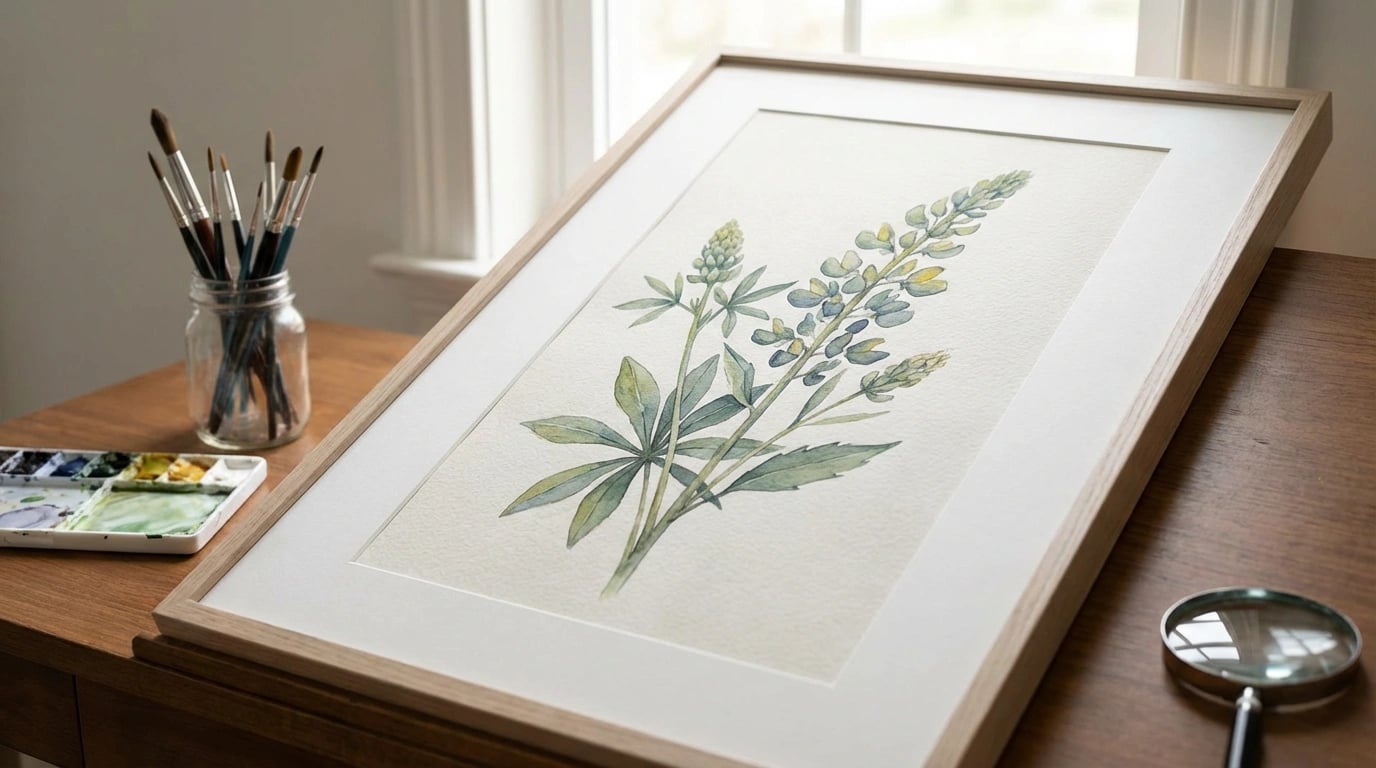
    botanical art supplies arranged - Techniques and Materials for Creating Botanical Art

    Creating authentic botanical art requires both technical skill and artistic sensibility. Traditional methods employ watercolour, gouache, and pen-and-ink techniques. These mediums allow artists to capture intricate details whilst maintaining vibrant colours. Watercolour remains particularly popular because it enables subtle colour gradations essential for realistic plant representation.

    Modern botanical artists employ diverse approaches and materials. Digital illustration has expanded possibilities for contemporary practitioners. However, traditional methods continue to dominate among collectors and galleries. Each technique requires understanding plant anatomy, growth patterns, and seasonal variations. Artists must develop keen observational skills to accurately represent botanical subjects.

    Professional botanical illustrators follow established conventions. Subject positioning typically showcases the plant’s defining characteristics—leaves, flowers, root systems, and seed structures. Scale references ensure scientific accuracy. Proper lighting reveals three-dimensional form whilst maintaining botanical clarity. These principles apply whether working with traditional botanical art styles or contemporary botanical art approaches.

    Modern Applications and Contemporary Trends

    digital botanical illustration tablet - Modern Applications and Contemporary Trends

    Botanical art transcends gallery walls in contemporary society. Interior designers increasingly incorporate botanical illustrations into home décor schemes. These artworks add sophistication whilst connecting interior spaces with natural elements. Incorporating eucalyptus prints in interior design demonstrates how botanical art enhances modern living spaces. The versatility of botanical subjects means they complement diverse decorative styles.

    Fashion, product design, and publishing industries actively utilise botanical artwork. Textile designers draw inspiration from detailed plant illustrations. Publishers commission botanical art for gardening guides, educational materials, and lifestyle publications. Museums and botanical institutions maintain extensive collections, with many now offering high-quality reproductions for public appreciation.

    Digital Reproduction and Accessibility

    Technology has democratised access to botanical art. High-resolution digital reproductions make museum-quality pieces affordable for everyday collectors. Our shop offers curated botanical artwork selections suitable for various budgets and preferences. Print-on-demand technology allows artists to create small-batch or individual pieces without excessive costs. This accessibility has expanded the botanical art market significantly.

    Building Your Own Botanical Art Collection

    Starting a botanical art collection requires understanding what resonates with your aesthetic preferences. Consider your space, colour palette, and personal interests. Some collectors focus on specific plant families, geographic regions, or artistic periods. Others prioritise acquiring works by recognised artists or museum-quality pieces.

    Quality indicators for botanical artwork include:

    • Accurate botanical representation and scientific detail
    • Superior colour vibrancy and longevity
    • Artist reputation and exhibition history
    • Archival-quality materials and framing
    • Provenance and authenticity documentation
    • Appropriate sizing for your intended display space

    Beginning collectors should educate themselves about different styles and periods. Research living artists, historical masters, and emerging talents. Visit galleries, botanical gardens, and museums to experience botanical art directly. Exploring different botanical art styles and periods helps inform your collecting journey. Networking with other collectors provides valuable insights and recommendations.

    The Future of Botanical Artwork

    Botanical art continues evolving whilst maintaining traditional values. Contemporary artists experiment with mixed media, incorporating photographic elements, collage, and unconventional materials. Sustainability concerns inspire artists to explore environmentally conscious practices. Digital tools augment rather than replace traditional skills, creating hybrid approaches that honour botanical art’s heritage.

    Scientific illustration maintains critical importance as biodiversity documentation becomes increasingly urgent. Artists contribute to conservation efforts by creating awareness through beautiful, accurate representations. Understanding eucalyptus trees as artistic muses connects us to broader environmental storytelling. Educational institutions recognise botanical art’s value in teaching plant science, anatomy, and ecology.

    The global market for botanical art strengthens annually. Collectors seek authentic, meaningful artwork that combines beauty with substance. Museums expand their botanical collections and present innovative exhibitions exploring the discipline’s significance. Whether you’re beginning your collecting journey or deepening existing expertise, botanical art offers inexhaustible creative and intellectual rewards. Its timeless appeal ensures that botanical artwork will remain cherished for generations to come.

  • 7 Hidden Stories Behind Australian Eucalyptus Art

    7 Hidden Stories Behind Australian Eucalyptus Art

    Australian landscape art carries within it layers of meaning that extend far beyond the visible brushstrokes and colours. At the heart of this artistic tradition stands the eucalyptus, a tree so intrinsically woven into the nation’s identity that its representation in art becomes a portal to understanding Australia’s cultural soul. From the early colonial painters to contemporary abstract artists, eucalyptus trees have been interpreted, reimagined and celebrated in ways that reveal hidden narratives about place, identity and belonging.

    The stories behind eucalyptus art reveal a complex relationship between artists and the Australian landscape. These narratives encompass Indigenous knowledge systems, colonial perspectives, environmental concerns and the ongoing quest to capture the unique quality of Australian light. Each artistic interpretation of the gum tree carries with it a story that speaks to broader themes of national identity, environmental stewardship and the distinctly Australian aesthetic that has emerged over centuries.

    The Colonial Misunderstanding: When European Eyes First Met Gum Trees

    When European artists first arrived in Australia, they struggled profoundly to represent the eucalyptus tree. Trained in the traditions of European landscape painting, where deciduous trees provided familiar forms and predictable seasonal changes, these artists found the gum tree bewildering. The peeling bark, the silvery-grey foliage, and the peculiar way light filtered through eucalyptus canopies defied their artistic conventions.

    Early colonial paintings often depicted eucalyptus trees as though they were English oaks or European elms, with dense, dark foliage and sturdy proportions that bore little resemblance to reality. This artistic miscommunication reveals a deeper cultural story: the difficulty of seeing and understanding a landscape through unfamiliar eyes. The hidden narrative here is one of cultural displacement and the gradual, sometimes painful process of learning to see Australia on its own terms rather than through a European lens.

    These early misrepresentations weren’t merely technical failures but reflected a broader colonial mindset that struggled to value what was different. The eucalyptus, with its unconventional beauty, challenged artists to develop entirely new visual vocabularies. This transition period in Australian art history tells a story of cultural adaptation that mirrors the broader settler experience of coming to terms with an unfamiliar continent.

    Indigenous Knowledge Encoded in Bark and Leaf

    Long before European settlement, Indigenous Australians had developed sophisticated artistic traditions that incorporated eucalyptus in both medium and subject. Bark paintings, created on eucalyptus bark itself, represent one of the world’s oldest continuous art traditions. The hidden story here involves the encyclopaedic knowledge of eucalyptus species, their properties and their cultural significance encoded within these artworks.

    Each representation of a eucalyptus tree or its components in Indigenous art carries layers of meaning related to Dreaming stories, seasonal calendars and ecological relationships. The choice of which eucalyptus bark to use for painting, how to prepare it and what to depict upon it represents knowledge accumulated over tens of thousands of years. This artistic tradition demonstrates an intimate understanding of eucalyptus biology that modern science is only beginning to fully appreciate.

    Moreover, the continuation of these artistic practices represents cultural resilience and the ongoing transmission of traditional knowledge. When contemporary Indigenous artists incorporate eucalyptus motifs into their work, they’re participating in an unbroken artistic lineage whilst also asserting cultural sovereignty. This narrative challenges the colonial assumption that Australian art history began with European settlement, revealing instead a far richer and more ancient artistic tradition.

    The Heidelberg School Revolution: Claiming an Australian Light

    The Heidelberg School painters of the 1880s and 1890s initiated a radical shift in how eucalyptus trees were represented in Australian art. Artists like Tom Roberts, Arthur Streeton and Frederick McCubbin ventured into the bush around Melbourne, determined to capture the distinctive quality of Australian light as it played through eucalyptus canopies. Their plein air approach marked the first sustained artistic attempt to see and represent eucalyptus trees authentically.

    The hidden story behind this movement involves a deliberate effort to forge a distinctly Australian artistic identity. These artists recognised that capturing the eucalyptus accurately meant rejecting European artistic conventions that simply didn’t apply to the Australian landscape. The silvery-blue haze of eucalyptus foliage, the dramatic contrasts between sunlit bark and deep shadow, and the sparse, vertical composition of gum tree forests required new techniques and fresh eyes. For those interested in exploring how eucalyptus trees have inspired Australian artists, this period represents a pivotal moment in the nation’s cultural development.

    This artistic revolution also carried political undertones. By celebrating the eucalyptus landscape, these artists were making a statement about Australian nationalism during a period when federation loomed on the horizon. The gum tree became a symbol of emerging national identity, and its representation in art became an act of cultural assertion. The landscapes these artists created weren’t merely aesthetic achievements but statements about what it meant to be Australian.

    Modernist Abstraction: Eucalyptus as Symbol

    As Australian art entered the modernist period, eucalyptus imagery underwent further transformation. Artists began abstracting the gum tree’s forms, using eucalyptus motifs symbolically rather than representationally. The distinctive patterns of eucalyptus bark, the rhythmic verticality of forest compositions, and the colour palette of grey-greens and ochres became visual shorthand for Australian identity itself.

    Contemporary abstract interpretations of eucalyptus continue this tradition, distilling the essence of the gum tree into colour, form and texture. Works like the Gum print 1 and Gum print 2 demonstrate how modern artists extract the essential qualities of eucalyptus—its textures, its colours, and its emotional resonance—and present them in abstract forms that speak to both aesthetic and cultural sensibilities.

    The hidden narrative in modernist eucalyptus art involves the ongoing negotiation between local and global artistic movements. Australian abstract artists working with eucalyptus themes participate in international modernist conversations whilst simultaneously asserting a distinctly Australian voice. This dual identity—being both globally connected and locally rooted—mirrors the broader Australian cultural experience and finds perfect expression in abstracted eucalyptus imagery.

    The Environmental Awakening: Art as Conservation

    From the 1970s onwards, eucalyptus art increasingly carried environmental messages as Australians became more aware of ecological threats facing native forests. Artists began using eucalyptus imagery to draw attention to deforestation, climate change and biodiversity loss. The hidden story here involves art’s role in shaping environmental consciousness and galvanising conservation movements.

    Artworks depicting eucalyptus forests took on new urgency as these ecosystems faced mounting pressures. Artists documented threatened species of eucalyptus, commemorated forests lost to logging, and celebrated the ecological richness of intact bushland. This environmental turn in eucalyptus art represents a shift from aesthetic appreciation to active advocacy, with the gum tree becoming a symbol of fragile ecosystems requiring protection.

    The relationship between eucalyptus imagery in contemporary spaces and environmental awareness continues to evolve. When people choose eucalyptus art for their homes, they’re often making a statement about their connection to nature and their environmental values. This transforms the artwork from mere decoration into a form of ecological commitment, a daily reminder of the natural world we’re responsible for protecting. According to Australia’s Department of Climate Change, Energy, the Environment and Water, numerous eucalyptus species are currently listed as threatened, making their artistic celebration particularly poignant.

    Contemporary Interpretations: Eucalyptus in the Digital Age

    Contemporary artists working with eucalyptus themes have access to technologies and platforms previous generations could never have imagined. Digital photography, digital painting, mixed media and installation art have expanded the possibilities for representing eucalyptus in innovative ways. Yet the hidden story involves continuity as much as innovation—contemporary artists still grapple with the same fundamental challenge of capturing the essence of the Australian landscape.

    Social media and online galleries have democratised eucalyptus art, allowing artists to share their work globally and connect with audiences who may never visit Australia but nonetheless feel drawn to eucalyptus imagery. This digital dissemination has made eucalyptus a recognisable symbol of Australia worldwide, contributing to how the nation is perceived internationally. The gum tree has become visual shorthand for Australian identity in the global imagination.

    Furthermore, contemporary artists increasingly engage with scientific understanding of eucalyptus biology, ecology and evolution. Collaborations between artists and scientists produce work that is both aesthetically compelling and scientifically informed. These interdisciplinary approaches reveal hidden stories about eucalyptus adaptation, resilience and diversity that enrich both artistic and scientific understanding. Artists exploring which eucalyptus species offer the most compelling visual qualities draw upon this growing body of knowledge.

    Eucalyptus Art as Cultural Export

    The final hidden story behind Australian eucalyptus art involves its role as cultural ambassador. When Australian artists exhibit eucalyptus-themed work internationally, they’re sharing a distinctly Australian perspective with global audiences. These artworks become windows into Australian identity, landscape and values, shaping how the world understands this continent at the bottom of the globe.

    International collectors who acquire Australian eucalyptus art are purchasing more than aesthetic objects—they’re buying into a narrative about place, ecology and identity. The eucalyptus becomes a conversation starter, a point of cultural exchange and a tangible connection to Australia. This export of cultural meaning through artistic representation represents soft power, building international understanding and appreciation for Australian perspectives.

    Moreover, the global popularity of Australian eucalyptus art has economic implications, supporting Australian artists and contributing to the nation’s creative economy. When visitors browse the collection of eucalyptus-inspired artworks, they’re participating in this cultural and economic exchange. The commercial success of eucalyptus art validates its cultural significance and ensures that future generations of artists will continue exploring and celebrating these iconic trees.

    The stories hidden within Australian eucalyptus art are ultimately stories about seeing, understanding and belonging. From colonial miscommunication to contemporary environmental advocacy, from Indigenous knowledge systems to modernist abstraction, the artistic representation of eucalyptus traces the evolution of Australian identity itself. Each artwork becomes a chapter in this ongoing narrative, a visual record of how Australians have understood themselves and their landscape across time. Those interested in mastering the artistic techniques for capturing eucalyptus are participating in this rich tradition, adding their own voices to a conversation that spans millennia. As Australia faces environmental challenges and cultural changes, eucalyptus art will undoubtedly continue to evolve, revealing new hidden stories for future generations to discover and interpret.

    joerussell

    joerussell

    Australian abstract artists based in Byron Bay and curator of the GumPrints art print collection.

  • Eucalyptus Trees: Muses Behind Australia’s Canvas

    Eucalyptus Trees: Muses Behind Australia’s Canvas

    The eucalyptus tree has captivated Australian artists for over a century, transforming from a simple botanical subject into one of the nation’s most recognisable artistic motifs. From the sweeping landscapes of the Heidelberg School to contemporary abstract interpretations, these iconic native trees have shaped how we visually understand the Australian continent. The interplay of light on their distinctive foliage, the sculptural quality of their bark, and the ethereal quality of their silvery-green leaves create an endlessly fascinating subject for artists seeking to capture the essence of the Australian landscape.

    The relationship between eucalyptus trees in Australian landscape art runs deeper than mere representation. These trees embody Australia’s natural identity, and their depiction in art reflects broader cultural conversations about land, heritage, and environmental change. Recent developments in the Australian art market have seen a resurgence of interest in native botanical subjects, particularly among emerging artists and collectors seeking authentic representations of the Australian environment. This renewed focus has prompted galleries, museums, and artists to reconsider how traditional landscape painting techniques can coexist with modern interpretive approaches to showcase these magnificent trees.

    The Historical Foundation of Eucalyptus in Australian Art

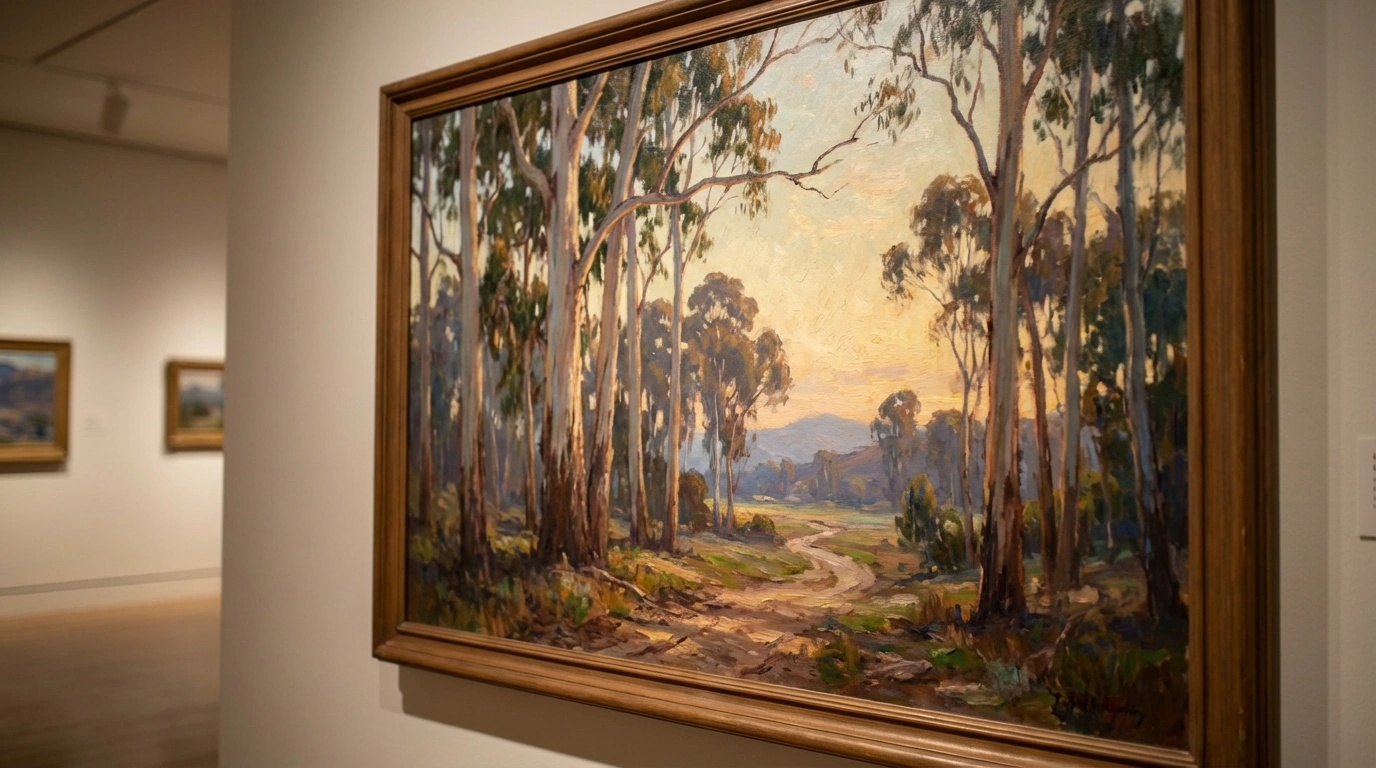
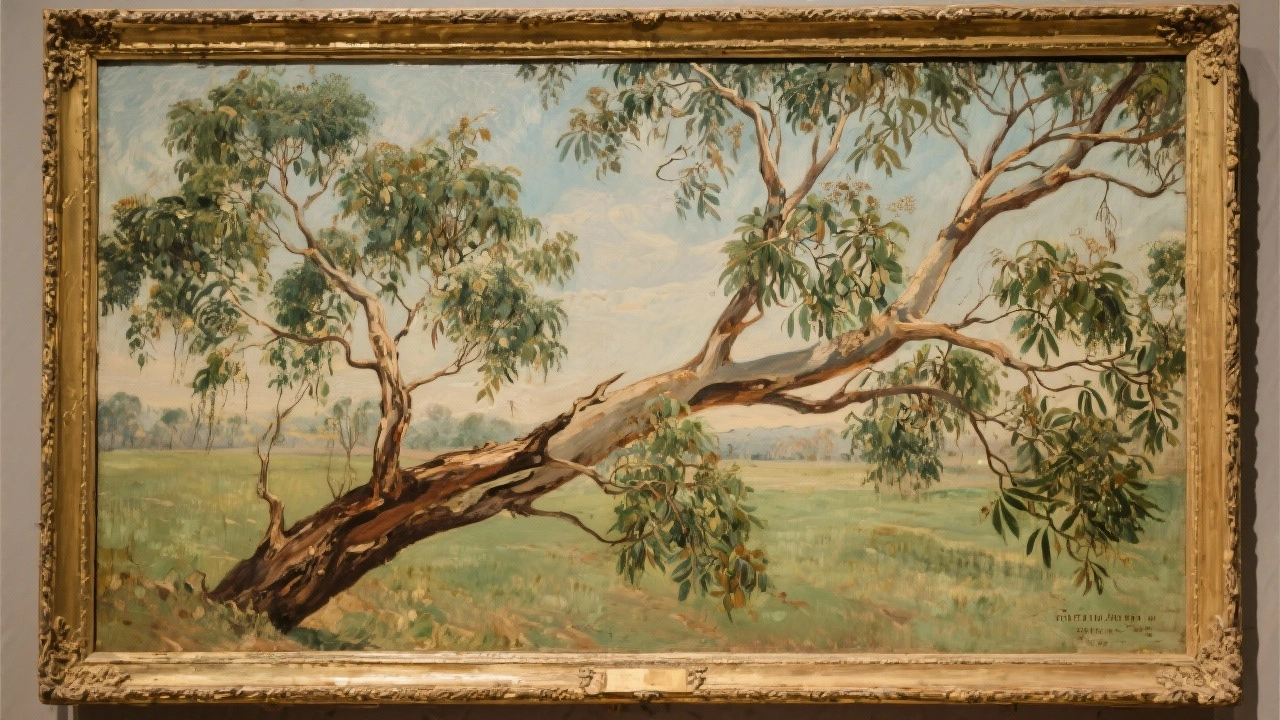
    historic eucalyptus paintings - The Historical Foundation of Eucalyptus in Australian Art

    The Australian landscape art movement of the late nineteenth and early twentieth centuries placed eucalyptus trees at its creative heart. Artists such as Arthur Streeton, Tom Roberts, and Frederick McCubbin—key figures of the Heidelberg School—spent countless hours studying how light filtered through the gnarled branches and peeling bark of native gum trees. Their plein air paintings, created outdoors in Victoria’s Dandenong Ranges and other eucalyptus-rich locations, established a visual language that subsequent generations would build upon.

    The Heidelberg School’s approach was revolutionary for its time. Rather than adhering to European conventions of landscape painting, these artists embraced the harsh Australian light and the unique character of native vegetation. Streeton’s “The Purple Noon’s Transparent Might” (1896) and Roberts’ “A Breakaway” (1891) demonstrate how eucalyptus trees became structural and symbolic elements in compositions that celebrated Australian identity. These works established a precedent: gum trees were no longer exotic botanical curiosities but rather the embodiment of national character.

    Understanding this historical context helps contemporary artists approach eucalyptus subjects with appropriate reverence. As you explore techniques for mastering eucalyptus painting, recognising the foundational work of these pioneers provides essential guidance for developing your own artistic voice.

    Contemporary Trends and Market Developments

    Recent shifts in the Australian art market reflect a growing appetite for works celebrating native botanical subjects. In 2023, the National Gallery of Victoria’s retrospective featuring works from the Heidelberg School drew record attendances, signalling renewed public interest in Australian landscape traditions. Simultaneously, contemporary artists working with eucalyptus subjects have gained increased representation in major galleries across Australia.

    The rise of digital and mixed-media approaches has expanded possibilities for artists interested in eucalyptus representation. Artists are combining traditional painting techniques with digital manipulation, botanical illustration with abstract expressionism, and photographic elements with hand-drawn interpretations. This technical diversity reflects broader cultural conversations about how traditional subjects can speak to contemporary audiences.

    Major institutional developments have further validated this trend. In 2024, the Art Gallery of New South Wales expanded its acquisition programme specifically targeting contemporary works featuring Australian native flora. Curator Sarah Mitchell noted that eucalyptus remains the most frequently submitted subject category for landscape-focused exhibitions, suggesting both artist and viewer fascination continues to deepen.

    The commercial market has responded accordingly. Galleries specialising in Australian landscape art report increased demand for works featuring gum trees, with prices for quality pieces appreciating steadily over the past eighteen months. This market confidence encourages emerging artists to explore eucalyptus subjects as viable professional pursuits. When considering investment in original artwork, exploring available collections featuring native Australian subjects provides insight into current market offerings.

    Techniques for Capturing Eucalyptus Character

    Successfully depicting eucalyptus trees requires understanding their distinctive visual characteristics. The peeling bark, which reveals contrasting layers in whites, greys, and reddish-browns, creates dramatic textural possibilities. The foliage exhibits remarkable colour variation depending on species, season, and light conditions—ranging from blue-green to silvery-grey to deeper olive tones. These elements demand technical skill and observational sensitivity.

    Contemporary artists employ varied methodologies. Some favour traditional oil and watercolour approaches, using layering techniques to capture the translucent quality of backlit leaves. Others utilise mixed media, incorporating natural materials like pressed leaves or bark rubbings into compositions. Digital artists create striking abstract interpretations that distil eucalyptus characteristics into colour, form, and pattern.

    Light management proves crucial when painting gum trees. The Australian sun creates dramatic shadows and highlights, with eucalyptus foliage often appearing luminous against darker undergrowth or sky. Artists working with eucalyptus learn to use this natural phenomenon as a compositional advantage rather than a challenge. Reference materials and sketching studies conducted on-site provide invaluable information for studio work.

    For artists seeking detailed guidance on botanical subjects, exploring which specific gum leaf varieties work best for artistic purposes offers practical insights. Additionally, understanding applications in interior spaces through eucalyptus print integration in interior design expands appreciation for how these artworks function beyond gallery walls.

    Observational Studies and Field Work

    Professional artists consistently emphasise the importance of direct observation. Spending time in forests dominated by different eucalyptus species—whether coastal stringybarks, inland ironbarks, or alpine snow gums—develops an intuitive understanding of their structural character. Photography, sketching, and colour notation studies create reference libraries informing studio practice.

    Field work also connects artists to environmental contexts often absent from studio-bound practice. Understanding the ecological relationships between eucalyptus and Australian fauna, the seasonal transformations of forests, and the cultural significance of specific species enriches artistic interpretation. This holistic approach produces work with greater authenticity and depth.

    The Future of Gum Tree Representation

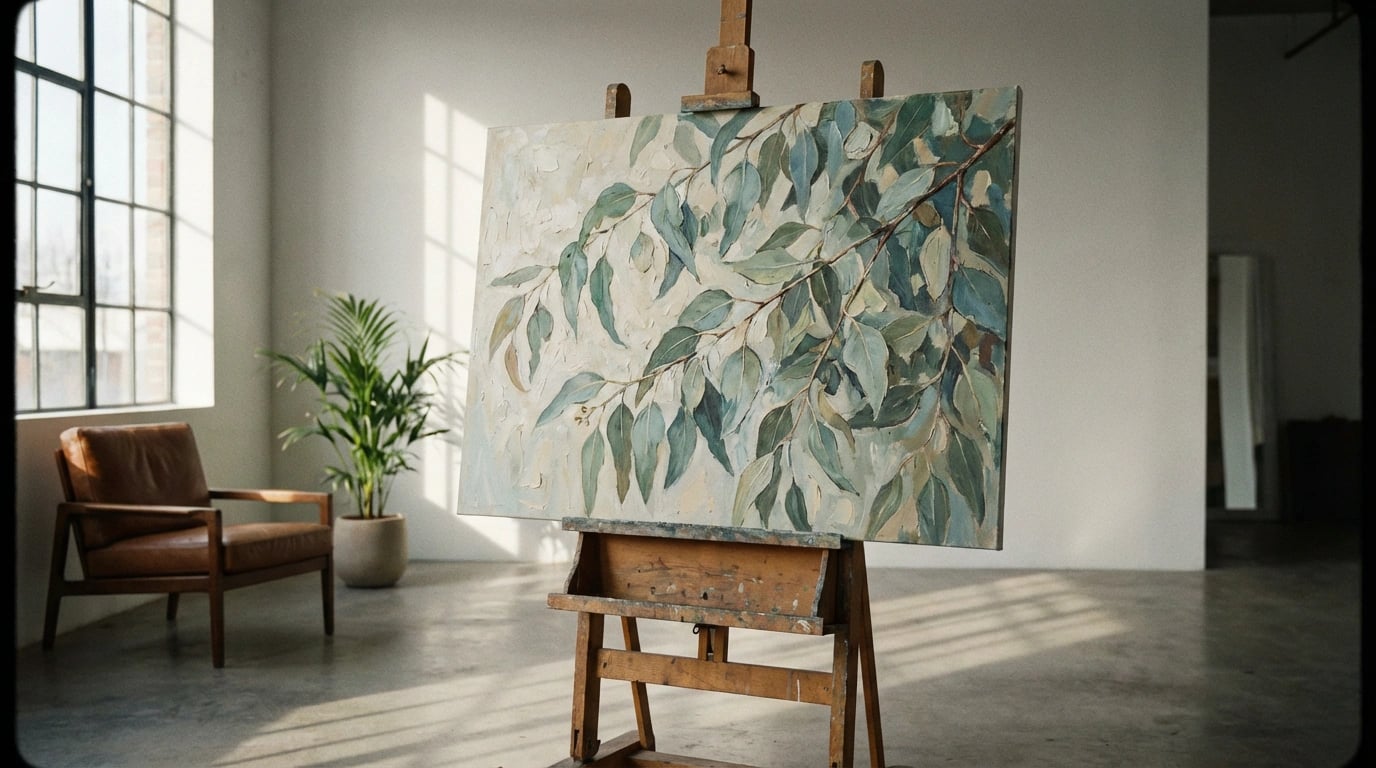
    contemporary gum tree canvas - The Future of Gum Tree Representation

    Looking forward, several developments suggest eucalyptus will remain central to Australian artistic discourse. Climate change conversations increasingly position native forests and their characteristic trees as symbols of environmental resilience and natural heritage worth protecting. Artists responding to ecological concerns find gum trees potent subjects for communicating environmental messages.

    Educational institutions are also reconsidering curriculum emphasis on native botanical subjects. Universities offering fine arts degrees now encourage students to engage deeply with Australian landscape traditions as foundational knowledge. This institutional support suggests the next generation of artists will approach eucalyptus subjects with sophisticated technical and conceptual frameworks.

    The intersection of cultural tourism and art markets creates additional opportunities. As international visitors seek authentic Australian cultural experiences, artworks authentically representing native landscapes command increasing market attention. Exploring comprehensive collections of Australian native floral prints reveals how contemporary artists are meeting this growing demand with diverse interpretive approaches.

    Technological advancement in art production also opens new possibilities. Techniques like giclée printing allow artists to produce high-quality reproductions maintaining the integrity of original works, making eucalyptus-focused art more accessible to broader audiences. This democratisation of access doesn’t diminish original artwork value but expands the market ecosystem benefiting artists and collectors alike.

    The trajectory is clear: eucalyptus trees will continue evolving as artistic subjects, reflecting contemporary concerns whilst honouring historical traditions. Whether through traditional landscape painting, abstract interpretation, or experimental mixed media, these iconic native trees remain endlessly compelling subjects for artists seeking to understand and celebrate the Australian natural world. For collectors and enthusiasts, this sustained artistic focus ensures an expanding body of work worthy of study, appreciation, and acquisition for years to come.

  • Eucalyptus print in interior design

    Eucalyptus print in interior design

    Eucalyptus prints have become a beloved element in Australian interior design, bringing the natural beauty of our native landscape indoors. These versatile botanical artworks offer a timeless aesthetic that complements various design styles, from minimalist to coastal. Whether you’re refreshing a single room or redesigning your entire home, incorporating eucalyptus prints can create a calming, sophisticated atmosphere that celebrates our unique Australian flora.

    To successfully incorporate eucalyptus prints into your interior design scheme, you’ll need to consider placement, scale, colour palette, and framing options. The key is selecting prints that harmonise with your existing décor while adding visual interest and a connection to nature. Moreover, understanding how to position these prints effectively will enhance the overall flow and ambiance of your space, creating a cohesive design that feels both intentional and inviting.

    Choosing the Right Eucalyptus Print Style

    The first step in incorporating eucalyptus prints into your space involves selecting the appropriate artistic style. Botanical prints range from photographic realism to watercolour interpretations and abstract representations. Therefore, consider your room’s existing aesthetic when making this decision.

    For contemporary interiors, minimalist eucalyptus prints with clean lines and neutral backgrounds work exceptionally well. These designs typically feature simple branch compositions on white or cream backgrounds. Conversely, traditional spaces benefit from more detailed botanical illustrations with vintage styling. Furthermore, coastal or Hamptons-style homes pair beautifully with soft watercolour eucalyptus prints in muted greens and blues.

    Additionally, you’ll want to research which gum leaves create the most visually appealing compositions for your specific needs. Different eucalyptus species offer varying leaf shapes and colours, from the silvery-blue tones of baby blue gum to the deeper greens of silver dollar eucalyptus. Consequently, selecting the right species representation ensures your print aligns with your design vision.

    Determining Optimal Placement and Scale

    Proper placement significantly impacts how eucalyptus prints enhance your interior design. Start by identifying focal points in each room where artwork will have maximum visual impact. Typically, these areas include spaces above sofas, beds, console tables, or dining room sideboards.

    Scale is equally important when positioning prints. As a general rule, artwork should occupy approximately two-thirds to three-quarters of the furniture width beneath it. For instance, a print above a king-size bed should span roughly 120-150 centimetres in width. However, smaller prints can work effectively when grouped together.

    Recommended Placement Guidelines

    Follow these practical guidelines for optimal positioning:

    • Hang prints at eye level, typically 145-150 centimetres from the floor to the centre of the artwork
    • In dining areas, position prints slightly lower to maintain visual connection whilst seated
    • Leave 15-20 centimetres of space between the top of furniture and the bottom of the print
    • In hallways, create rhythm by spacing multiple prints evenly along the wall

    Meanwhile, consider the viewing distance when determining print size. Larger rooms with substantial viewing distances can accommodate oversized prints, whilst intimate spaces work better with smaller, more delicate pieces. This approach ensures the artwork remains proportionate to its surroundings.

    Coordinating Colours with Your Interior Palette

    Colour coordination transforms eucalyptus prints from simple decorations into integral design elements. Begin by identifying your room’s dominant colours and undertones. Eucalyptus prints naturally feature greens, but these range from sage and olive to blue-green and grey-green variations.

    For monochromatic schemes, select prints with subtle colour variations that complement your existing palette. White or cream backgrounds maintain an airy, spacious feeling whilst allowing the eucalyptus imagery to become the focal point. Additionally, consider how natural light affects colour perception throughout the day, as this influences how your prints appear in different lighting conditions.

    If you’re working with Australian native floral prints alongside eucalyptus designs, ensure the colour temperatures align. Cool-toned eucalyptus pairs harmoniously with blue-greens and greys, whilst warmer selections complement beiges and taupes. The principles of colour theory suggest using analogous colours for cohesive, calming spaces.

    Creating Contrast and Balance

    Sometimes, strategic contrast elevates your design. Deep green eucalyptus prints against pale walls create stunning visual impact without overwhelming the space. Conversely, lighter prints on darker walls add subtle sophistication and prevent the room from feeling too heavy. Therefore, test print samples against your walls before committing to final selections.

    Selecting Frames and Display Methods

    Frame selection significantly influences how eucalyptus prints integrate into your interior design. The frame acts as a bridge between the artwork and your room’s architectural elements, furniture, and overall style. Consequently, choosing appropriate framing enhances visual cohesion.

    Step 1: Match Frame Style to Room Aesthetic

    Contemporary spaces benefit from slim metal frames in black, white, or brass finishes. Traditional interiors pair well with wooden frames in natural timber or painted finishes. For coastal styles, consider light timber or white-washed frames that echo beachside textures.

    Step 2: Choose Appropriate Matting

    Mat boards create breathing space around prints and add sophistication. White or cream mats suit most eucalyptus prints, providing clean separation from the frame. Generally, mat width should be 5-10 centimetres, though larger prints can accommodate wider mats for dramatic effect.

    Step 3: Consider Glass Options

    Standard glass works for most applications, but consider non-reflective glass for prints opposite windows or in brightly lit areas. UV-protective glass preserves print quality over time, particularly important for valuable or sentimental pieces.

    Alternatively, explore frameless options for contemporary spaces. Mounted canvas prints or prints on timber panels offer texture and depth without traditional framing. You can explore various presentation styles through curated eucalyptus print collections to find options that suit your preferences.

    Gallery walls featuring eucalyptus prints create stunning focal points that showcase your design vision. This approach allows mixing different sizes, orientations, and even complementary subject matter whilst maintaining visual harmony through consistent framing or colour themes.

    Start by arranging prints on the floor to experiment with layouts before hanging. The most successful gallery walls balance symmetry and asymmetry. For instance, anchor the arrangement with a larger central print, then surround it with smaller complementary pieces. Furthermore, maintain consistent spacing between frames, typically 5-8 centimetres, for professional results.

    Layout Strategies for Gallery Walls

    Several proven layouts work particularly well with eucalyptus prints:

    1. Grid layout: Uniform-sized prints arranged in neat rows and columns for contemporary appeal
    2. Salon style: Varied sizes clustered together with frames touching or nearly touching for eclectic charm
    3. Linear arrangement: Prints aligned along a central horizontal line for streamlined sophistication
    4. Organic clustering: Asymmetrical groupings that feel naturally balanced through careful placement

    When creating groupings, consider incorporating techniques from mastering eucalyptus artistic techniques to understand visual balance and composition. This knowledge helps you arrange prints in ways that guide the eye naturally through the display whilst maintaining overall harmony.

    Maintaining Flexibility in Your Design

    Finally, remember that interior design evolves over time. Install hanging systems that allow easy repositioning of prints as your tastes change or seasons shift. Removable adhesive strips work well for lightweight prints, whilst picture rails offer flexibility for frequently updated displays. This adaptability ensures your eucalyptus prints remain fresh and relevant throughout changing design trends.

    By following these systematic steps, you’ll successfully incorporate eucalyptus prints into your interior design, creating spaces that celebrate Australian botanical beauty whilst reflecting your personal style. The versatility of eucalyptus imagery means these prints adapt beautifully to various rooms and purposes, from creating serene bedroom retreats to establishing sophisticated living areas that welcome guests with natural elegance.

    joerussell

    joerussell

    Australian abstract artists based in Byron Bay and curator of the GumPrints art print collection.

  • Paint Like Australia: Eucalyptus Mastery

    Paint Like Australia: Eucalyptus Mastery

    The Australian landscape holds a distinctive character that captivates artists worldwide, and at its heart stands the iconic eucalyptus tree. These magnificent natives dominate the bush, their silvery-green canopies and sculptural trunks creating scenes that are uniquely Australian. Learning to paint eucalyptus trees authentically transforms your landscape art from merely depicting trees to capturing the very essence of Australia’s natural beauty.

    Mastering eucalyptus in landscape painting requires understanding their unique growth patterns, colour palettes, and environmental presence. This comprehensive guide will walk you through essential techniques for capturing these iconic trees, from initial sketching to final touches. Whether you’re working with oils, acrylics, or watercolours, these proven methods will help you create authentic Australian landscape paintings that resonate with the character of the bush.

    Understanding Eucalyptus Structure and Form

    Before touching brush to canvas, you must observe how eucalypts differ fundamentally from European and Northern Hemisphere trees. Their structure defies traditional tree-painting conventions, presenting unique challenges and opportunities for artists.

    Step 1: Study the Angular Branch Structure

    Begin by sketching eucalypt branches in your sketchbook. Notice how they grow at distinctive angles rather than the typical upward sweep of many deciduous trees. Australian gums often feature branches that extend horizontally or even droop downwards, creating characteristic silhouettes against the sky. Spend at least thirty minutes observing real eucalypts or quality photographic references, noting how the branches divide and subdivide.

    Step 2: Map the Trunk Characteristics

    Eucalypt trunks vary dramatically between species. Some feature smooth, mottled bark in creams and greys, whilst others display rough, deeply fissured textures. Sketch the trunk structure, paying attention to how the bark peels, revealing layers beneath. Moreover, note the often-irregular lean of mature eucalypts, which rarely grow perfectly vertical.

    Understanding these structural elements separates authentic Australian landscape art from generic tree paintings. Consequently, your preliminary sketches become the foundation for convincing eucalypt portraiture. Different eucalyptus species offer distinct characteristics that inform your artistic choices.

    Building Your Australian Colour Palette

    eucalyptus color swatches - Building Your Australian Colour Palette

    The Australian landscape demands a unique palette that differs significantly from European landscape traditions. Therefore, selecting the right colours is crucial for authentic representation.

    Essential Colours for Eucalyptus Painting

    Your palette should include these fundamental colours:

    • Ultramarine blue and cobalt blue for atmospheric perspective
    • Yellow ochre and raw sienna for golden light
    • Burnt sienna and burnt umber for bark tones
    • Viridian green and sap green for foliage bases
    • Titanium white for mixing silvery greens
    • Payne’s grey for shadows and depth

    Step 3: Mix Authentic Eucalypt Greens

    Avoid using greens straight from the tube. Instead, create eucalyptus greens by mixing viridian or sap green with generous amounts of white and touches of yellow ochre. Add small amounts of blue to create cooler, silvery tones characteristic of many gum species. Test your mixes on scrap paper, comparing them to actual eucalypt leaves or reliable photographic references.

    Australian light possesses a brilliant, clear quality that influences all colours in the landscape. As a result, your mixed greens should appear lighter and more desaturated than traditional landscape foliage colours. Furthermore, incorporating warm ochres and siennas throughout your palette unifies the composition with that distinctive Australian golden glow.

    Composing Your Australian Landscape

    Effective composition transforms a simple tree study into compelling landscape art. The placement and arrangement of eucalypts within your frame determines the emotional impact of your painting.

    Step 4: Establish Your Focal Point

    Select one or two hero eucalypts as your primary focus. Position these using the rule of thirds rather than centring them directly. Sketch these main trees with more detail and stronger tonal contrast than surrounding elements. Additionally, consider the negative space created by branch structures, as these gaps contribute significantly to the composition’s visual interest.

    Step 5: Create Depth Through Layering

    Build depth by establishing distinct foreground, middle ground, and background layers. Foreground eucalypts should display detailed bark texture and darker values. Middle ground trees receive moderate detail, whilst background eucalypts become progressively lighter and bluer through atmospheric perspective. This layering technique mirrors how atmospheric perspective affects distant landscape elements.

    Consider the horizon line placement carefully. A lower horizon emphasises dramatic sky and tall tree forms, whilst a higher horizon showcases the distinctive character of the Australian bush floor. Subsequently, this decision shapes the entire narrative of your painting.

    Painting Eucalyptus Trunks and Bark

    eucalyptus bark texture - Painting Eucalyptus Trunks and Bark

    The trunk establishes the tree’s character and presence. Consequently, mastering bark texture and colour variations proves essential for convincing eucalypt representation.

    Step 6: Block in Base Trunk Colours

    Begin with a mid-tone base that reflects your eucalypt species. For smooth-barked varieties like scribbly gum, use mixtures of white, yellow ochre, and touches of burnt sienna. For stringybarks or ironbarks, start with raw umber and burnt umber combinations. Apply this base colour loosely, allowing some canvas texture to show through.

    Adding Texture and Dimension

    Step 7: Build Bark Texture Gradually

    Layer darker tones into shadow areas using burnt umber mixed with ultramarine blue. For smooth-barked eucalypts, add irregular patches and mottling with varied greys, creams, and pale ochres. Use a dry-brush technique to suggest peeling bark. For rough-barked species, apply thicker paint with palette knife edges to create physical texture, building up ridges and furrows that catch light realistically.

    Remember that eucalypt trunks rarely appear uniform in colour. Therefore, incorporate subtle colour variations throughout, adding warmth where light strikes directly and cooler tones in shadowed areas. Moreover, the reflected light from surrounding foliage often tints trunk shadows with gentle greens or blues.

    Mastering Eucalypt Foliage Techniques

    Eucalypt foliage presents unique challenges due to its distinctive appearance and the dappled light it creates. Unlike dense deciduous canopies, eucalypt foliage appears more open and airy.

    Step 8: Establish Foliage Masses

    Block in overall foliage shapes using your pre-mixed silvery greens. Work loosely at this stage, establishing the general cloud-like masses rather than individual leaves. Leave gaps between foliage clumps to suggest the open, transparent quality of eucalypt canopies. Furthermore, vary your green mixtures throughout, incorporating warmer yellowy-greens where light penetrates and cooler blue-greens in shadow areas.

    Step 9: Add Foliage Detail and Highlights

    Once your foliage masses are established, add suggestion of leaf clusters using small, directional brushstrokes. Eucalypt leaves hang vertically or at angles rather than lying horizontal, so your strokes should reflect this characteristic. Add highlights to sunlit foliage edges using lighter, warmer greens mixed with yellow ochre and white. Similarly, deepen shadows with darker greens mixed from viridian and burnt umber.

    The characteristic silvery shimmer of eucalypt leaves comes from their waxy coating. Therefore, incorporate reflected light within shadow areas and occasional bright highlights that suggest this reflective quality. This technique connects beautifully with botanical art approaches that emphasise the unique qualities of Australian flora.

    Creating Australian Light and Atmosphere

    australian eucalyptus landscape light - Creating Australian Light and Atmosphere

    The quality of light fundamentally shapes Australian landscape painting. Bright, clear sunlight creates strong contrasts and vibrant colours that distinguish Australian scenes from softer European landscapes.

    Step 10: Establish Strong Value Contrast

    Australian sunlight creates dramatic shadows. Push your darks darker than feels comfortable initially, particularly in shadow areas beneath eucalypt canopies and within foliage masses. Conversely, keep sunlit areas bright and vibrant. This strong value contrast captures the intensity of Australian light more effectively than subtle gradations.

    Painting the Australian Sky

    The sky provides crucial context for your eucalypts. Australian skies often display intense blue in upper regions, becoming paler and warmer near the horizon. Mix cobalt blue with white for the upper sky, gradually introducing more white and touches of yellow ochre as you approach the horizon line.

    Step 11: Add Atmospheric Haze

    Australian eucalypt forests often display a characteristic blue haze caused by oil vapours from the trees. Add this effect to distant eucalypts by glazing thin layers of diluted ultramarine blue mixed with white over background elements. This technique enhances depth whilst adding authentic atmospheric character to your landscape.

    Additionally, consider the warmth of Australian sunlight. Even shadows contain warmth, particularly during morning and afternoon golden hours. Consequently, avoid pure cold shadows; instead, warm your shadow mixtures slightly with touches of sienna or ochre.

    Common Mistakes to Avoid

    Even experienced artists encounter pitfalls when first attempting eucalyptus landscape painting. Therefore, awareness of these common errors helps you achieve more authentic results.

    Avoiding Generic Tree Approaches

    The most frequent mistake involves painting eucalypts using techniques suited to European trees. Eucalypts require different structural approaches, colour palettes, and textural treatments. Moreover, they interact with light differently due to their vertical leaf orientation and open canopy structure.

    Another common error involves over-detailing every element equally. Instead, establish focal areas with refined detail whilst treating background and peripheral elements more loosely. This selective focus creates visual hierarchy and prevents your painting from appearing busy or overworked.

    Colour and Value Pitfalls

    • Using greens that are too saturated or dark
    • Failing to incorporate sufficient atmospheric perspective
    • Painting shadows too cool or neutral
    • Neglecting the silvery, reflective quality of eucalypt foliage
    • Creating trunks with uniform colour rather than varied mottling

    Furthermore, many artists underestimate the importance of negative space in eucalypt compositions. The gaps between foliage masses and the sky visible through branches contribute enormously to authentic representation. Therefore, consciously design these negative spaces as carefully as you paint the trees themselves.

    Mastering eucalyptus in landscape art opens doors to authentically capturing Australia’s unique beauty. Through careful observation, appropriate colour selection, and specialised techniques, you can create paintings that genuinely reflect the character of the Australian bush. Practice these methods regularly, referring back to actual eucalypts whenever possible, and your confidence in painting these iconic trees will grow steadily. The journey towards eucalyptus mastery rewards persistence, transforming your Australian landscapes from competent to truly compelling.

  • Australian native floral prints

    Australian native floral prints

    Australian native floral prints represent a uniquely distinctive design tradition that captures the essence of the continent’s rich botanical heritage. These prints showcase the vibrant colours, intricate patterns, and distinctive forms found in Australia’s remarkable native plants. From delicate wildflowers to bold eucalyptus leaves, native floral designs have become increasingly popular in contemporary home décor, fashion, and artistic applications. Understanding the characteristics, cultural significance, and design applications of Australian native florals allows you to appreciate and incorporate these beautiful botanical elements into your own creative projects or personal spaces.

    Australian native floral prints celebrate the country’s extraordinary biodiversity and offer a meaningful way to connect with the natural landscape. These designs typically feature iconic native species such as waratahs, banksias, flannel flowers, and numerous varieties of eucalyptus leaves. The prints are characterised by their bold colour palettes, organic shapes, and the authentic representation of Australia’s unique flora. Whether used in interior design, textiles, or fine art, these floral designs bring warmth, personality, and a distinctly Australian aesthetic to any space. The growing appreciation for native florals also reflects a broader movement towards celebrating local biodiversity and sustainable design practices.

    Understanding Australian Native Flora in Design

    The foundation of effective native floral print design lies in understanding the botanical characteristics of Australia’s unique plant species. Indigenous Australians recognised and utilised these plants for thousands of years before European settlement, embedding significant cultural meaning into many native species. Today, contemporary designers draw inspiration from both the aesthetic qualities and cultural heritage of these plants. Working with native florals requires knowledge of plant structure, growth patterns, and seasonal variations to create authentic, botanically accurate representations.

    Australian native plants have evolved in isolation, developing distinctive characteristics that set them apart from plants found elsewhere globally. This isolation resulted in highly specialised adaptations to Australia’s diverse climates, from tropical rainforests to arid deserts. Furthermore, the variety of native species provides designers with an exceptional palette of forms, colours, and textures to explore. understanding which gum leaves make the best art subjects can help designers select specimens that translate effectively into print media.

    Botanical Accuracy in Representation

    Creating authentic native floral prints requires careful attention to botanical detail and accuracy. Successful designers study the specific characteristics of each plant species, including leaf shape, petal formation, stem structure, and overall growth habit. This meticulous approach ensures that prints are not only visually appealing but also educationally valuable. Many contemporary artists and designers combine scientific observation with artistic interpretation to create prints that honour both the accuracy of the plant and the creative vision of the designer.

    Popular Native Floral Specimens for Prints

    Australian native flowers in print - Popular Native Floral Specimens for Prints

    Certain Australian native plants have become particularly popular subjects for floral prints due to their distinctive visual appeal and immediate recognisability. These species offer varying levels of complexity and colour richness, making them suitable for diverse design applications. Understanding the characteristics of these popular specimens helps designers select appropriate subjects for specific projects and audiences.

    Iconic Native Species

    The waratah stands as one of Australia’s most recognisable native flowers, featuring dramatic crimson blooms and striking architectural form. This New South Wales native flower has become synonymous with Australian floral design and appears frequently in contemporary prints and textiles. Additionally, banksias offer remarkable visual interest with their distinctive cylindrical flower spikes and intricate individual florets. These woody shrubs provide designers with complex, layered forms that create dynamic, textured prints.

    Flannel flowers present another beloved choice for native floral prints, recognised by their soft, velvety petals and unique appearance. Native to New South Wales, these flowers add delicate, tactile qualities to designs. Meanwhile, waratahs, native orchids, and various eucalyptus flowers provide additional options for diverse aesthetic approaches. exploring which native species work best as art subjects helps designers make informed creative decisions about print composition and visual impact.

    Leaf Forms and Foliage Elements

    Beyond flowers, Australian native foliage offers exceptional design potential through eucalyptus leaves, acacias, and ferns. Eucalyptus leaves display remarkable variety in size, shape, and colour, from pale blue-green to deep emerald tones. These leaves provide elegant, linear elements that balance more complex floral forms within design compositions. Acacias, commonly known as wattles, contribute feathery, delicate foliage that adds movement and grace to prints. Many successful native floral designs combine multiple foliage types to create visually rich, layered compositions.

    Colour Palettes and Design Characteristics

    native floral print color swatches - Colour Palettes and Design Characteristics

    Australian native florals display distinctive colour characteristics shaped by the country’s unique light conditions and environmental factors. The intense, clear Australian sunlight produces vibrant hues that translate beautifully into print media. Native flowers and foliage exhibit colour combinations that rarely appear in plant species found elsewhere, creating instantly recognisable design aesthetics.

    Natural Colour Ranges

    Red and crimson tones dominate many native flowers, particularly waratahs and banksias, creating bold, energetic visual statements. Yellow, golden, and orange hues appear frequently in wattle flowers and various native blooms. Consequently, designers often incorporate these warm tones as primary colours in native floral prints. Simultaneously, cooler tones including soft creams, pale pinks, and muted purples provide balance and sophistication in design compositions. The interplay between warm and cool tones reflects the diversity of Australia’s native flora across different regions and seasons.

    Contemporary Design Applications

    Modern floral print design approaches Australian native specimens with both respect for their natural characteristics and creative freedom for artistic interpretation. Some designers pursue photorealistic representation, capturing precise botanical detail. However, others embrace stylised, abstract approaches that emphasise colour, pattern, and emotional response. Furthermore, many contemporary designers combine native florals with geometric elements, minimalist backgrounds, or mixed-media techniques to create prints that appeal to current design trends whilst maintaining authentic connections to native species.

    The versatility of native floral designs accommodates various aesthetic preferences and interior design styles. Whether incorporated into maximalist schemes celebrating bold pattern and colour or minimalist spaces featuring single, statement prints, Australian native florals adapt effectively to diverse contexts. discover more about design possibilities and creative inspiration for incorporating these beautiful elements into your own projects.

    Applications in Contemporary Interior Design

    Native floral prints have experienced significant growth in popularity within interior design applications across residential and commercial spaces. These designs bring authentic Australian character to interiors whilst celebrating the country’s natural heritage. The versatility of native florals allows designers to create cohesive, sophisticated spaces that reflect both personal aesthetic preferences and environmental values.

    Textiles and Soft Furnishings

    Fabrics featuring native floral prints provide an accessible way to incorporate these designs into interior spaces. Cushions, upholstery, curtains, and bedding textiles showcase native florals in functional applications. These soft furnishings allow homeowners to introduce pattern and colour whilst maintaining flexibility to update designs seasonally or refresh interior schemes. Additionally, textile applications of native floral prints often reach broader audiences than fine art prints, making these designs increasingly accessible to diverse markets.

    Wall Art and Decorative Displays

    Framed native floral prints function as focal points within interior spaces, drawing attention and establishing design direction for rooms. Gallery walls combining multiple prints create dynamic, visually engaging displays that celebrate Australia’s botanical diversity. Moreover, large-scale prints command attention and establish strong design statements within minimalist contemporary interiors. Many designers strategically position native floral prints to coordinate with other design elements, creating cohesive, intentional interior schemes.

    The accessibility of native floral prints through various price points and production methods ensures availability for diverse budgets and aesthetic preferences. From original artworks to reproductions and digital prints, options exist for every design application and financial consideration. Australian native plants (Wikipedia) provides comprehensive information about the botanical diversity that inspires these beautiful designs.

    Sustainability and Cultural Significance

    native floral print on sustainable fabric - Sustainability and Cultural Significance

    The contemporary appreciation for Australian native floral prints reflects broader cultural shifts towards celebrating local biodiversity and supporting sustainable design practices. Using native flora as design inspiration encourages recognition and preservation of Australia’s unique ecosystems. This growing interest in native plants extends beyond aesthetic appreciation to encompass environmental consciousness and cultural acknowledgement of Indigenous botanical knowledge.

    Environmental Awareness Through Design

    Native floral print design can serve as a gateway to broader environmental education and conservation awareness. When individuals develop appreciation for specific native plants through design applications, they often become motivated to learn more about these species and their ecological importance. Consequently, this engagement can translate into support for habitat preservation and sustainable gardening practices. Many designers intentionally incorporate educational elements into their work, providing information about featured species and their ecological roles. Furthermore, choosing designs featuring native plants rather than exotic species reflects a commitment to celebrating local biodiversity and reduced environmental impact.

    Indigenous Knowledge and Respect

    Acknowledging the Indigenous heritage of Australian native plants represents an essential aspect of ethically engaging with native floral design. Aboriginal and Torres Strait Islander peoples maintained sophisticated knowledge systems regarding native plants, utilising them for food, medicine, materials, and cultural purposes. Contemporary designers increasingly recognise this heritage, incorporating respectful representation and cultural acknowledgement into their work. This approach moves beyond superficial aesthetic appreciation to embrace genuine respect for the cultural significance and ecological knowledge associated with native flora.

    The enduring appeal of Australian native floral prints lies in their ability to celebrate natural beauty, support environmental awareness, and connect individuals with Australia’s unique botanical heritage. Whether through interior design applications, textile creations, or fine art prints, these designs continue to inspire and delight diverse audiences. By understanding the characteristics, cultural significance, and creative possibilities of native florals, you can make informed decisions about incorporating these beautiful elements into your own spaces and projects. The continued evolution of native floral design ensures that these distinctive prints remain relevant, appreciated, and celebrated in contemporary creative practice.