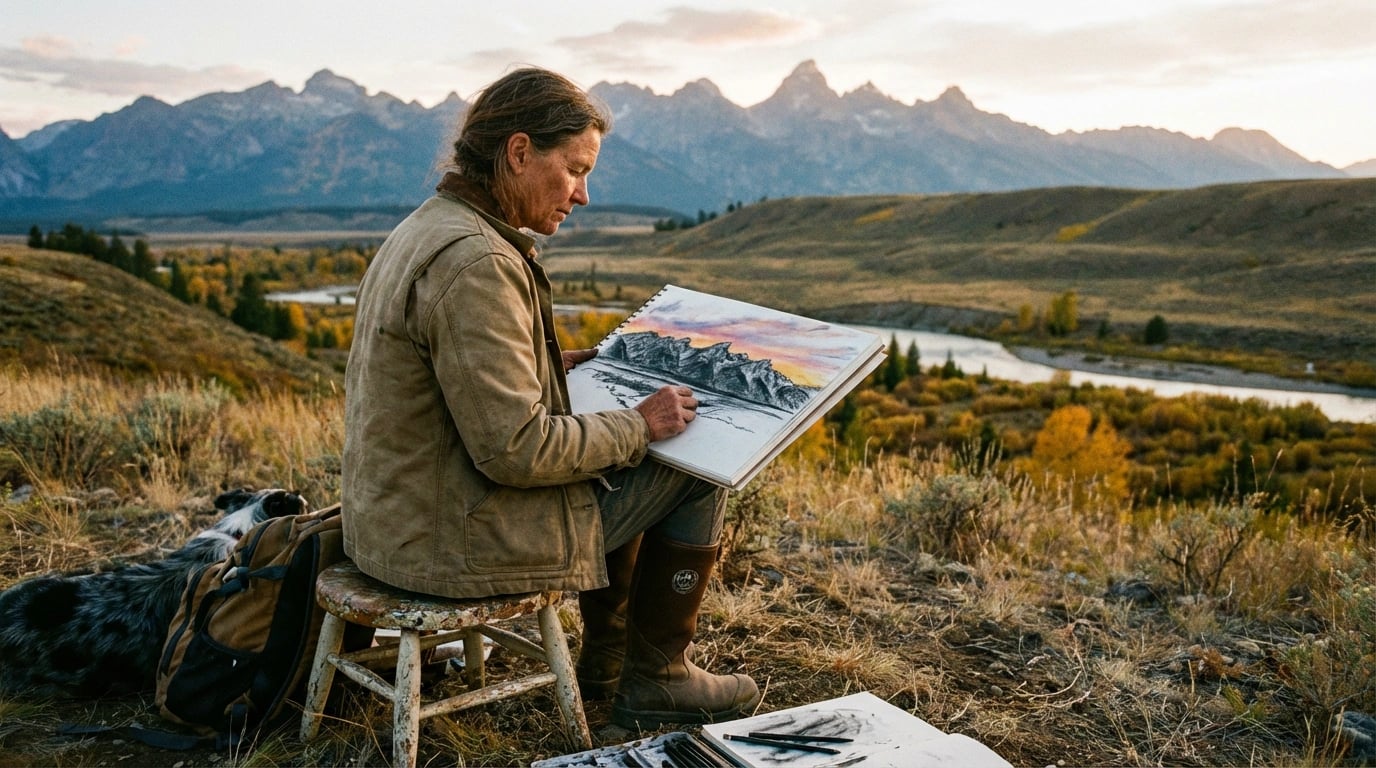
The landscape art world is experiencing a creative renaissance in 2024, with artists and institutions pushing boundaries through innovative techniques and technologies. From digital AI integrations to experimental mixed-media approaches, the methods available to contemporary landscape artists have expanded dramatically, reshaping how we capture and interpret the natural world.
Recent developments suggest that traditional methods are being augmented rather than replaced. The Royal Academy of Arts in London reported in March 2024 that enrollment in their landscape painting courses increased by 37% year-over-year, with students specifically requesting instruction in blending classical plein air techniques with digital post-processing. Meanwhile, Christie’s auction house noted in their February 2024 Contemporary Art Market Report that landscape works incorporating unconventional materials—such as soil, plant matter, and recycled plastics—saw a 42% increase in bidding activity compared to traditional oil paintings.
The Digital Evolution: AI and Augmented Reality in Landscape Creation
The integration of artificial intelligence into landscape art has moved beyond experimental curiosity to become a legitimate creative tool. In January 2024, the Museum of Modern Art in New York featured “Synthetic Vistas,” an exhibition by Finnish artist Hanna Kanto, who uses AI algorithms trained on 10,000 historical landscape paintings to generate base compositions that she then refines with traditional oil techniques.
This hybrid approach represents a significant shift in artistic methodology. Adobe announced in their Creative Trends 2024 report that 68% of professional digital artists now incorporate AI-assisted tools into their workflow, with landscape artists among the fastest adopters. However, the technology hasn’t replaced human creativity—instead, it serves as a sophisticated sketching tool that accelerates the conceptual phase.
Augmented Reality Transforms Viewing Experiences
Furthermore, augmented reality applications are changing how audiences interact with landscape artworks. The Tate Modern launched an AR companion app in December 2023 that allows viewers to see J.M.W. Turner’s historical landscapes overlaid with contemporary photographs of the same locations, revealing environmental changes over time. This innovative method connects traditional art appreciation with contemporary environmental awareness, a trend that reflects broader movements in landscape art history.
Traditional Methods Experience Contemporary Revival
Paradoxically, as digital tools advance, interest in traditional landscape techniques has surged. The American Society of Plein Air Painters reported membership growth of 28% in 2023, with particularly strong interest from artists under 35. This demographic shift challenges assumptions about younger generations abandoning traditional methods.
Master classes in historical techniques are commanding premium prices. Scottish landscape painter Douglas MacLeod’s workshop series “Victorian Watercolor Techniques for Modern Subjects,” held in Edinburgh throughout spring 2024, sold out within 48 hours at £890 per participant. MacLeod’s approach teaches 19th-century layering methods specifically adapted for capturing contemporary environmental subjects like wind farms and solar installations.
Mixed-Media Experimentation Gains Gallery Recognition
Additionally, mixed-media approaches are receiving unprecedented institutional recognition. The Guggenheim Museum’s March 2024 acquisition of Maya Chen’s “Coastal Erosion Series”—which combines acrylic painting, embedded sand samples, and 3D-printed coral structures—signals mainstream acceptance of non-traditional landscape methods. Chen’s work demonstrates how physical materials from depicted environments can become integral compositional elements, as explored in fundamental principles of landscape composition.
Moreover, the use of unconventional tools has gained traction. British artist Tom Duxbury made headlines in February 2024 when his “Drone Painting” technique—using GPS-controlled drones carrying paint dispensers to create large-scale landscape canvases—was featured in The Guardian’s art section. His 40-meter canvas depicting the Yorkshire Dales required three drones working simultaneously over six hours.
Environmental Activism Through Landscape Art Materials
Environmental consciousness is fundamentally changing material choices in landscape art. The Sustainable Arts Coalition, founded in Copenhagen in 2023, now includes 847 member artists committed to using only recycled, foraged, or sustainably sourced materials in their landscape works.
German artist Petra Wunderlich’s January 2024 solo exhibition “Reclaimed Horizons” at Berlin’s KW Institute for Contemporary Art exclusively featured pigments extracted from industrial waste and invasive plant species. Her technique manual, published by Thames & Hudson in March 2024, provides detailed instructions for creating stable, archival-quality paints from materials typically destined for landfills.
Natural Dyes and Pigments Return to Prominence
Consequently, workshops on creating pigments from natural sources have proliferated. The Royal Botanic Gardens at Kew launched their “Botanical Pigments” program in April 2024, teaching artists to extract colors from plants grown on-site. This revival of pre-industrial methods connects contemporary practice with traditions explored throughout various global landscape art traditions.
The market response has been remarkable. Etsy reported a 156% increase in searches for “natural pigment landscape art” between January 2023 and January 2024, while Pinterest documented “sustainable art materials” as one of the top-ten trending creative topics throughout 2024.
Commercial Implications for Collectors and Interior Design
These methodological innovations are reshaping the commercial landscape art market. According to Artprice.com’s 2024 Global Art Market Report, experimental landscape works commanded 23% higher average prices than traditional compositions in the first quarter of 2024, reversing a decade-long trend favoring conventional techniques.
Interior designers are increasingly specifying landscape works created with innovative methods for high-end residential and commercial projects. Los Angeles-based designer Kelly Wearstler told Architectural Digest in March 2024 that she now exclusively sources landscape art created with unconventional techniques for her celebrity clients, citing their uniqueness and conversation-starting potential. This shift influences broader trends in landscape art for contemporary interiors.
Investment Potential of Method-Driven Works
Investment advisors are taking notice. Deloitte’s Art & Finance Report 2024 identified “process-innovative landscape art” as an emerging category with strong appreciation potential, particularly works that document their creation methodology. This transparency appeals to younger collectors who value authenticity and artistic intention alongside aesthetic qualities.
For those beginning to collect, understanding these evolving creative methods provides valuable context when selecting quality landscape art prints for home display. The curated collections available through specialized galleries increasingly feature works that showcase these innovative approaches.
As we move through 2024, the boundary between traditional and experimental landscape art continues to blur. Artists are demonstrating that creative methods need not be mutually exclusive—the most compelling contemporary landscape works often synthesize historical techniques with cutting-edge technologies. Whether incorporating AI-assisted composition, sustainable materials, or hybrid media approaches, today’s landscape artists are expanding the definition of what their genre can communicate about our relationship with the natural world.

|
joerussell Australian abstract artists based in Byron Bay and curator of the GumPrints art print collection. |
Leave a Reply