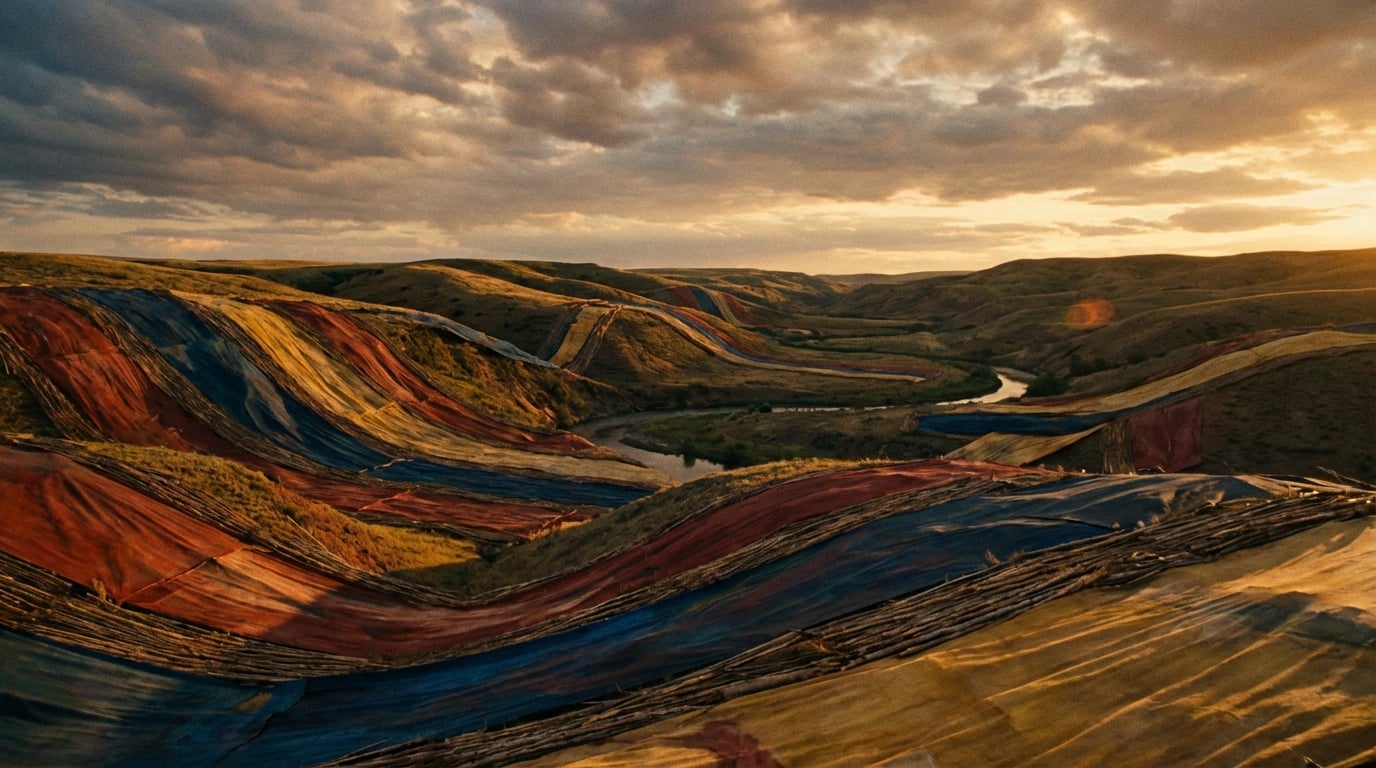
The art world is witnessing a dramatic shift in how artists approach color in landscape painting, driven by recent climate events, digital technology, and a renewed appreciation for regional biodiversity. From the wildfires that scorched California in 2024 to the unprecedented blooms documented across Australian deserts in early 2025, nature itself is rewriting the color vocabulary available to contemporary landscape artists. Meanwhile, major galleries including London’s Tate Britain and New York’s Metropolitan Museum of Art have launched exhibitions specifically examining how environmental changes influence artistic palettes.
Contemporary landscape artists are increasingly drawing inspiration from scientific color data, climate imagery, and hyperlocal ecosystem studies. This trend represents a significant departure from traditional palette formulas taught in art schools for decades. Artists like Sarah McNeil, whose “Burnt Country” series debuted at Melbourne’s National Gallery of Victoria in March 2025, are capturing the charred ochres and ash grays of fire-affected landscapes. Conversely, British painter David Hockney’s 2024 Yorkshire series introduced unexpected electric greens and deep purples reflecting the region’s changing seasonal patterns. These developments signal a broader movement toward documentary realism combined with heightened chromatic intensity in response to environmental transformation.
Climate-Driven Color Palettes Transform Contemporary Work
The 2024-2025 wildfire seasons across North America and Australia have profoundly impacted landscape art color theory. Furthermore, artists are documenting what researchers call “novel ecosystems”—landscapes that have transformed so dramatically that historical color references no longer apply. The Smithsonian American Art Museum’s February 2025 exhibition “Chromatic Shifts” featured works by 23 artists who specifically documented post-fire regeneration colors.
California-based artist Maria Torres gained international attention when her “Aftermath” collection, displayed at San Francisco’s de Young Museum in January 2025, captured the unexpected pink and purple hues of fire retardant residue mixed with new spring growth. Similarly, Australian artist James Morrison’s “Recovery” series documents the vibrant lime greens and electric blues emerging in traditionally brown outback regions following unprecedented rainfall patterns.
Scientific Collaboration Informing Artistic Choices
Artists are increasingly partnering with ecologists and climate scientists to understand color changes. The Royal Botanic Gardens in Kew, London, launched an artist-in-residence program in late 2024 specifically focused on documenting plant color variations. Consequently, participating artists gained access to spectrophotometer data and historical botanical illustrations, creating works grounded in measurable environmental shifts. This approach connects directly to broader studies of plant coloration worldwide.
Technology’s Role in Expanding Color Discovery
Digital tools have revolutionized how artists identify and reproduce landscape colors. NASA’s Landsat 9 satellite, launched in September 2021, provides publicly accessible imagery that artists now use as reference material. Moreover, color-extraction software allows creators to analyze satellite imagery and translate it into usable palettes. Portland artist Chen Wei demonstrated this technique at the Pacific Northwest College of Art’s March 2025 symposium, showing how he derived unexpected coral and teal combinations from satellite images of Oregon’s high desert.
Additionally, smartphone technology has democratized color sampling. Apps like Adobe Color and Pantone Studio enable artists to capture exact color values from nature during field studies. London’s Royal Academy reported in their 2025 Annual Survey that 67% of landscape painting students now use digital color-sampling tools regularly, compared to just 23% in 2020. This technological integration enhances traditional painting techniques rather than replacing them.
AI-Generated Palette Suggestions
Artificial intelligence platforms launched in 2024 now offer palette suggestions based on geographic location, season, and historical climate data. However, purists argue this removes intuitive discovery from the creative process. Nevertheless, artists like Tokyo-based Yuki Tanaka, featured in Artforum’s April 2025 issue, use AI-generated suggestions as starting points, then modify them based on personal observation and emotional response.
Regional Color Movements Gaining Recognition
Geographic specificity has become increasingly important in contemporary landscape art. The “New Nordic Palette” movement, formalized at Copenhagen’s Louisiana Museum of Modern Art in December 2024, emphasizes the muted grays, deep forest greens, and glacier blues characteristic of Scandinavian landscapes. Meanwhile, the “Outback Reimagined” collective, based in Alice Springs, Australia, challenges traditional red-ochre stereotypes by incorporating the full spectrum of desert colors including purples, pinks, and unexpected greens.
These regional movements reflect growing interest in diverse global approaches to landscape representation. The Art Gallery of New South Wales’s “Desert Light” exhibition in February 2025 showcased how Indigenous Australian artists have always employed broader color ranges than Western observers historically acknowledged. This revelation has prompted reassessment of colonial-era landscape art and its limited color interpretations.
Mediterranean Renaissance
Southern European artists are reclaiming what curator Isabella Fontana calls “authentic Mediterranean light” in her March 2025 exhibition at Rome’s MAXXI Museum. Rather than tourist-oriented blues and whites, featured artists emphasized the dusty ochres, olive greens, and burnt siennas that dominate actual Mediterranean ecosystems. This approach relates to understanding regional plant ecosystems and their inherent color signatures.
What These Trends Mean for Collectors and Creators
For collectors, these evolving palettes represent both aesthetic shifts and investment considerations. Sotheby’s 2025 Contemporary Landscape Art Report noted that works featuring non-traditional palettes commanded 34% higher prices than conventional blue-sky compositions. Moreover, institutional acquisitions increasingly favor pieces documenting environmental change, suggesting long-term value appreciation for climate-responsive work.
Artists entering the landscape genre should consider regional specificity and scientific accuracy as differentiating factors. Therefore, field studies, ecosystem research, and location-based palette development offer competitive advantages. Art schools including Rhode Island School of Design and Glasgow School of Art have added “environmental color theory” courses to their 2025 curricula, acknowledging this shift in professional expectations.
The integration of these color trends with innovative creative methods positions contemporary landscape art as both documentary and interpretive. As climate patterns continue evolving, artists who develop systematic approaches to color observation and documentation will likely lead the field. Collectors seeking meaningful acquisitions should explore works that demonstrate both technical color accuracy and emotional resonance with changing environments. Browse our curated collection of contemporary landscape prints to discover how these emerging palettes translate into accessible art for your space.

|
joerussell Australian abstract artists based in Byron Bay and curator of the GumPrints art print collection. |
Leave a Reply