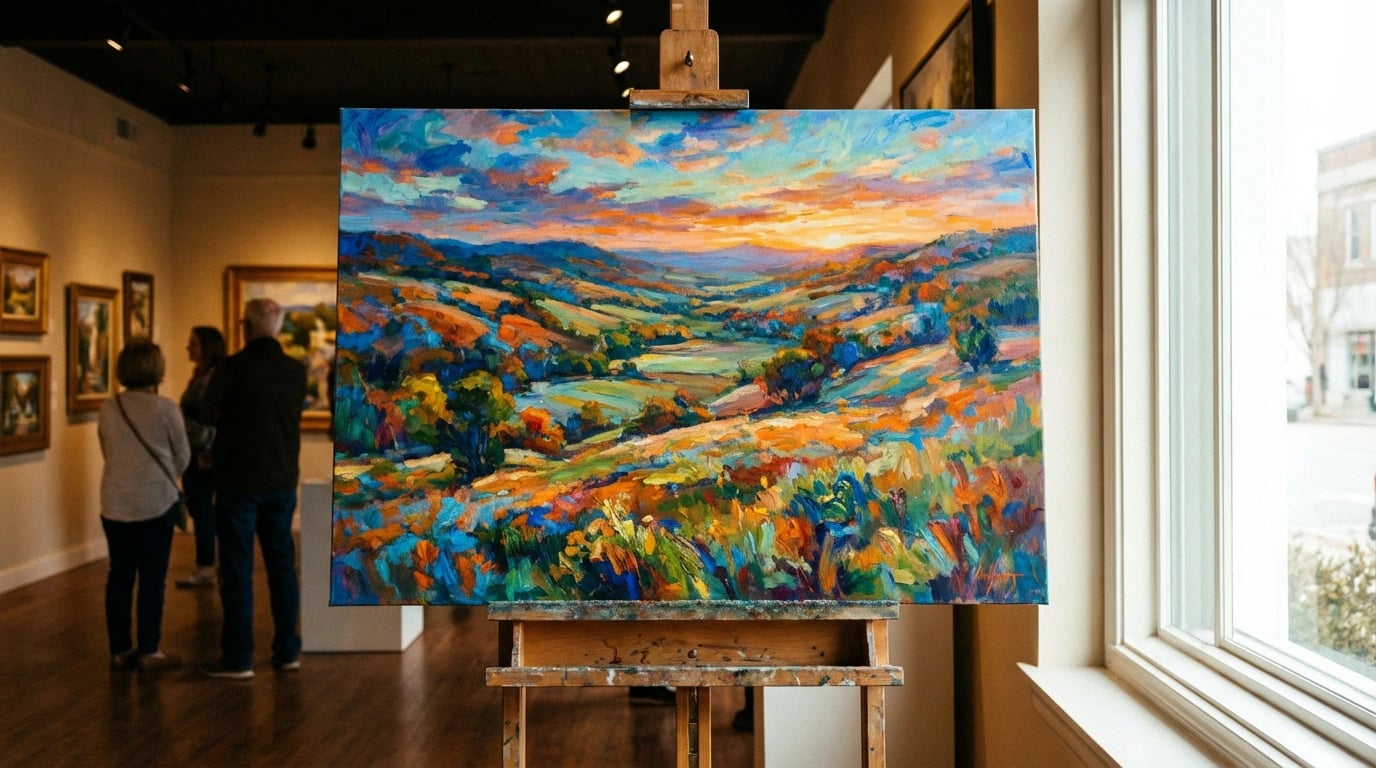
Choosing the right colors for your landscape art can transform a room from ordinary to extraordinary. However, for beginners, matching landscape art to existing home decor can feel overwhelming. With countless shades, tones, and color combinations available in nature-inspired artwork, understanding the fundamentals of color coordination becomes essential. This comprehensive guide will walk you through the basic principles of color matching, helping you select landscape pieces that harmonize beautifully with your living spaces.
The key to successful landscape art color matching lies in understanding three core approaches: complementary coordination, analogous harmony, and accent placement. Start by identifying your room’s dominant colors—typically found in furniture, walls, or major textiles. Then, select landscape art that either echoes these existing hues for a cohesive look, introduces complementary colors for dynamic contrast, or provides strategic accent colors to enliven neutral spaces. By mastering these fundamental techniques, you’ll confidently choose artwork that enhances your home’s aesthetic while reflecting your personal style.
Understanding Color Basics for Landscape Art
Before diving into color matching, familiarizing yourself with basic color theory helps tremendously. The color wheel consists of primary colors (red, blue, yellow), secondary colors (green, orange, purple), and tertiary colors that blend these together. Understanding this foundation enables you to identify relationships between the colors in your artwork and your decor.
Landscape art naturally incorporates a wide spectrum of colors depending on the scene depicted. Coastal landscapes often feature blues, teals, and sandy beiges, while forest scenes showcase various greens, browns, and earthy tones. Desert landscapes might emphasize warm oranges, terracottas, and golden yellows. Moreover, the artistic style significantly impacts color presentation—realistic landscapes use natural hues, whereas abstract interpretations might employ unexpected color palettes.
Warm Versus Cool Color Temperatures
Color temperature plays a crucial role in setting a room’s mood. Warm colors include reds, oranges, yellows, and warm earth tones, creating cozy, energetic atmospheres. Cool colors encompass blues, greens, and purples, promoting calm, serene environments. Most landscape art naturally leans toward one temperature, though many pieces incorporate both for visual interest.
Consider your room’s existing temperature bias when selecting artwork. A space dominated by cool grays and blues benefits from landscape art that continues this theme or introduces warm accents for balance. Conversely, rooms with warm wood tones and beige furniture can embrace either harmonious warm landscapes or refreshing cool-toned pieces for contrast. The various artistic styles used in landscape interpretation offer different temperature options even within similar subject matter.
Assessing Your Space Before Choosing Art
Successfully matching landscape art begins with thoroughly evaluating your existing space. Take inventory of the colors already present in your room. Therefore, examine your walls, flooring, major furniture pieces, curtains, rugs, and decorative accessories. Identify which colors dominate, which serve as secondary accents, and which appear sparingly.
Create a simple color palette reference by collecting paint chips, fabric swatches, or photographs that capture your room’s existing colors. This tangible reference proves invaluable when browsing for landscape art, whether online or in person. Additionally, note your room’s lighting conditions—natural light changes throughout the day, affecting how colors appear.
Identifying Your Dominant Color Scheme
Most rooms follow one of several established color schemes. Monochromatic schemes use variations of a single color in different shades and tints. Analogous schemes combine colors adjacent on the color wheel, such as blues and greens. Complementary schemes pair opposite colors for bold contrast. Understanding your existing scheme helps you choose landscape art that either reinforces or thoughtfully challenges it.
Furthermore, consider the purpose and mood of your space. Bedrooms typically benefit from calming landscapes with softer colors, while living areas can accommodate bolder, more vibrant pieces. Home offices might require focused, less distracting color schemes. Matching your landscape art’s color intensity to the room’s function ensures visual comfort and appropriate atmosphere.
Three Essential Matching Techniques
Once you understand color basics and have assessed your space, three proven techniques will guide your selection process. Each approach offers distinct advantages depending on your design goals and existing decor.
The Complementary Approach
The complementary approach involves selecting landscape art featuring colors opposite your room’s dominant hues on the color wheel. For instance, a room with predominantly blue furnishings pairs beautifully with landscape art emphasizing warm oranges and golden tones—think sunset scenes or autumn foliage. This technique creates visual excitement and dynamic tension without clashing.
However, successful complementary matching requires balancing intensity. If your room features saturated, bold blues, choose landscape art with muted, softer oranges rather than equally intense hues. This prevents overwhelming visual competition. The complementary technique works exceptionally well in neutral-dominated spaces where you want the artwork to serve as the room’s focal point.
The Analogous Harmony Method
Analogous harmony creates cohesive, soothing environments by selecting landscape art with colors adjacent to your existing palette. If your room features various blues and greens, choose landscape pieces that continue this theme—coastal scenes, forest vistas, or misty mountain ranges. This approach feels naturally unified and restful.
The key to preventing monotony with analogous matching involves varying the saturation and value of colors. Consequently, combine deep forest greens with lighter sage tones and bright turquoise accents within your landscape art. This variation maintains visual interest while preserving overall harmony. Artists who specialize in capturing the geometric patterns and natural forms of native flora often work within analogous palettes that translate beautifully to interior spaces.
The Strategic Accent Technique
The strategic accent technique works best in predominantly neutral spaces. Here, your landscape art introduces pops of color that appear sparingly elsewhere in the room. Perhaps you have a gray sofa with coral throw pillows—choose landscape art featuring coral, peach, or salmon tones in sunset skies or floral elements to create visual connections across the space.
This method allows for creative flexibility and can easily refresh a room’s look. By changing smaller accent pieces like pillows or decorative objects to match different colors within your landscape art, you create multiple coordinated looks from a single artwork. Additionally, this technique helps unify open-concept spaces by repeating accent colors from room to room through strategically placed landscape pieces.
Working With Neutral Landscapes
Neutral landscape art deserves special attention as it offers remarkable versatility. Pieces featuring blacks, whites, grays, beiges, and browns coordinate with virtually any color scheme. Black and white photography of dramatic mountain ranges, sepia-toned vintage landscapes, or minimalist charcoal drawings provide sophisticated options that never clash.
Nevertheless, neutrals aren’t necessarily boring. Look for neutral landscape art with varied textures, interesting compositions, or subtle color undertones. A predominantly gray landscape might contain hints of blue or purple that subtly connect with your decor. Landscape art throughout history has explored these nuanced neutral palettes with remarkable sophistication.
Adding Depth With Neutral Artwork
Neutral landscapes excel at adding visual depth without competing for attention. They allow colorful furnishings and accessories to shine while providing grounding visual weight. Moreover, neutral artwork adapts as your decor evolves—you can completely change your room’s color scheme without needing to replace neutral landscape pieces.
Consider layering neutral landscapes with colorful ones for gallery wall arrangements. A large neutral piece can anchor a collection while smaller, colorful landscapes provide pops of interest. This approach creates visual hierarchy and prevents overwhelming the space with competing colors. The subtle tones found in natural eucalyptus and native flora often provide this perfect neutral foundation with organic interest.
Common Color Matching Mistakes to Avoid
Even with solid color theory knowledge, beginners often make predictable mistakes. Recognizing these pitfalls helps you avoid costly decorating missteps and buyer’s remorse.
Matching Too Literally
The most common error involves trying to match colors too exactly. Seeking landscape art with the precise shade of blue as your sofa often results in flat, uninteresting coordination. Instead, aim for complementary or harmonious relationships rather than perfect matches. Variation in shade, tone, and saturation creates depth and sophistication.
Furthermore, exact matching limits your options unnecessarily. A slightly different blue in your landscape art—perhaps more teal or navy than your furniture’s sky blue—adds visual richness while still coordinating beautifully. Embrace subtle differences that create conversation between elements rather than monotonous repetition.
Ignoring Undertones
Colors have undertones that significantly impact compatibility. A beige with pink undertones looks entirely different than beige with yellow or gray undertones. Similarly, greens range from blue-greens to yellow-greens. Ignoring these subtle differences leads to combinations that feel “off” even when they theoretically should work.
Test potential landscape art against your existing colors in various lighting conditions. Colors that seem perfect in bright gallery lighting might clash under your home’s warm incandescent bulbs. Additionally, consider how the artwork’s frame color and material affect overall appearance—wood tones have undertones too, which should harmonize with both the artwork and your space.
Overwhelming Small Spaces
Choosing landscape art with too many colors or overly intense hues can overwhelm small rooms. While vibrant artwork makes bold statements, compact spaces benefit from more restrained palettes. Opt for landscapes with two or three dominant colors rather than busy, multi-colored scenes. This restraint prevents visual chaos and maintains a sense of spaciousness.
Conversely, large rooms can accommodate more complex, colorful landscape pieces without feeling cluttered. Scale your color intensity and complexity to your space’s dimensions. Remember that you can browse options at our curated collection to see how different pieces might work in various room sizes.
Practical Tips for Testing and Selection
Theory matters, but practical testing ensures successful results. Several strategies help you preview how landscape art will actually look in your space before committing to a purchase.
Use Digital Tools
Many websites and apps allow you to virtually place artwork on your walls using augmented reality or photo editing. Take a clear photograph of your wall, then digitally add potential landscape pieces to visualize scale, color coordination, and overall impact. This technology removes much guesswork from online art shopping.
Additionally, adjust your screen’s brightness to approximate different lighting conditions. View potential pieces on your phone or computer at various times of day to see how colors shift. While not perfectly accurate, digital previews provide valuable preliminary insights that narrow your options effectively.
Sample Before Committing
Whenever possible, obtain samples or visit physical galleries to see artwork in person. Colors on screens vary significantly from printed or painted reality. If purchasing prints, some retailers offer small sample sizes at minimal cost—worth the investment to ensure color accuracy before ordering large, expensive pieces.
Bring your color swatches or photographs of your room when viewing art in person. Hold swatches directly against potential purchases to see how colors interact in reality. Trust your instincts—if something feels off despite theoretically working, listen to that intuition. The relationship between traditional painting techniques and color mixing can produce unexpected results that screens don’t fully capture.
Consider Seasonal Flexibility
Think about rotating landscape art seasonally, especially in accent positions. A warm, golden autumn landscape might feel perfect in fall but too heavy in summer. Having options allows you to refresh your space’s mood without major redecorating. Select pieces that either work year-round or complement each other when swapped.
This approach also justifies investing in multiple pieces rather than agonizing over one perfect selection. Two or three coordinating landscape prints at moderate price points provide more flexibility than a single expensive piece. You’ll enjoy variety while maintaining cohesive color coordination throughout the year.
Building a Cohesive Collection
As you gain confidence, consider building a collection of landscape art with a unifying color thread. This might be a specific hue that appears in each piece, a consistent temperature bias, or a signature neutral that grounds diverse colorful works. Collections feel curated and intentional rather than randomly assembled.
Moreover, cohesive collections allow you to rearrange pieces across different rooms while maintaining visual harmony. The warm greens found in eucalyptus-inspired interior design might thread through multiple artworks, creating continuity even when pieces depict different scenes or styles. This strategy maximizes your investment and decorating flexibility.
Color matching landscape art to your home decor doesn’t require professional design training—just patience, observation, and willingness to trust your developing eye. Start with these fundamental techniques, avoid common pitfalls, and test thoroughly before committing. As you gain experience, you’ll develop intuition for color relationships that transcends rules. Remember that your home should reflect your personal aesthetic preferences, so choose landscape art that resonates emotionally while coordinating visually. The perfect piece balances technical color harmony with that intangible quality that makes you smile every time you see it. With these beginner guidelines, you’re well-equipped to confidently select landscape artwork that transforms your living spaces into cohesive, beautiful environments.

|
joerussell Australian abstract artists based in Byron Bay and curator of the GumPrints art print collection. |
Leave a Reply