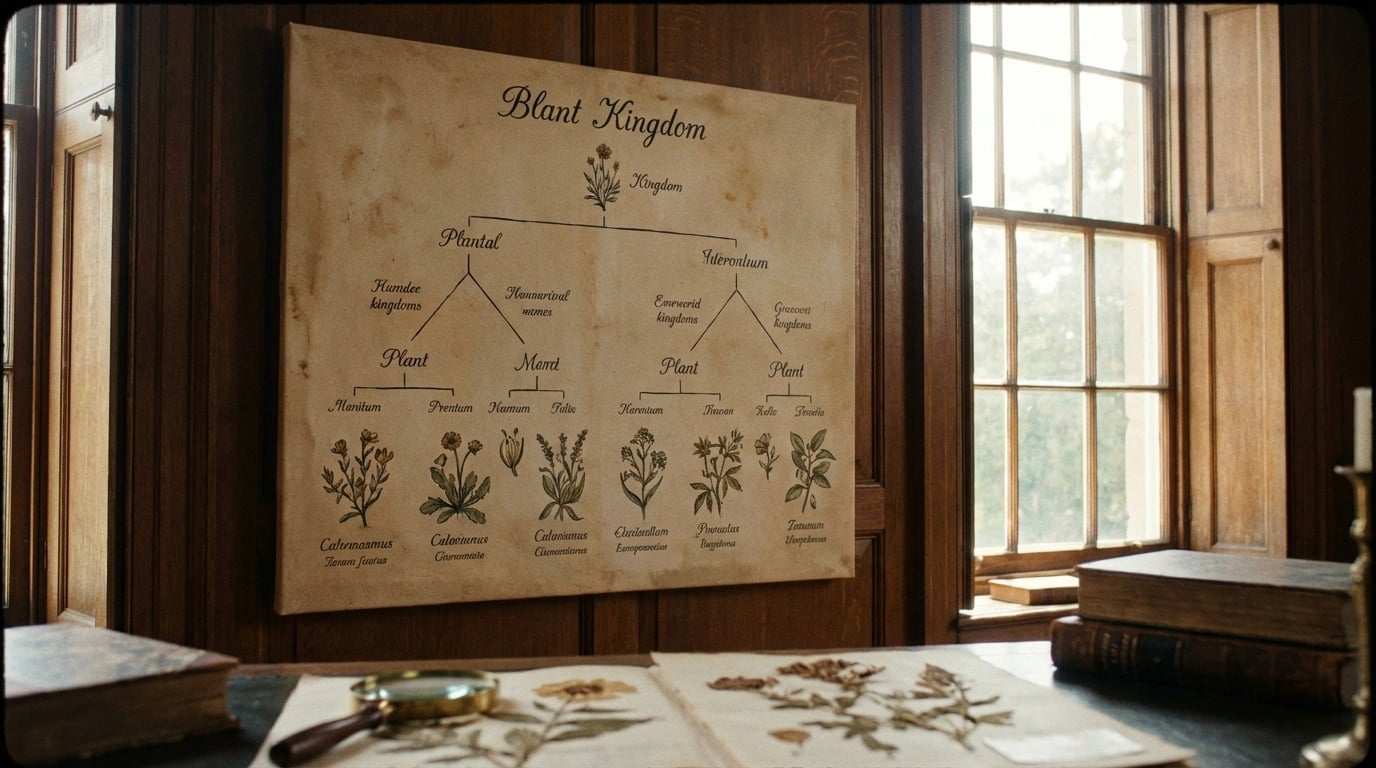
Understanding plant diversity requires more than casual observation. The scientific classification of plant families provides a systematic framework that botanists and plant enthusiasts use to organize and study the estimated 400,000 plant species on Earth. This structured approach helps us comprehend relationships between different plants, predict their characteristics, and appreciate the remarkable complexity of the plant kingdom. Whether you’re a gardening hobbyist, a biology student, or simply curious about the natural world, learning to classify plants using established scientific methods opens doors to deeper botanical knowledge and understanding.
Plant classification, formally known as taxonomy, operates through a hierarchical system that moves from broad categories to increasingly specific ones. At the broadest level, all plants belong to the Kingdom Plantae. From there, the classification descends through Division, Class, Order, Family, Genus, and finally Species. Plant families represent a crucial middle ground in this hierarchy, grouping together plants that share fundamental structural and evolutionary characteristics. Understanding how to identify and classify these families empowers you to recognize patterns across seemingly different species and appreciate the evolutionary relationships that connect the plant world.
Understanding the Taxonomic Hierarchy
The taxonomic system creates order from botanical chaos by organizing plants into nested categories. Each level becomes progressively more exclusive, meaning fewer plants share characteristics as you move down the hierarchy. Plant families sit at a particularly useful level because they’re specific enough to reveal meaningful patterns yet broad enough to encompass diverse forms. For instance, the Rosaceae family includes roses, strawberries, almonds, and apples—plants that seem wildly different but share key reproductive and structural features. Moreover, understanding this hierarchy helps you grasp why plant classification matters for practical applications like agriculture, medicine, and horticulture.
When learning about plant characteristics, it’s helpful to understand how evolution shapes these organizational patterns. As you explore the complete guide to plant evolution and adaptation, you’ll see how shared ancestry creates the resemblances that taxonomists use to group plants. The hierarchical system essentially reflects evolutionary relationships, making it both a practical organizational tool and a window into botanical history.
Step-by-Step Classification Process
Classifying plants requires careful observation and knowledge of specific botanical features. The process begins with examining physical characteristics that reveal family membership. Here’s how to approach plant classification methodically:
Step 1: Examine Flower Structure
Start by observing the flower’s basic anatomy. Count the flower parts, particularly the number of petals, sepals, and stamens. Family-level classification often hinges on these numbers—some families consistently show flowers with multiples of three petals, while others display multiples of four or five. Additionally, note the arrangement and fusion of flower parts, as these patterns reveal family identity. Using a magnifying glass helps reveal fine details that distinguish one family from another.
Step 2: Observe Leaf Arrangement and Type
Leaf characteristics provide crucial classification clues. Examine whether leaves are simple or compound, noting their arrangement along the stem. Some families favor opposite leaf arrangements, while others consistently show alternate patterns. Furthermore, inspect leaf margins—whether they’re smooth, serrated, or lobed. The leaf texture, whether waxy or fuzzy, and the presence of special structures like stipules (small leaf-like growths at the leaf base) all contribute to family identification. These visible features often correlate directly with family groupings.
Step 3: Analyze Stem and Root Characteristics
Examine the plant’s woody or herbaceous nature, noting whether stems are hollow or solid. Cross-sectional stem anatomy reveals whether the plant is a monocot or dicot, a fundamental division that separates many plant families. Consequently, understanding basic stem structure helps narrow down possible family classifications. Root systems also tell the story—fibrous roots versus taproot systems often correlate with family membership, reflecting evolutionary adaptations to specific environmental niches.


Step 4: Study Fruit and Seed Structures
Fruits and seeds provide definitive classification information. Examine whether the fruit is a berry, capsule, legume, or drupe. The way seeds attach inside fruits, their number, and their protective structures vary significantly between families. Therefore, identifying fruit type becomes one of the most reliable classification methods. Seeds themselves reveal patterns—some families produce winged seeds for wind dispersal, while others develop seeds with specialized structures for animal dispersal.
Using Field Guides and Digital Resources
Modern plant classification relies on both traditional field guides and digital tools. Quality field guides specific to your region or plant family provide illustrations and descriptions that facilitate identification. Digital applications and online databases now offer interactive keys where you answer questions about plant features, progressively narrowing possibilities until reaching family identification. Understanding biological taxonomy (Wikipedia) provides essential background that helps you appreciate why these systematic classification methods matter to the scientific community.
Key Plant Family Characteristics to Memorize
Certain plant families appear so frequently in nature and cultivation that recognizing them immediately becomes valuable. The Poaceae family (grasses) represents one of the most important families economically and ecologically. Grasses display parallel leaf veins, hollow stems, and distinctive flower structures called spikelets. Members include wheat, rice, corn, and bamboo—plants that sustain human civilization. Similarly, the Fabaceae family (legumes) features compound leaves and distinctive pea-like flowers, with the added benefit of nitrogen-fixing root nodules.
The Asteraceae family (sunflowers and daisies) contains the largest number of flowering plant species. These plants display characteristic flower heads composed of many tiny flowers clustered together. Additionally, you’ll encounter the Solanaceae family (nightshades), which includes tomatoes, peppers, potatoes, and deadly nightshade. This family consistently shows alternate simple leaves and five-petaled flowers. As you deepen your exploration of how to identify unique plant kingdom characteristics, you’ll develop mental shortcuts for recognizing these common families instantly.
Common Plant Families to Know
Building familiarity with major plant families accelerates your classification skills. Consider learning these prominent families that dominate gardens, farms, and wild ecosystems:
- Rosaceae (Roses): Includes apple, strawberry, peach, and ornamental roses with typically five petals
- Cucurbitaceae (Gourds): Features pumpkins, cucumbers, and melons with distinctive tendrils and large flowers
- Brassicaceae (Cabbage): Contains broccoli, cabbage, and mustard with characteristic four-petaled flowers
- Apiaceae (Carrot): Includes carrots, parsley, and dill with umbrella-shaped flower clusters
- Liliaceae (Lilies): Features tulips, lilies, and onions with bulbs and six-petaled flowers
As you continue studying botanical classification, remember that these family characteristics evolved over millions of years. Therefore, understanding family traits tells you not just what plants look like today, but how they adapted to their environments. When you’re ready to explore how botanical art captures plant diversity, visit our art print shop to discover stunning representations of plants from across the botanical spectrum. Creating a collection of botanical artwork alongside your classification knowledge deepens your connection to the plant world.

|
joerussell Australian abstract artists based in Byron Bay and curator of the GumPrints art print collection. |
Leave a Reply