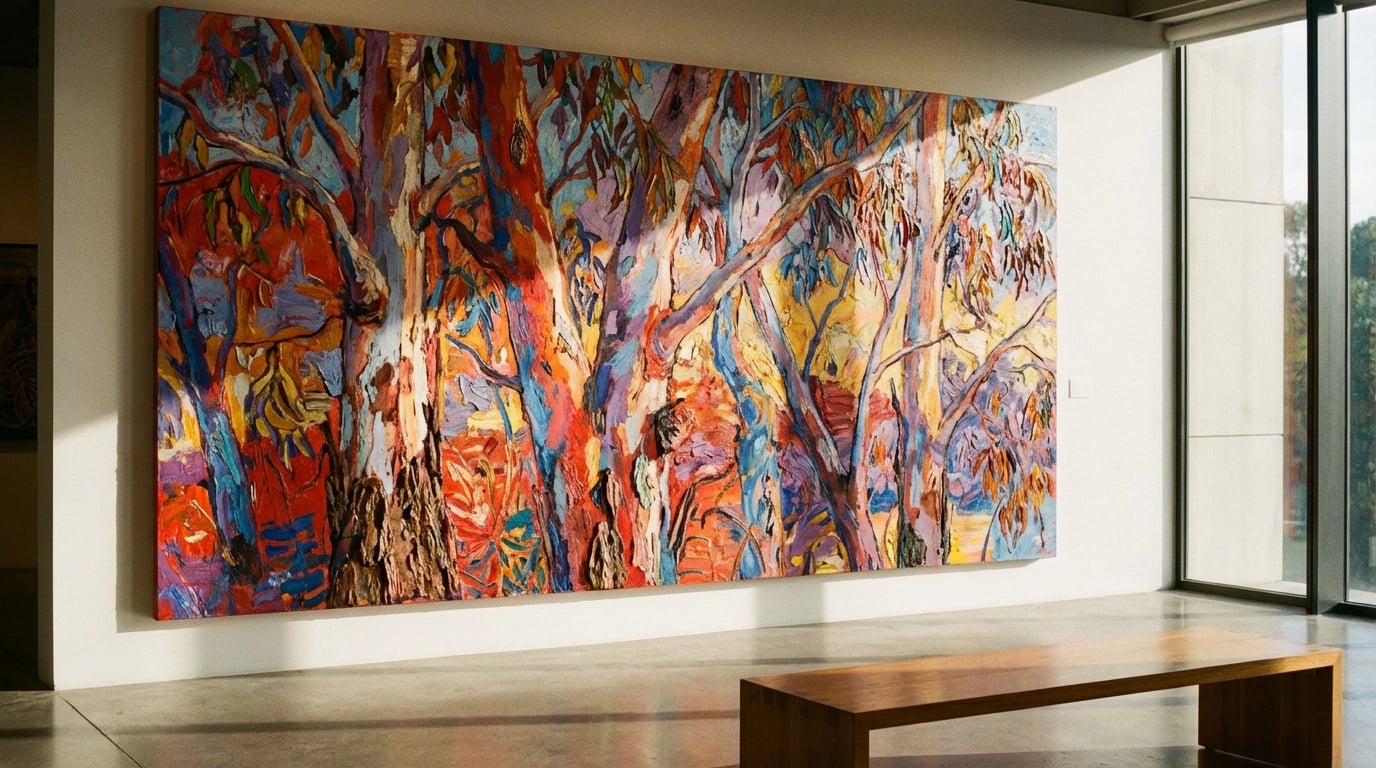
Australia’s iconic gum trees have captivated artists for generations, inspiring some of the most breathtaking and innovative artistic interpretations found anywhere in the natural world. From their distinctive silvery bark to their graceful, twisting branches, eucalyptus trees offer endless visual possibilities that artists across diverse mediums continue to explore and reimagine. This comprehensive guide explores seven distinctive art styles that have transformed how we see and appreciate these remarkable trees.
The most compelling tree art styles bring together traditional techniques with contemporary vision, creating works that honour the gum tree’s unique character whilst pushing creative boundaries. Whether through bold abstracts, delicate watercolours, or striking mixed-media compositions, these artistic approaches reveal new dimensions of Australia’s beloved eucalypts. Each style offers distinct methods for capturing the essence of these trees—from their textural complexity to their ethereal presence in the landscape.
Abstract Expressionism and Gum Trees
Abstract expressionism transforms gum trees into emotional landscapes of colour, form, and gesture. Rather than depicting every leaf and branch with photographic precision, this approach captures the visceral feeling of standing beneath towering eucalypts or witnessing their dance in coastal winds. Artists working in this style often employ bold brushstrokes, layered textures, and spontaneous mark-making to convey the energy and movement inherent in these trees.
The beauty of abstract eucalyptus art lies in its ability to distil the essence of gum trees into their fundamental visual elements. Colour fields might represent the shifting blues and greys of eucalyptus foliage, whilst sweeping gestures evoke the graceful arc of branches reaching skyward. This approach connects deeply with viewers who appreciate nature’s living ink palette and the emotional resonance of the Australian landscape. Moreover, abstract works invite personal interpretation, allowing each viewer to bring their own experiences and memories of gum trees to the artwork.
The “Gum print 1” and “Gum print 2” exemplify this abstract approach beautifully, translating the organic complexity of eucalyptus into sophisticated compositions that work equally well in contemporary and traditional interiors.
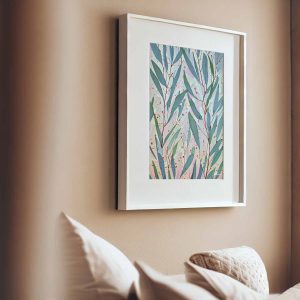
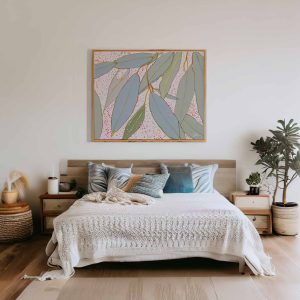
These abstract interpretations particularly suit modern spaces where art serves as both focal point and conversation starter. Furthermore, they demonstrate how limiting a colour palette can actually enhance visual impact, with subtle tonal variations creating depth and sophistication.
Contemporary Botanical Illustration

Contemporary botanical illustration represents a meticulous celebration of gum tree anatomy, combining scientific accuracy with artistic sensibility. This style honours centuries of botanical art tradition whilst incorporating modern aesthetics and techniques. Artists working in this genre carefully observe and render the distinctive characteristics that make each eucalyptus species unique—the particular shape of leaves, the texture of bark, the form of gum nuts, and the delicate structure of blossoms.
However, contemporary approaches distinguish themselves from historical scientific illustration through their artistic liberty and compositional innovation. Modern botanical artists might isolate a single branch against negative space, creating a minimalist statement piece, or arrange multiple specimens in unexpected configurations. The precision required for this style demands intimate familiarity with gum tree morphology, often developed through hours of field observation and sketching. Additionally, these works frequently explore which gum leaves make the best art subjects, focusing on species with particularly striking visual characteristics.
Techniques for Botanical Accuracy
Creating compelling botanical art requires mastering several specialised techniques. Watercolour remains a favoured medium for its translucency and ability to capture subtle colour variations in eucalyptus foliage. Pen and ink work beautifully for rendering bark texture and intricate detail. Meanwhile, coloured pencils offer precise control for layering colours and creating smooth gradations. Many contemporary artists combine these traditional media with digital tools for enhanced flexibility and reproduction quality.
Impressionist Landscape Techniques
Impressionist interpretations of gum trees capture the atmospheric qualities and changing light conditions that make Australian eucalyptus forests so enchanting. This style prioritises visual impression over photographic detail, using broken colour and visible brushwork to convey the shimmering effect of sunlight filtering through silver-green canopies. Consequently, impressionist gum tree paintings often evoke specific times of day—the golden warmth of afternoon light, the cool blues of twilight, or the soft haziness of early morning mist.
The impressionist approach suits eucalyptus subjects particularly well because it mirrors how we actually perceive these trees in nature. Our eyes don’t catalogue every individual leaf; instead, we experience the overall effect of dappled light, moving shadows, and colour harmonies. Artists employing this style often work en plein air, painting directly from observation to capture fleeting light conditions. This immediacy brings freshness and vitality to the finished work. Additionally, the looser brushwork characteristic of impressionism naturally suggests the gentle movement of eucalyptus branches swaying in breezes.
Mixed Media and Textural Exploration
Mixed media approaches to gum tree art embrace experimentation and textural complexity, combining diverse materials and techniques to create richly layered works. Artists might incorporate actual eucalyptus bark fragments, pressed leaves, or gum nut impressions into their compositions, blurring the boundary between representation and physical reality. These works often feature collaged elements, found materials, and unconventional tools that build surface interest and tactile dimension.
The textural nature of eucalyptus trees themselves—their peeling bark, rough trunks, and dimensional seed pods—makes them ideal subjects for mixed media exploration. Artists might apply thick impasto to suggest bark texture, use tissue paper for translucent leaf effects, or embed natural materials into resin for preservation and depth. This approach particularly appeals to those interested in painting eucalyptus and discovering nature’s hidden geometry through tactile and visual experimentation.
Materials and Methods
Successful mixed media work requires understanding how different materials interact and adhere. Acrylic mediums serve as versatile binders, whilst gesso provides texture and tooth. Natural elements like bark must be properly dried and sealed to prevent deterioration. Therefore, technical knowledge complements creative vision in producing durable, archivally sound artworks. Many artists also incorporate printmaking techniques, transfers, or encaustic wax to expand their expressive vocabulary.
Minimalist and Geometric Interpretations
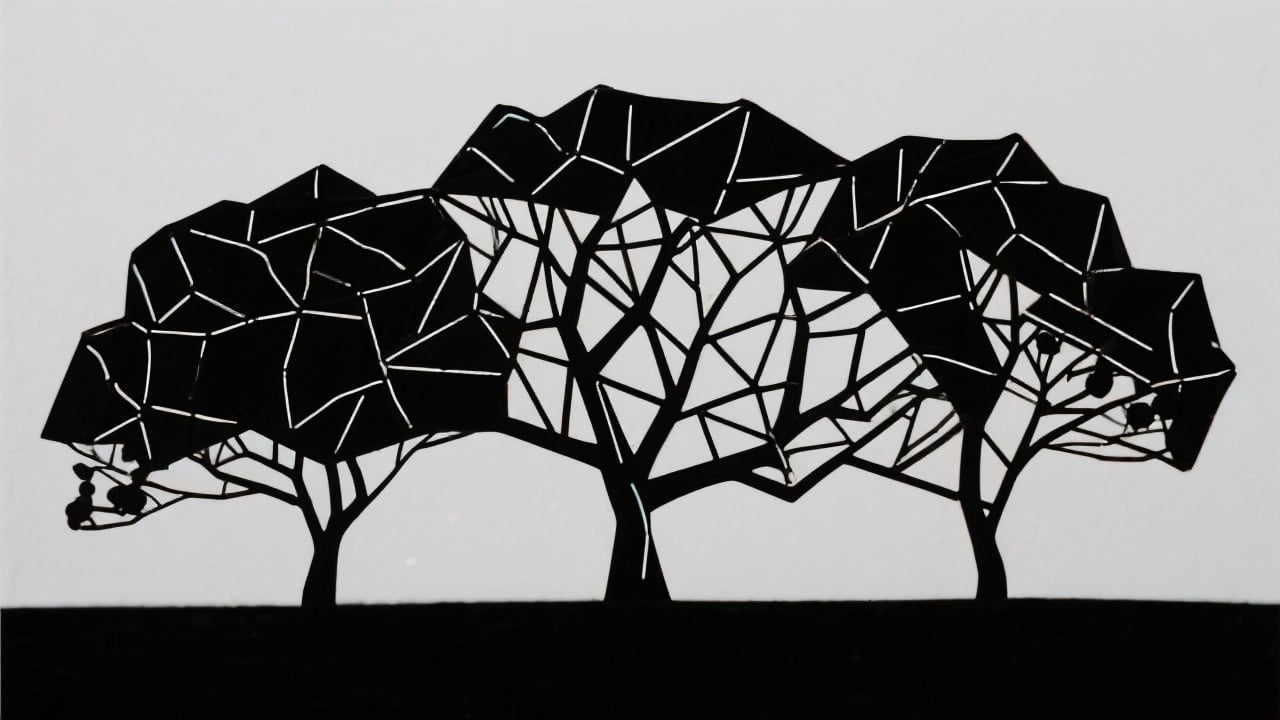
Minimalist approaches strip gum trees to their essential forms, creating powerful statements through restraint and simplification. These interpretations might reduce a eucalyptus to a single elegant line representing trunk and branches, or distil foliage into geometric shapes and patterns. The minimalist aesthetic celebrates negative space as much as positive form, allowing the eye to rest and the mind to complete the image.
Geometric interpretations take this further by analysing the underlying mathematical patterns in eucalyptus growth—the angles of branch divergence, the spiral arrangements of leaves, or the fractal-like repetition of forms at different scales. Consequently, these works often possess a contemporary sophistication that suits modern interiors beautifully. The reduced colour palettes typical of minimalism—perhaps just black and white, or subtle earth tones—focus attention on form, composition, and spatial relationships. Furthermore, this style translates exceptionally well to various applications, from large-scale wall art to small, intimate studies.
Indigenous Art Perspectives
Indigenous Australian artists bring thousands of years of cultural knowledge and spiritual connection to their representations of eucalyptus trees. For Aboriginal peoples, gum trees hold profound significance as sources of food, medicine, shelter, and spiritual meaning. Indigenous Australian art traditions express these deep relationships through distinctive visual languages that vary across different cultural groups and regions.
Contemporary Indigenous artists continue evolving these traditions whilst maintaining cultural integrity and meaning. Some incorporate traditional dot painting techniques to represent gum trees within larger landscape narratives, whilst others use cross-hatching methods characteristic of particular regions. These works often depict trees not merely as botanical specimens but as living entities embedded within complex stories of Country, ancestry, and seasonal cycles. Moreover, they remind non-Indigenous viewers that Australian landscapes carry cultural meanings and histories that predate colonisation by tens of thousands of years. The spiritual dimension Indigenous art brings to gum tree representation offers perspectives that purely aesthetic approaches cannot capture.
Digital and Contemporary Fusion
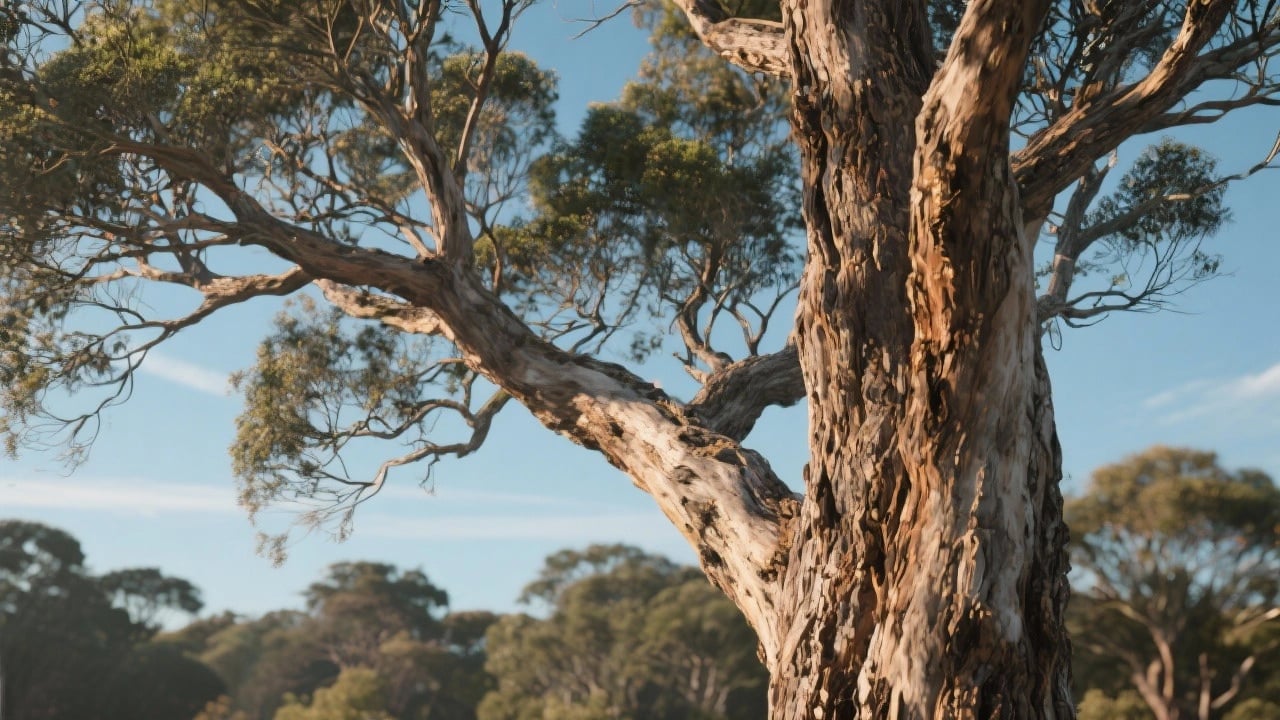
Digital technologies have opened extraordinary new possibilities for reimagining gum trees in art. Contemporary artists combine photography, digital painting, 3D modelling, and algorithmic generation to create works impossible through traditional media alone. Digital tools allow infinite experimentation—adjusting colours instantly, trying multiple compositions, or blending photographic elements with painted passages seamlessly. Consequently, digital eucalyptus art ranges from hyperrealistic renderings to fantastical interpretations that transform trees into otherworldly visions.
The fusion of traditional and digital approaches represents particularly exciting territory. Artists might begin with watercolour sketches created en plein air, then scan and manipulate these digitally, adding layers, adjusting values, or incorporating photographic textures. Others photograph eucalyptus specimens, then use digital painting techniques to enhance, abstract, or reimagine them. This hybrid methodology combines the authenticity and spontaneity of direct observation with digital precision and flexibility. Additionally, digital art democratises creation and distribution, allowing artists to reach global audiences through online galleries and print-on-demand services. Those interested in exploring contemporary eucalyptus art will find inspiring examples in our curated shop collection.
Emerging Technologies and Possibilities
Emerging technologies continue expanding creative possibilities for gum tree art. Augmented reality applications can overlay digital eucalyptus artworks onto physical spaces, whilst virtual reality allows immersive experiences of walking through digitally painted gum forests. Generative algorithms can create endless variations on eucalyptus forms based on programmed parameters. Meanwhile, projection mapping transforms physical spaces with dynamic, moving eucalyptus imagery. These technologies suggest that the relationship between art, technology, and nature will only deepen and diversify in coming years.
Choosing Your Eucalyptus Art Style
Selecting which art style resonates most depends on personal aesthetic preferences, intended display spaces, and the emotional response you seek from the artwork. Abstract approaches offer versatility and emotional depth, working beautifully in contemporary settings. Botanical illustrations bring scientific fascination and timeless elegance, whilst impressionist works capture atmospheric beauty and nostalgic warmth. Therefore, consider how different styles complement your existing décor and which aspects of gum trees you find most compelling—their physical beauty, their environmental significance, or their cultural meanings.
Ultimately, the most interesting tree art styles succeed not merely through technical proficiency but through their ability to reveal something new about their subjects. Whether through radical abstraction or meticulous realism, great eucalyptus art invites us to see these familiar trees afresh, appreciating nuances we might otherwise overlook. For those drawn to the hidden stories behind Australian eucalyptus art, exploring diverse artistic approaches enriches understanding of both the trees themselves and our cultural relationships with them. As you consider which style speaks to you, remember that art’s ultimate purpose is connection—between artist and subject, artwork and viewer, humanity and the natural world that sustains us.

|
joerussell Australian abstract artists based in Byron Bay and curator of the GumPrints art print collection. |
Leave a Reply