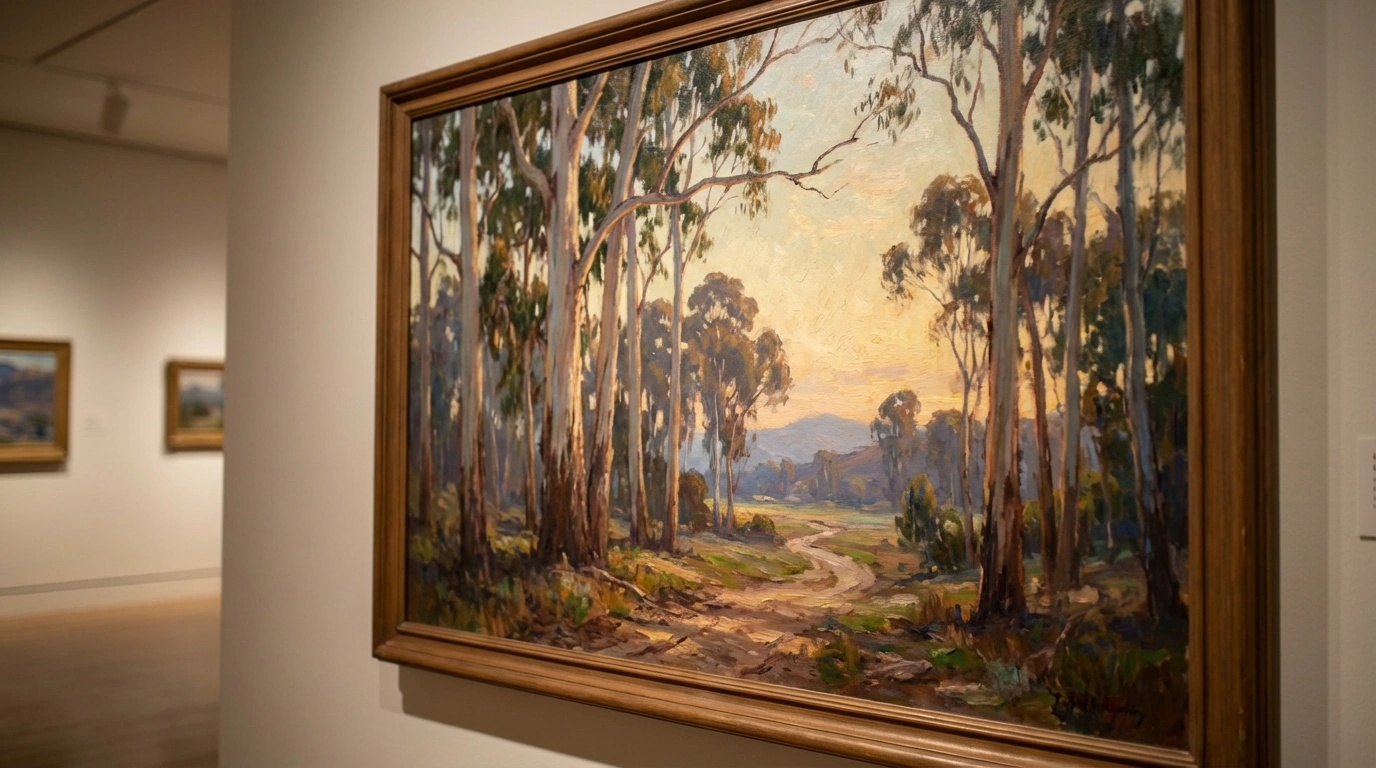
The eucalyptus tree has captivated Australian artists for over a century, transforming from a simple botanical subject into one of the nation’s most recognisable artistic motifs. From the sweeping landscapes of the Heidelberg School to contemporary abstract interpretations, these iconic native trees have shaped how we visually understand the Australian continent. The interplay of light on their distinctive foliage, the sculptural quality of their bark, and the ethereal quality of their silvery-green leaves create an endlessly fascinating subject for artists seeking to capture the essence of the Australian landscape.
The relationship between eucalyptus trees in Australian landscape art runs deeper than mere representation. These trees embody Australia’s natural identity, and their depiction in art reflects broader cultural conversations about land, heritage, and environmental change. Recent developments in the Australian art market have seen a resurgence of interest in native botanical subjects, particularly among emerging artists and collectors seeking authentic representations of the Australian environment. This renewed focus has prompted galleries, museums, and artists to reconsider how traditional landscape painting techniques can coexist with modern interpretive approaches to showcase these magnificent trees.
The Historical Foundation of Eucalyptus in Australian Art
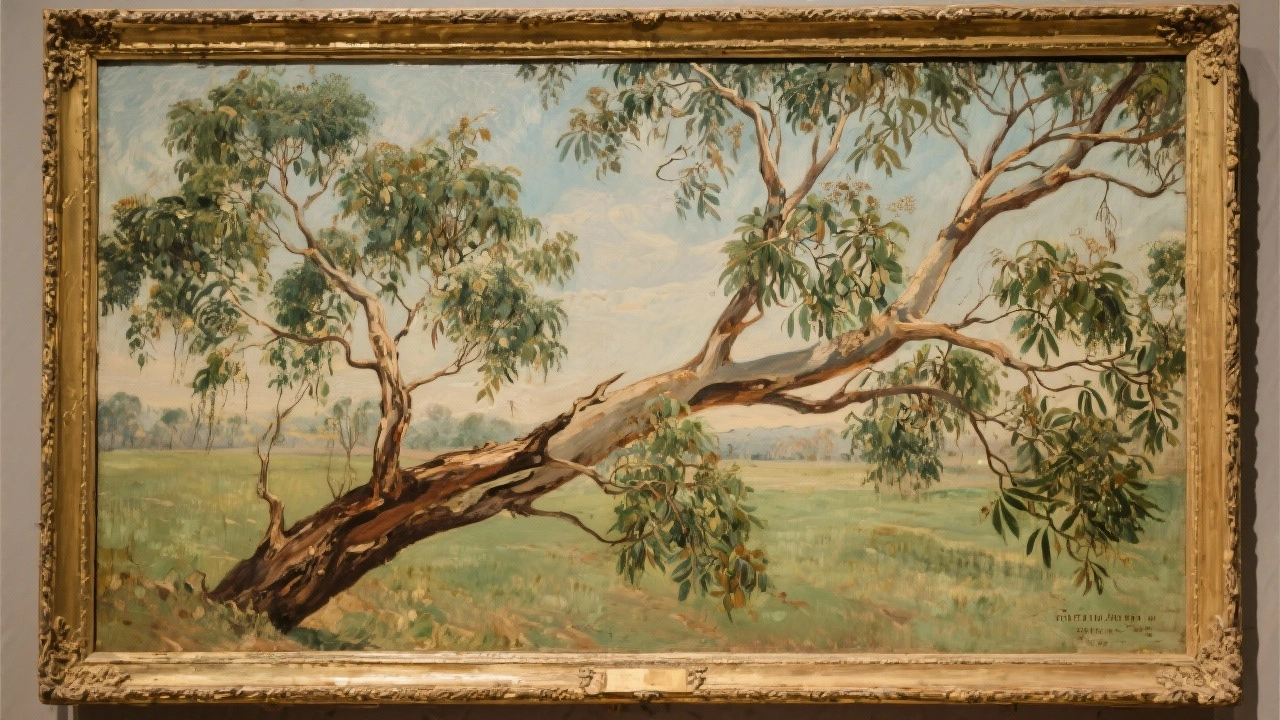
The Australian landscape art movement of the late nineteenth and early twentieth centuries placed eucalyptus trees at its creative heart. Artists such as Arthur Streeton, Tom Roberts, and Frederick McCubbin—key figures of the Heidelberg School—spent countless hours studying how light filtered through the gnarled branches and peeling bark of native gum trees. Their plein air paintings, created outdoors in Victoria’s Dandenong Ranges and other eucalyptus-rich locations, established a visual language that subsequent generations would build upon.
The Heidelberg School’s approach was revolutionary for its time. Rather than adhering to European conventions of landscape painting, these artists embraced the harsh Australian light and the unique character of native vegetation. Streeton’s “The Purple Noon’s Transparent Might” (1896) and Roberts’ “A Breakaway” (1891) demonstrate how eucalyptus trees became structural and symbolic elements in compositions that celebrated Australian identity. These works established a precedent: gum trees were no longer exotic botanical curiosities but rather the embodiment of national character.
Understanding this historical context helps contemporary artists approach eucalyptus subjects with appropriate reverence. As you explore techniques for mastering eucalyptus painting, recognising the foundational work of these pioneers provides essential guidance for developing your own artistic voice.
Contemporary Trends and Market Developments
Recent shifts in the Australian art market reflect a growing appetite for works celebrating native botanical subjects. In 2023, the National Gallery of Victoria’s retrospective featuring works from the Heidelberg School drew record attendances, signalling renewed public interest in Australian landscape traditions. Simultaneously, contemporary artists working with eucalyptus subjects have gained increased representation in major galleries across Australia.
The rise of digital and mixed-media approaches has expanded possibilities for artists interested in eucalyptus representation. Artists are combining traditional painting techniques with digital manipulation, botanical illustration with abstract expressionism, and photographic elements with hand-drawn interpretations. This technical diversity reflects broader cultural conversations about how traditional subjects can speak to contemporary audiences.
Major institutional developments have further validated this trend. In 2024, the Art Gallery of New South Wales expanded its acquisition programme specifically targeting contemporary works featuring Australian native flora. Curator Sarah Mitchell noted that eucalyptus remains the most frequently submitted subject category for landscape-focused exhibitions, suggesting both artist and viewer fascination continues to deepen.
The commercial market has responded accordingly. Galleries specialising in Australian landscape art report increased demand for works featuring gum trees, with prices for quality pieces appreciating steadily over the past eighteen months. This market confidence encourages emerging artists to explore eucalyptus subjects as viable professional pursuits. When considering investment in original artwork, exploring available collections featuring native Australian subjects provides insight into current market offerings.
Techniques for Capturing Eucalyptus Character
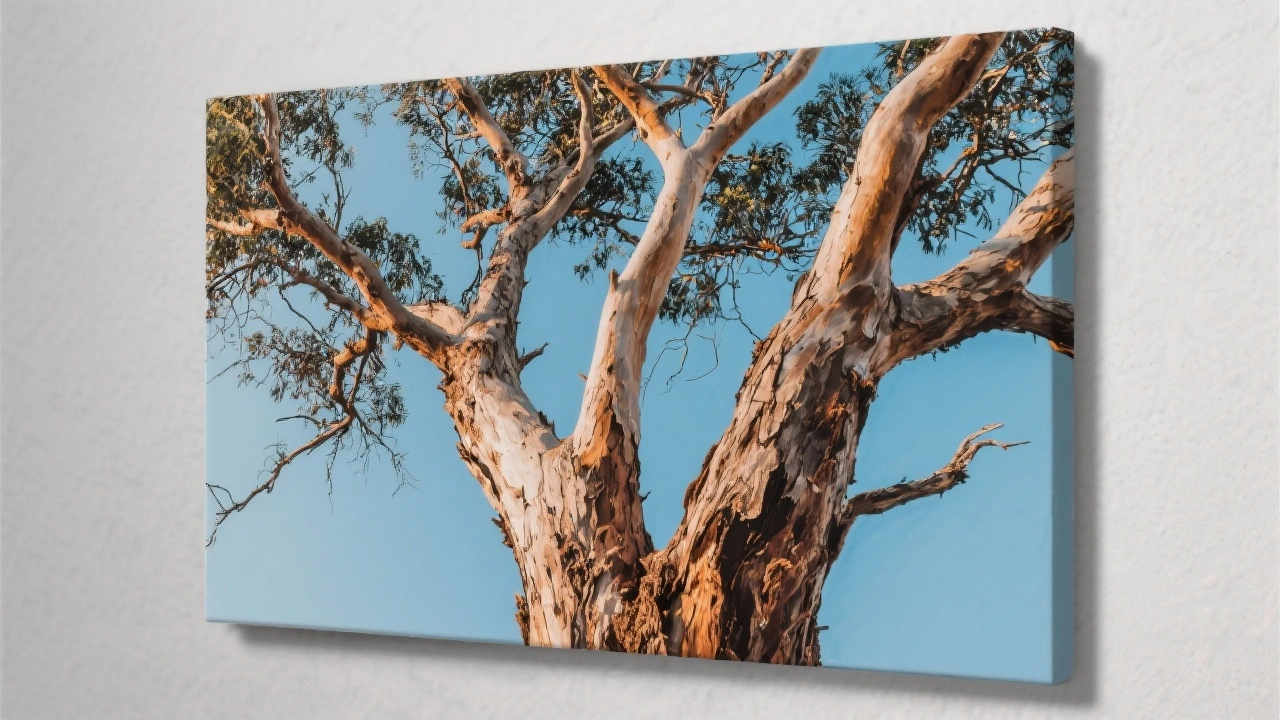
Successfully depicting eucalyptus trees requires understanding their distinctive visual characteristics. The peeling bark, which reveals contrasting layers in whites, greys, and reddish-browns, creates dramatic textural possibilities. The foliage exhibits remarkable colour variation depending on species, season, and light conditions—ranging from blue-green to silvery-grey to deeper olive tones. These elements demand technical skill and observational sensitivity.
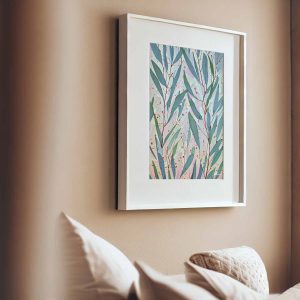
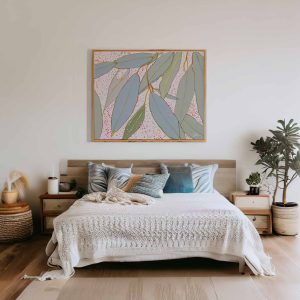
Contemporary artists employ varied methodologies. Some favour traditional oil and watercolour approaches, using layering techniques to capture the translucent quality of backlit leaves. Others utilise mixed media, incorporating natural materials like pressed leaves or bark rubbings into compositions. Digital artists create striking abstract interpretations that distil eucalyptus characteristics into colour, form, and pattern.
Light management proves crucial when painting gum trees. The Australian sun creates dramatic shadows and highlights, with eucalyptus foliage often appearing luminous against darker undergrowth or sky. Artists working with eucalyptus learn to use this natural phenomenon as a compositional advantage rather than a challenge. Reference materials and sketching studies conducted on-site provide invaluable information for studio work.
For artists seeking detailed guidance on botanical subjects, exploring which specific gum leaf varieties work best for artistic purposes offers practical insights. Additionally, understanding applications in interior spaces through eucalyptus print integration in interior design expands appreciation for how these artworks function beyond gallery walls.
Observational Studies and Field Work
Professional artists consistently emphasise the importance of direct observation. Spending time in forests dominated by different eucalyptus species—whether coastal stringybarks, inland ironbarks, or alpine snow gums—develops an intuitive understanding of their structural character. Photography, sketching, and colour notation studies create reference libraries informing studio practice.
Field work also connects artists to environmental contexts often absent from studio-bound practice. Understanding the ecological relationships between eucalyptus and Australian fauna, the seasonal transformations of forests, and the cultural significance of specific species enriches artistic interpretation. This holistic approach produces work with greater authenticity and depth.
The Future of Gum Tree Representation
Looking forward, several developments suggest eucalyptus will remain central to Australian artistic discourse. Climate change conversations increasingly position native forests and their characteristic trees as symbols of environmental resilience and natural heritage worth protecting. Artists responding to ecological concerns find gum trees potent subjects for communicating environmental messages.
Educational institutions are also reconsidering curriculum emphasis on native botanical subjects. Universities offering fine arts degrees now encourage students to engage deeply with Australian landscape traditions as foundational knowledge. This institutional support suggests the next generation of artists will approach eucalyptus subjects with sophisticated technical and conceptual frameworks.
The intersection of cultural tourism and art markets creates additional opportunities. As international visitors seek authentic Australian cultural experiences, artworks authentically representing native landscapes command increasing market attention. Exploring comprehensive collections of Australian native floral prints reveals how contemporary artists are meeting this growing demand with diverse interpretive approaches.
Technological advancement in art production also opens new possibilities. Techniques like giclée printing allow artists to produce high-quality reproductions maintaining the integrity of original works, making eucalyptus-focused art more accessible to broader audiences. This democratisation of access doesn’t diminish original artwork value but expands the market ecosystem benefiting artists and collectors alike.
The trajectory is clear: eucalyptus trees will continue evolving as artistic subjects, reflecting contemporary concerns whilst honouring historical traditions. Whether through traditional landscape painting, abstract interpretation, or experimental mixed media, these iconic native trees remain endlessly compelling subjects for artists seeking to understand and celebrate the Australian natural world. For collectors and enthusiasts, this sustained artistic focus ensures an expanding body of work worthy of study, appreciation, and acquisition for years to come.
Leave a Reply