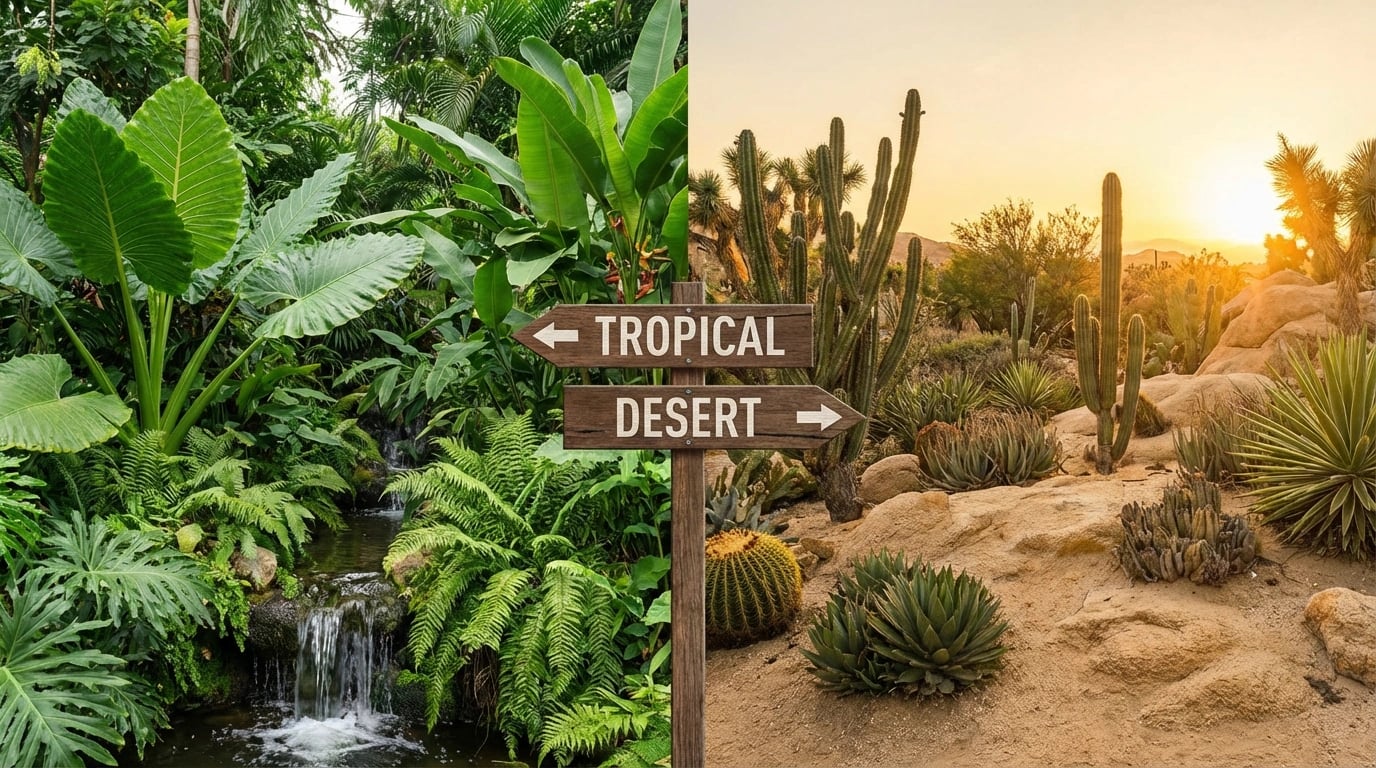
Tropical plants and desert plants represent two distinctly different growing environments, each with unique requirements for successful cultivation. Understanding the differences between these plant types is essential for any gardener or plant enthusiast looking to create thriving indoor or outdoor gardens. While tropical plants thrive in warm, humid conditions with consistent moisture, desert plants flourish in arid climates with minimal water and intense sunlight. By learning how to grow both types effectively, you can diversify your plant collection and create stunning displays that showcase nature’s incredible adaptability.
The key to successfully growing tropical versus desert plants lies in replicating their natural habitats as closely as possible. Tropical plants require warm temperatures (typically 65-75°F), high humidity levels (50-80%), and regular watering to mimic rainforest conditions. Conversely, desert plants need hot, dry conditions with well-draining soil and minimal water. Understanding these fundamental differences will help you make informed decisions about plant placement, watering schedules, soil composition, and environmental controls. With the right approach, both plant types can flourish in your home or garden.
Understanding Tropical Plant Requirements
Tropical plants originate from warm, humid regions near the equator where rainfall is abundant and temperatures remain consistently warm year-round. These plants, including popular varieties like orchids, anthuriums, and bird of paradise, have adapted to thrive in moisture-rich environments. To successfully grow tropical specimens, you’ll need to recreate these conditions as accurately as possible in your home or garden.
Temperature control is absolutely critical for tropical plants. Most species prefer temperatures between 65-75°F during the day and slightly cooler at night. Avoid exposing these plants to temperatures below 50°F, as most tropical varieties cannot tolerate cold conditions. Additionally, maintaining humidity levels between 50-80% is essential. You can achieve this by:
- Misting leaves regularly with distilled water
- Grouping plants together to create a more humid microclimate
- Using a humidifier in the room where plants are located
- Placing plants on trays filled with pebbles and water
- Providing adequate air circulation with a gentle fan
Watering tropical plants requires consistency and attention. These plants prefer consistently moist (but not waterlogged) soil. Water when the top inch of soil feels dry to the touch, typically every 5-7 days depending on season and plant type. During winter months, reduce watering slightly as growth naturally slows. Understanding how plants adapt to their environments will help you better care for tropical species.
Mastering Desert Plant Care
Desert plants have evolved remarkable adaptations to survive in arid, low-moisture environments. Species like succulents, cacti, and agave store water in their leaves and stems, allowing them to thrive with minimal irrigation. Growing desert plants successfully requires a fundamentally different approach than tropical cultivation. The primary challenge most gardeners face is overwatering, which leads to root rot and plant death.
Temperature preferences for desert plants vary by species, but most prefer warm conditions between 60-80°F. Unlike tropical plants, many desert species can tolerate cooler winter temperatures (50-60°F), which can actually promote flowering during spring. The most critical factor for desert plants is ensuring excellent drainage and minimal water. These plants should be watered deeply but infrequently. A practical approach includes:
- Watering only when soil is completely dry (typically every 2-3 weeks)
- Using the “soak and dry” method: water thoroughly until it drains from the bottom, then allow soil to dry completely
- Reducing water frequency during winter months to once monthly or less
- Avoiding water on leaves to prevent fungal issues
- Using cactus or succulent-specific fertilizer during growing season
Light requirements for desert plants are generally high. Most prefer 6-8 hours of direct sunlight daily. If growing indoors, place desert plants near south or west-facing windows. Inadequate light causes weak growth and stretching. Plant diversity provides crucial ecological benefits, and desert plants play an important role in fragile ecosystems worldwide.

Comparing Soil, Water, and Light Needs
Soil composition represents one of the most significant differences between tropical and desert plant care. Tropical plants thrive in rich, organic soil that retains moisture while still providing adequate drainage. Use a high-quality potting mix containing peat moss, coconut coir, and perlite. This combination provides the moisture retention these plants need while preventing waterlogging. Desert plants, conversely, require fast-draining soil that mimics their natural sandy, rocky habitats.
For desert plants, invest in specialized cactus or succulent soil, or create your own by mixing regular potting soil with coarse sand, perlite, or pumice at a ratio of 1:1 or even 1:2 soil to drainage material. This ensures water drains quickly and roots don’t remain in moisture. The difference in watering frequency cannot be overstated: tropical plants need consistent moisture, while desert plants need long periods of dryness between waterings.
Light requirements also differ significantly between these plant types. Tropical plants often come from understory environments in rainforests, so many prefer bright, indirect light. Direct afternoon sun can scorch leaves. Place tropical plants near east or north-facing windows, or use sheer curtains to filter intense afternoon sunlight. Desert plants, by contrast, evolved under intense equatorial or subtropical sun and generally demand direct, unfiltered sunlight for optimal growth and flowering. Learning to classify plants scientifically helps you understand their specific needs more deeply.
Creating the Perfect Environment for Each Type
Successfully growing both tropical and desert plants begins with honest assessment of your home’s conditions. Evaluate your available light, humidity levels, and temperature stability before selecting plants. If your home is naturally warm and humid with limited direct sunlight, tropical plants are your best choice. If your space is bright, dry, and cool, desert plants will thrive.
For tropical plant success, consider investing in a humidifier or creating a dedicated plant zone with grouped specimens that create their own microclimate. Ensure consistent temperatures without cold drafts from windows or doors. Watering should follow a consistent schedule, and regular misting keeps foliage healthy and dust-free. Feed tropical plants with diluted liquid fertilizer every 2-4 weeks during growing season.
Desert plant cultivation requires patience and restraint—the most common mistake is providing too much care. Allow soil to dry completely between waterings, resist the urge to fertilize frequently (once in spring and once in summer is sufficient), and ensure maximum direct sunlight. Repot desert plants only every 2-3 years, as they prefer slightly tight conditions. When choosing between these plant types, consider visiting your local plant shop to see examples of both and determine which appeals to your lifestyle and home environment.
Whether you choose botanical specimens for your collection, understanding the fundamental differences between tropical and desert plants empowers you to make informed growing decisions. Both types offer unique aesthetic qualities and satisfaction when properly cultivated. Many experienced gardeners maintain both tropical and desert collections, creating diverse displays that showcase nature’s incredible range of survival strategies. Start with hardy, beginner-friendly species in either category, then expand your collection as you gain confidence and expertise. Desert plant adaptations (Wikipedia) provide fascinating scientific context for understanding these remarkable organisms. With consistent attention to their specific environmental needs, both tropical and desert plants will reward you with vibrant growth and long-lasting beauty.

|
joerussell Australian abstract artists based in Byron Bay and curator of the GumPrints art print collection. |
Leave a Reply