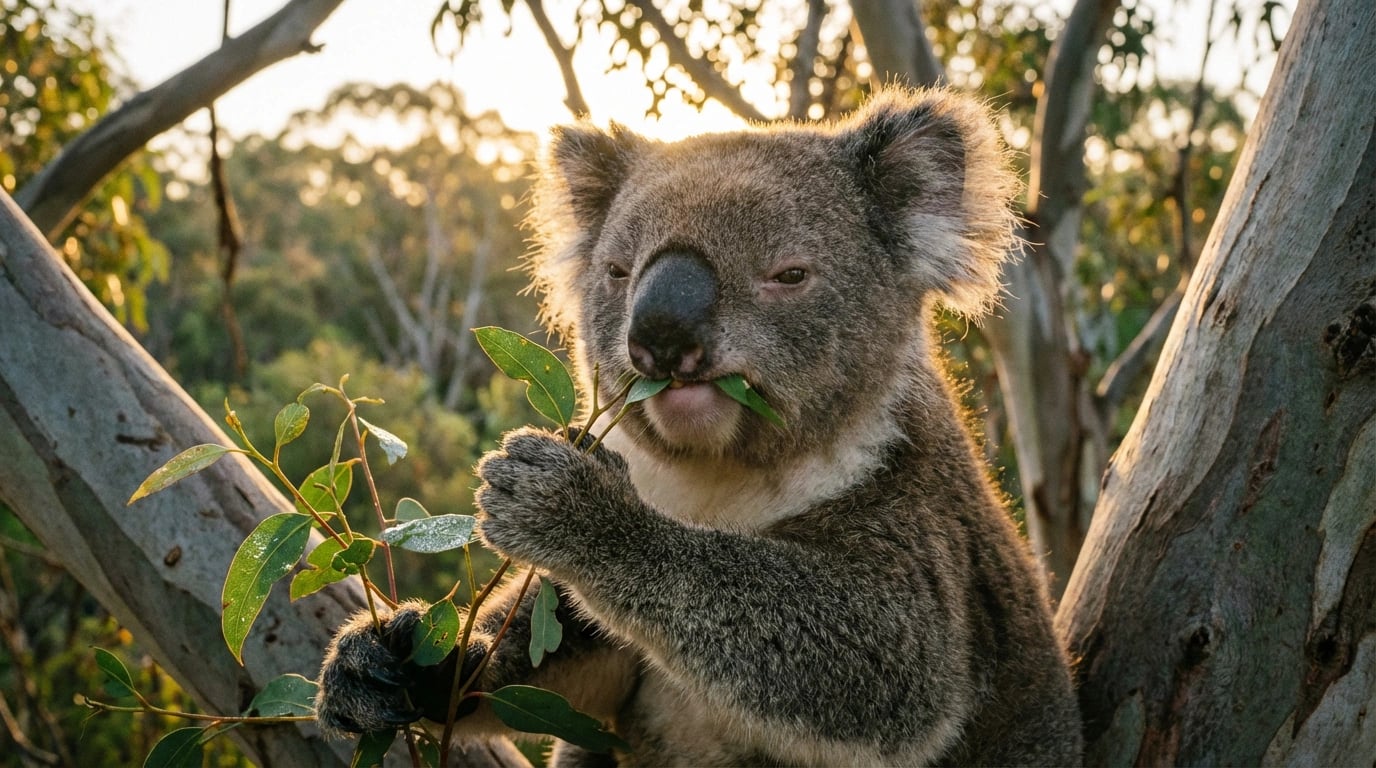
Koalas are among Australia’s most iconic marsupials, yet their dietary choice puzzles many wildlife observers. These adorable creatures feed almost exclusively on eucalyptus leaves, which contain toxic compounds that would sicken most other animals. Understanding why koalas have evolved to consume these poisonous leaves reveals a fascinating story of adaptation, survival, and ecological specialisation that spans millions of years.
The answer lies in a remarkable evolutionary adaptation. Koalas possess an extraordinarily long digestive system—particularly an extended caecum—that houses specialised bacteria capable of breaking down toxic compounds found in eucalyptus leaves. Additionally, their liver produces specific enzymes that neutralise these toxins, allowing them to extract nutrients from a food source that most animals cannot digest. This unique adaptation has granted koalas exclusive access to an abundant food resource with minimal competition, though it comes at significant metabolic costs.
The Toxic Compounds in Eucalyptus Leaves
Eucalyptus leaves contain numerous defensive chemicals that deter most herbivores. These compounds include phenolic substances, terpenes, and cyanogenic glycosides. Phenolics can damage proteins and inhibit digestion, whilst terpenes—which give eucalyptus its distinctive smell—are toxic to the liver and kidneys of most mammals.
Moreover, eucalyptus leaves are remarkably fibrous and low in protein, containing only 5-10% protein content. They also have high concentrations of lignin, a woody substance that’s extremely difficult to digest. The combination of toxicity and poor nutritional value makes eucalyptus an unappealing food source for virtually all animals except koalas.
Chemical Defence Mechanisms
Plants in the Eucalyptus genus have evolved these toxic compounds specifically to avoid being eaten. Different eucalyptus species produce varying concentrations of these chemicals, which is why koalas show distinct preferences for certain species and even individual trees. The diverse nature of gum trees means that koalas must carefully select their food sources based on toxin levels and nutritional content.
Interestingly, the toxicity of eucalyptus leaves varies seasonally and even throughout the day. Consequently, koalas have developed an acute sense of smell to identify leaves with lower toxin concentrations and higher moisture content.
Remarkable Digestive Adaptations
The koala’s digestive system represents millions of years of evolutionary refinement. Their caecum—a specialised organ where bacterial fermentation occurs—measures up to 2.5 metres in length, proportionally the longest of any mammal. This extended organ provides ample time for specialised microorganisms to break down toxic compounds and extract nutrients from the fibrous leaves.
Furthermore, koalas possess a highly developed liver that produces cytochrome P450 enzymes. These enzymes are specifically adapted to detoxify the phenolic compounds and terpenes found in eucalyptus. Research from the koala genome project has revealed expanded gene families dedicated to detoxification, highlighting the genetic basis for this remarkable ability.
Microbial Partnerships
The bacterial community within a koala’s caecum is highly specialised and uniquely adapted to their eucalyptus diet. These microorganisms are passed from mother to joey through a special substance called “pap,” which joeys consume before weaning. This process ensures that young koalas acquire the necessary gut bacteria to digest eucalyptus leaves successfully.
Without these microbes, koalas would be unable to process their food effectively. This symbiotic relationship demonstrates the complexity of evolutionary adaptation and the interconnectedness of biological systems.
Nutritional Challenges and Energy Conservation
Despite their adaptations, eucalyptus leaves provide minimal energy. Consequently, koalas have evolved an extremely slow metabolic rate—approximately half that of other mammals of similar size. This metabolic efficiency allows them to survive on such a poor-quality diet.
Additionally, koalas are famous for sleeping up to 20 hours daily. This sedentary lifestyle is not laziness but rather an essential energy conservation strategy. By minimising activity, koalas reduce their energy expenditure to match the limited calories they extract from eucalyptus leaves.
Water Requirements
The word “koala” is believed to derive from an Aboriginal word meaning “no drink,” reflecting their ability to obtain most of their water from eucalyptus leaves. However, during extreme heat or drought conditions, koalas will drink water from other sources. The moisture content of fresh eucalyptus leaves typically ranges from 50-60%, providing sufficient hydration under normal conditions.
This adaptation is particularly important given that koalas rarely descend from trees, where they would be vulnerable to predators. Nevertheless, climate change and increasingly frequent droughts are challenging this adaptation, making water supplementation sometimes necessary.
Selective Feeding Behaviour
Koalas demonstrate remarkable selectivity when choosing which leaves to consume. Of the approximately 700 eucalyptus species found across Australia, koalas feed on only about 30 species, with strong preferences for 10-15 particular varieties. Even within preferred species, they select only certain trees and specific leaves.
This selectivity is based on several factors including toxin concentration, nitrogen content, moisture levels, and leaf maturity. Koalas prefer younger leaves from the tips of branches, which generally have higher protein content and lower toxin concentrations than older leaves. Their sense of smell is so refined that they can detect subtle chemical differences between individual trees.
Regional Preferences
Different koala populations show distinct preferences for local eucalyptus species. For instance, koalas in Victoria favour manna gum and swamp gum, whilst those in Queensland prefer forest red gum and tallowwood. These regional preferences reflect both availability and the specific chemical profiles of local eucalyptus varieties.
Understanding these preferences is crucial for conservation efforts, particularly when creating wildlife corridors or establishing new koala habitats. Those interested in growing eucalyptus for wildlife should consider local koala populations’ dietary preferences.
Evolutionary Advantages of This Diet
Despite the challenges, specialising in eucalyptus leaves has provided koalas with significant evolutionary advantages. Firstly, it offers a virtually unlimited food supply across much of eastern Australia, where eucalyptus forests dominate the landscape. The abundance of thriving eucalyptus trees means koalas face minimal competition for their food source.
Secondly, this specialisation has eliminated competition with other herbivores. Whilst kangaroos, wallabies, and possums share koala habitats, they cannot digest eucalyptus leaves effectively. Therefore, koalas occupy an exclusive ecological niche with abundant resources that other animals cannot exploit.
Predator Avoidance
An arboreal lifestyle centred around eucalyptus trees also provides protection from ground-based predators. Historically, koalas’ main predators were dingoes, pythons, and large birds of prey. By remaining in the tree canopy where they feed, koalas minimise exposure to these threats whilst simultaneously accessing their food source.
Furthermore, the toxic compounds in eucalyptus leaves accumulate in koala tissues, potentially making them less palatable to predators. This chemical defence adds another layer of protection derived directly from their specialised diet.
Conservation Implications
Understanding koalas’ eucalyptus dependency is critical for conservation efforts. Habitat loss through land clearing directly threatens koala populations by removing their food source. Unlike generalist feeders that can adapt to different environments, koalas require specific eucalyptus species to survive.
Climate change poses additional challenges. Rising temperatures increase the toxin concentrations in eucalyptus leaves whilst decreasing their nutritional value and moisture content. Consequently, koalas must consume more leaves to meet their nutritional needs, exposing them to higher toxin levels and increasing physiological stress.
Habitat Corridors and Restoration
Conservation strategies must focus on preserving existing eucalyptus habitats and creating wildlife corridors that connect fragmented populations. Planting appropriate eucalyptus species in strategic locations can help support koala populations. However, success requires careful species selection based on local koala preferences and environmental conditions.
Additionally, maintaining genetic diversity within koala populations is essential for preserving their unique digestive adaptations. Isolated populations may lose genetic variations that enable them to process different eucalyptus species, further limiting their dietary options and survival prospects.
Artistic and Cultural Connections
The koala’s relationship with eucalyptus has inspired countless artistic representations. From Australian eucalyptus art to botanical illustrations, artists have long celebrated this iconic partnership. These artistic works not only capture the beauty of eucalyptus foliage but also raise awareness about conservation needs, helping to protect both koalas and the forests they depend upon.
The intricate relationship between koalas and eucalyptus exemplifies nature’s remarkable capacity for specialisation. Through millions of years of evolution, koalas have transformed a toxic, nutritionally poor food source into an exclusive resource that sustains their entire existence. This adaptation showcases both the ingenuity of natural selection and the delicate balance between species and their environment—a balance that conservation efforts must work diligently to preserve for future generations.

|
joerussell Australian abstract artists based in Byron Bay and curator of the GumPrints art print collection. |
Leave a Reply