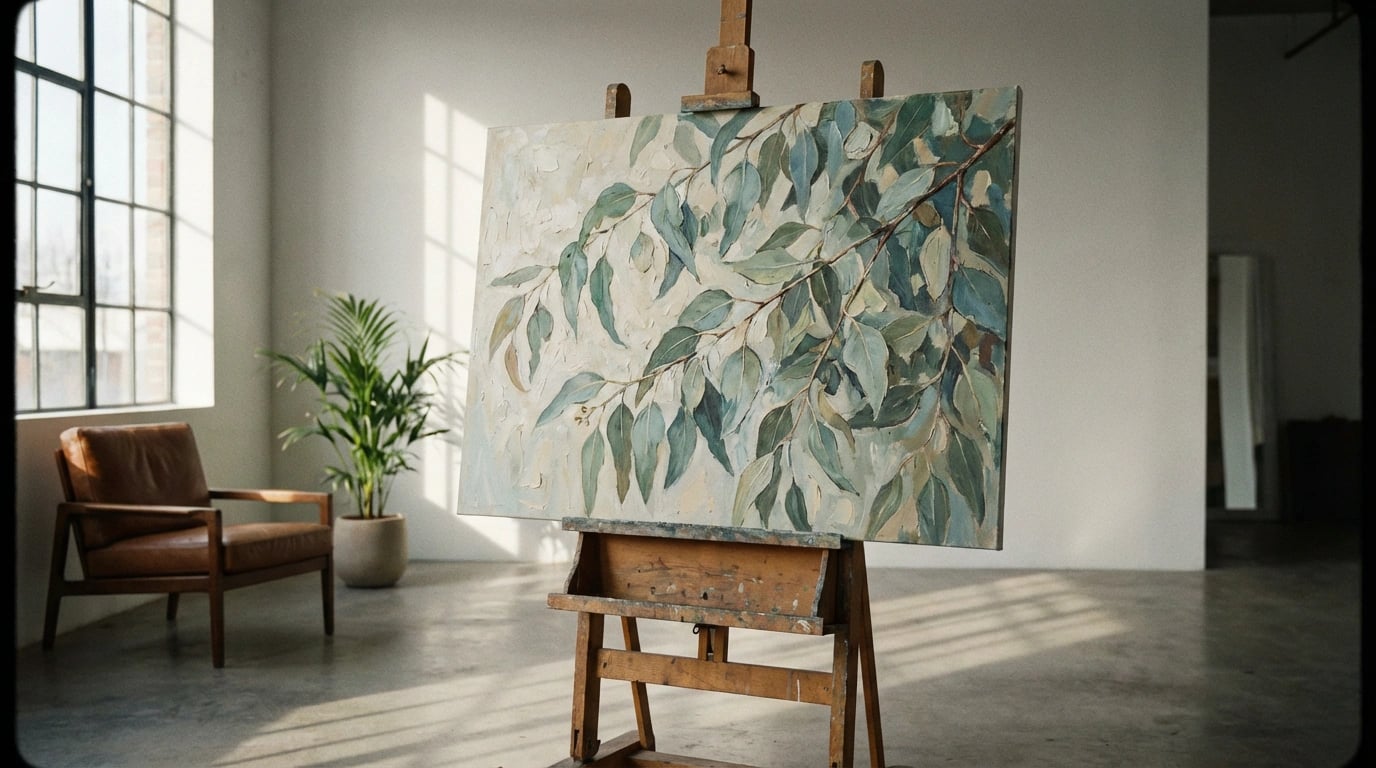
Australian landscape art carries within it layers of meaning that extend far beyond the visible brushstrokes and colours. At the heart of this artistic tradition stands the eucalyptus, a tree so intrinsically woven into the nation’s identity that its representation in art becomes a portal to understanding Australia’s cultural soul. From the early colonial painters to contemporary abstract artists, eucalyptus trees have been interpreted, reimagined and celebrated in ways that reveal hidden narratives about place, identity and belonging.
The stories behind eucalyptus art reveal a complex relationship between artists and the Australian landscape. These narratives encompass Indigenous knowledge systems, colonial perspectives, environmental concerns and the ongoing quest to capture the unique quality of Australian light. Each artistic interpretation of the gum tree carries with it a story that speaks to broader themes of national identity, environmental stewardship and the distinctly Australian aesthetic that has emerged over centuries.
The Colonial Misunderstanding: When European Eyes First Met Gum Trees
When European artists first arrived in Australia, they struggled profoundly to represent the eucalyptus tree. Trained in the traditions of European landscape painting, where deciduous trees provided familiar forms and predictable seasonal changes, these artists found the gum tree bewildering. The peeling bark, the silvery-grey foliage, and the peculiar way light filtered through eucalyptus canopies defied their artistic conventions.
Early colonial paintings often depicted eucalyptus trees as though they were English oaks or European elms, with dense, dark foliage and sturdy proportions that bore little resemblance to reality. This artistic miscommunication reveals a deeper cultural story: the difficulty of seeing and understanding a landscape through unfamiliar eyes. The hidden narrative here is one of cultural displacement and the gradual, sometimes painful process of learning to see Australia on its own terms rather than through a European lens.
These early misrepresentations weren’t merely technical failures but reflected a broader colonial mindset that struggled to value what was different. The eucalyptus, with its unconventional beauty, challenged artists to develop entirely new visual vocabularies. This transition period in Australian art history tells a story of cultural adaptation that mirrors the broader settler experience of coming to terms with an unfamiliar continent.
Indigenous Knowledge Encoded in Bark and Leaf
Long before European settlement, Indigenous Australians had developed sophisticated artistic traditions that incorporated eucalyptus in both medium and subject. Bark paintings, created on eucalyptus bark itself, represent one of the world’s oldest continuous art traditions. The hidden story here involves the encyclopaedic knowledge of eucalyptus species, their properties and their cultural significance encoded within these artworks.
Each representation of a eucalyptus tree or its components in Indigenous art carries layers of meaning related to Dreaming stories, seasonal calendars and ecological relationships. The choice of which eucalyptus bark to use for painting, how to prepare it and what to depict upon it represents knowledge accumulated over tens of thousands of years. This artistic tradition demonstrates an intimate understanding of eucalyptus biology that modern science is only beginning to fully appreciate.
Moreover, the continuation of these artistic practices represents cultural resilience and the ongoing transmission of traditional knowledge. When contemporary Indigenous artists incorporate eucalyptus motifs into their work, they’re participating in an unbroken artistic lineage whilst also asserting cultural sovereignty. This narrative challenges the colonial assumption that Australian art history began with European settlement, revealing instead a far richer and more ancient artistic tradition.
The Heidelberg School Revolution: Claiming an Australian Light
The Heidelberg School painters of the 1880s and 1890s initiated a radical shift in how eucalyptus trees were represented in Australian art. Artists like Tom Roberts, Arthur Streeton and Frederick McCubbin ventured into the bush around Melbourne, determined to capture the distinctive quality of Australian light as it played through eucalyptus canopies. Their plein air approach marked the first sustained artistic attempt to see and represent eucalyptus trees authentically.
The hidden story behind this movement involves a deliberate effort to forge a distinctly Australian artistic identity. These artists recognised that capturing the eucalyptus accurately meant rejecting European artistic conventions that simply didn’t apply to the Australian landscape. The silvery-blue haze of eucalyptus foliage, the dramatic contrasts between sunlit bark and deep shadow, and the sparse, vertical composition of gum tree forests required new techniques and fresh eyes. For those interested in exploring how eucalyptus trees have inspired Australian artists, this period represents a pivotal moment in the nation’s cultural development.
This artistic revolution also carried political undertones. By celebrating the eucalyptus landscape, these artists were making a statement about Australian nationalism during a period when federation loomed on the horizon. The gum tree became a symbol of emerging national identity, and its representation in art became an act of cultural assertion. The landscapes these artists created weren’t merely aesthetic achievements but statements about what it meant to be Australian.
Modernist Abstraction: Eucalyptus as Symbol
As Australian art entered the modernist period, eucalyptus imagery underwent further transformation. Artists began abstracting the gum tree’s forms, using eucalyptus motifs symbolically rather than representationally. The distinctive patterns of eucalyptus bark, the rhythmic verticality of forest compositions, and the colour palette of grey-greens and ochres became visual shorthand for Australian identity itself.
Contemporary abstract interpretations of eucalyptus continue this tradition, distilling the essence of the gum tree into colour, form and texture. Works like the Gum print 1 and Gum print 2 demonstrate how modern artists extract the essential qualities of eucalyptus—its textures, its colours, and its emotional resonance—and present them in abstract forms that speak to both aesthetic and cultural sensibilities.
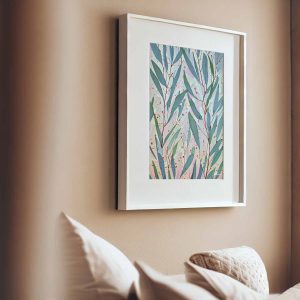
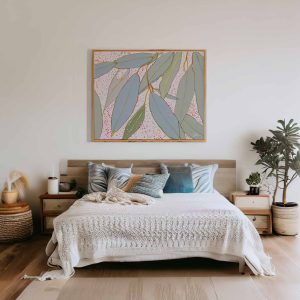
The hidden narrative in modernist eucalyptus art involves the ongoing negotiation between local and global artistic movements. Australian abstract artists working with eucalyptus themes participate in international modernist conversations whilst simultaneously asserting a distinctly Australian voice. This dual identity—being both globally connected and locally rooted—mirrors the broader Australian cultural experience and finds perfect expression in abstracted eucalyptus imagery.
The Environmental Awakening: Art as Conservation
From the 1970s onwards, eucalyptus art increasingly carried environmental messages as Australians became more aware of ecological threats facing native forests. Artists began using eucalyptus imagery to draw attention to deforestation, climate change and biodiversity loss. The hidden story here involves art’s role in shaping environmental consciousness and galvanising conservation movements.
Artworks depicting eucalyptus forests took on new urgency as these ecosystems faced mounting pressures. Artists documented threatened species of eucalyptus, commemorated forests lost to logging, and celebrated the ecological richness of intact bushland. This environmental turn in eucalyptus art represents a shift from aesthetic appreciation to active advocacy, with the gum tree becoming a symbol of fragile ecosystems requiring protection.
The relationship between eucalyptus imagery in contemporary spaces and environmental awareness continues to evolve. When people choose eucalyptus art for their homes, they’re often making a statement about their connection to nature and their environmental values. This transforms the artwork from mere decoration into a form of ecological commitment, a daily reminder of the natural world we’re responsible for protecting. According to Australia’s Department of Climate Change, Energy, the Environment and Water, numerous eucalyptus species are currently listed as threatened, making their artistic celebration particularly poignant.
Contemporary Interpretations: Eucalyptus in the Digital Age
Contemporary artists working with eucalyptus themes have access to technologies and platforms previous generations could never have imagined. Digital photography, digital painting, mixed media and installation art have expanded the possibilities for representing eucalyptus in innovative ways. Yet the hidden story involves continuity as much as innovation—contemporary artists still grapple with the same fundamental challenge of capturing the essence of the Australian landscape.
Social media and online galleries have democratised eucalyptus art, allowing artists to share their work globally and connect with audiences who may never visit Australia but nonetheless feel drawn to eucalyptus imagery. This digital dissemination has made eucalyptus a recognisable symbol of Australia worldwide, contributing to how the nation is perceived internationally. The gum tree has become visual shorthand for Australian identity in the global imagination.
Furthermore, contemporary artists increasingly engage with scientific understanding of eucalyptus biology, ecology and evolution. Collaborations between artists and scientists produce work that is both aesthetically compelling and scientifically informed. These interdisciplinary approaches reveal hidden stories about eucalyptus adaptation, resilience and diversity that enrich both artistic and scientific understanding. Artists exploring which eucalyptus species offer the most compelling visual qualities draw upon this growing body of knowledge.
Eucalyptus Art as Cultural Export
The final hidden story behind Australian eucalyptus art involves its role as cultural ambassador. When Australian artists exhibit eucalyptus-themed work internationally, they’re sharing a distinctly Australian perspective with global audiences. These artworks become windows into Australian identity, landscape and values, shaping how the world understands this continent at the bottom of the globe.
International collectors who acquire Australian eucalyptus art are purchasing more than aesthetic objects—they’re buying into a narrative about place, ecology and identity. The eucalyptus becomes a conversation starter, a point of cultural exchange and a tangible connection to Australia. This export of cultural meaning through artistic representation represents soft power, building international understanding and appreciation for Australian perspectives.
Moreover, the global popularity of Australian eucalyptus art has economic implications, supporting Australian artists and contributing to the nation’s creative economy. When visitors browse the collection of eucalyptus-inspired artworks, they’re participating in this cultural and economic exchange. The commercial success of eucalyptus art validates its cultural significance and ensures that future generations of artists will continue exploring and celebrating these iconic trees.
The stories hidden within Australian eucalyptus art are ultimately stories about seeing, understanding and belonging. From colonial miscommunication to contemporary environmental advocacy, from Indigenous knowledge systems to modernist abstraction, the artistic representation of eucalyptus traces the evolution of Australian identity itself. Each artwork becomes a chapter in this ongoing narrative, a visual record of how Australians have understood themselves and their landscape across time. Those interested in mastering the artistic techniques for capturing eucalyptus are participating in this rich tradition, adding their own voices to a conversation that spans millennia. As Australia faces environmental challenges and cultural changes, eucalyptus art will undoubtedly continue to evolve, revealing new hidden stories for future generations to discover and interpret.

|
joerussell Australian abstract artists based in Byron Bay and curator of the GumPrints art print collection. |
Leave a Reply